 EN
Home Skincare
Ideal for daily facial care routines, providing easy-to-use beauty solutions at home.

2026/10/02
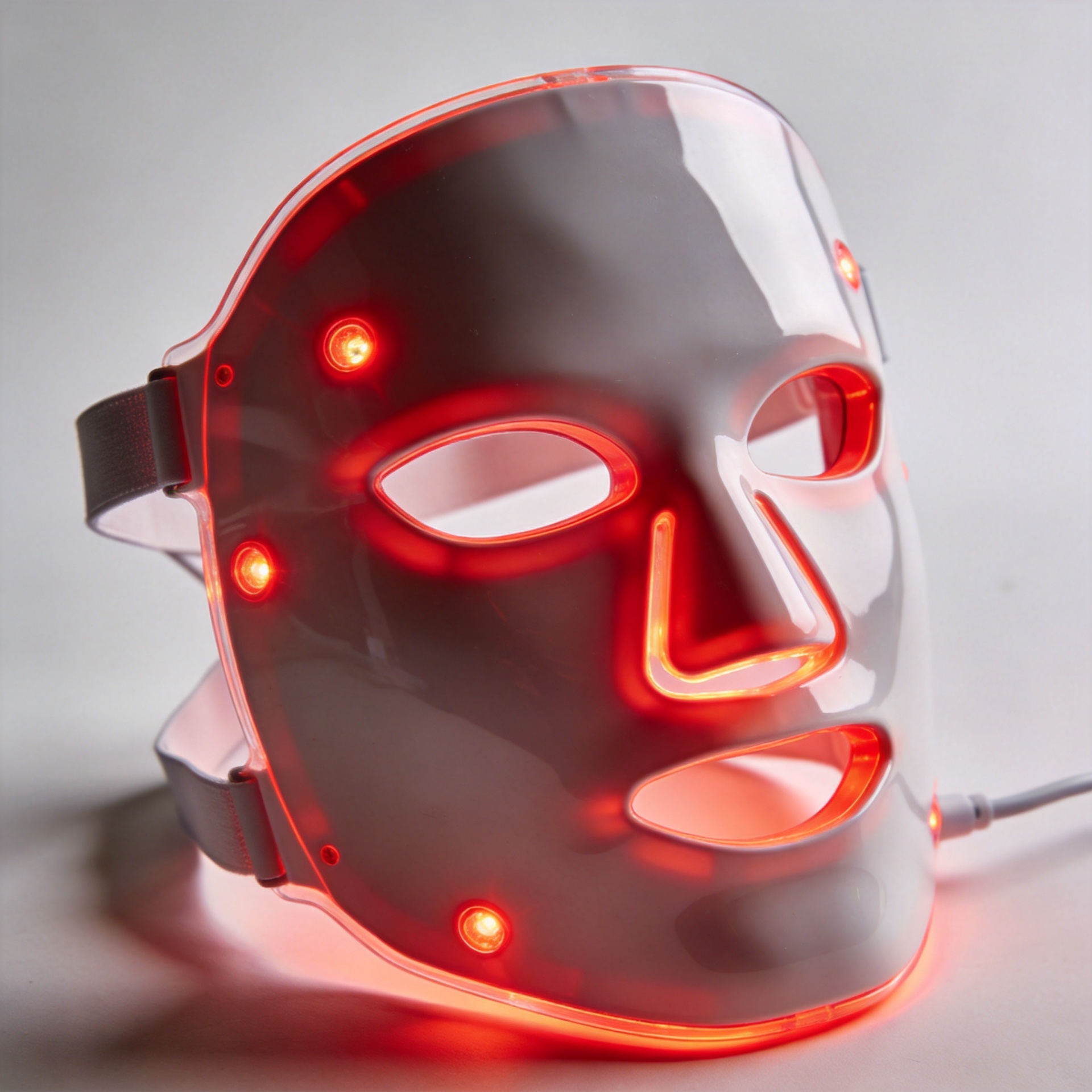
For a led light therapy mask, wavelength accuracy is not a minor line on a specification sheet. It is the difference between delivering light in the band a treatment protocol was designed around and delivering light that is merely close in color. As a beauty-device technical adviser, I encourage buyers to treat the wavelength claim, its tolerance, and the way it is verified as one decision—not as three separate marketing details.
That distinction matters because light-based skincare is parameter-dependent. A led light therapy mask may look similar from the outside, but its LEDs, optical design, output consistency, irradiance, treatment time, and user fit all affect what reaches the skin. This article explains why wavelength accuracy deserves a place beside comfort and price when evaluating a home use light therapy mask.
Wavelength is the distance between light waves, usually stated in nanometers (nm). It identifies the part of the light spectrum a device is intended to emit. For photobiomodulation discussions, red light around 630–660 nm and near-infrared light around 830–850 nm are commonly cited study bands. Those ranges are useful context, but they are not a universal promise that every device in the range will produce the same result.
Accuracy asks a more practical question: does the finished mask emit the claimed wavelength at the expected peak, within a declared tolerance, rather than only using an LED component nominally labeled with that value? A credible specification distinguishes a target wavelength from the acceptable production variation and is supported by measurement on the assembled product.
Skin does not treat every wavelength as interchangeable. Different wavelengths travel through tissue differently and interact with different chromophores and cell populations. That is why published protocols identify wavelengths rather than simply saying “visible red” or “infrared.” If a mask is designed around a red-light protocol but its real output drifts away from the stated band, the biological rationale for comparing it with that protocol becomes weaker.
There is an important nuance here. No responsible reviewer should claim that one small deviation automatically makes a led light therapy mask ineffective. LEDs have a spectral bandwidth, skin responses vary, and research protocols are not identical. The concern is traceability: the farther a finished device is from its stated parameter, the less confidently a buyer can connect its output to the evidence it references.
A precise wavelength does not compensate for an incomplete dose design. The same technical reviews that discuss common red and near-infrared bands also emphasize irradiance, fluence, pulse structure, and session duration. Photobiomodulation is often described as having a biphasic dose response, meaning that more exposure is not automatically better.
Think of wavelength as choosing the correct address and dose as deciding how much is delivered there. A high-irradiance red-light mask with no clear session guidance can be just as difficult to assess as a mask with a vague wavelength claim. Ask how the manufacturer defines output at the skin, not only the electrical wattage at the plug.
For a home use light therapy mask, these terms make the conversation more useful than a raw LED count. More LEDs can improve coverage, but count alone does not prove wavelength accuracy, output uniformity, or a suitable dose.
For a brand, wavelength accuracy begins before mass production. LED bins can vary, optical components can change output at the skin, and heat can affect performance. A production-ready specification should therefore define the target bands, tolerance limits, measurement method, sample plan, and acceptance criteria. It should also state whether measurements are taken at the LED, at the mask surface, or at a realistic skin-distance fixture.
This is where a parameter-rich product can be misleading. A list of red, blue, and near-infrared modes sounds comprehensive, but it does not show whether each channel is verified after assembly. The better question is: can the supplier provide a repeatable test record for the final configuration?
| Buyer question | Why it helps |
|---|---|
| What are the target peak wavelengths and allowed tolerances? | Shows whether the claim is specific enough to verify. |
| How is the final mask measured? | Separates component data from finished-device data. |
| Where is irradiance measured? | Clarifies whether the quoted number is relevant to facial use. |
| What production samples are checked? | Indicates how batch consistency is managed. |
| What session protocol accompanies each mode? | Connects wavelength to dose rather than treating it as decoration. |
Start with transparent claims. A manufacturer should be able to name the intended wavelengths, explain the mode design, and provide supporting test documentation appropriate to the product and market. If the device refers to clinical research, check whether the cited protocol uses comparable wavelength and dose parameters. Similar wording is not the same as comparable engineering.
Next, assess real-world usability. A flexible mask, eye protection, controls, fit, and treatment schedule all influence whether a user can follow the recommended routine. Parameters matter, but a technically credible device that is uncomfortable enough to stay in a drawer has limited practical value. In other words, do not replace a “more features is better” mindset with a “one number is better” mindset.
Finally, keep claims proportionate. A led light therapy mask is not a substitute for medical diagnosis or treatment. People with photosensitivity, relevant medications, active skin concerns, or questions about suitability should follow device instructions and seek advice from a qualified clinician when appropriate.
Wavelength accuracy is critical because it links a led light therapy mask to the mechanism and evidence behind its intended light protocol. It gives product teams a measurable quality target and gives buyers a way to distinguish a transparent technical specification from a broad marketing claim. Still, accuracy works with—not instead of—dose, uniformity, safety design, and consistent use. The most credible mask is one that explains all of those pieces clearly and can verify them in the finished product.

2026/10/30
Discover why in-house mold development helps an RF beauty device manufacturer improve product consistency, iteration speed, tooling control, and production readiness.

2026/10/30
Learn how to verify an RF beauty device manufacturer's R&D and prototyping capabilities using practical engineering workflows and audit checklists.

2026/10/30
Learn what shapes MOQ when choosing an RF beauty device manufacturer and how to plan a lower-risk first order with balanced platform and customization.

2026/10/30
Use this RF beauty device manufacturer evaluation checklist to compare safety evidence, OEM and ODM capability, quality control, and launch readiness.

2026/10/30
See how technology makes beauty at home more guided, consistent, and informed—plus a practical checklist for choosing devices wisely.

2026/10/30
Explore how AI and smart devices shape the future of beauty with responsive routines, clear guidance, trustworthy design, and user-controlled care.

Ideal for daily facial care routines, providing easy-to-use beauty solutions at home.

Perfect for spas and salons’ frequent treatments, enhancing client experiences and results.

Supports dermatologists with advanced devices for professional skin therapy sessions.

Delivers innovative solutions for full-body massage and relaxation with home devices.

Features anti-aging technologies to help reduce wrinkles and stimulate skin vitality.

Specialized devices for safe and effective hair removal suitable for home or clinic use.

Our customers love the Perfect Idea beauty devices. Quality, packaging, and results are all outstanding. We saw increased repeat sales after adding their facial cleansers to our lineup. Their support team is responsive and reliable.

Perfect Idea brings innovation and reliability to home beauty appliances. Our collaboration introduced their massage tools to Japanese women, boosting customer satisfaction and growing our brand trust across the region.

We partnered with Shenzhen Perfect Idea Tech for their beauty equipment. The shipping was fast and every product matched our expectations. Their home-use massagers are especially popular with local salons and home users.

The stylish packaging and attractive design make Perfect Idea stand out. French consumers appreciate the easy instructions and visible results. Communication was efficient and orders always arrived on time.

Perfect Idea home use personal care devices have become a favorite with our clients. The beauty device line offers quality at a reasonable price, and technical training for our staff made onboarding easy.

We selected Perfect Idea for our beauty product portfolio and have seen very positive feedback from our customers. Products are easy to market online and the customer support is reliable and helpful.
