 EN
Home Skincare
Ideal for daily facial care routines, providing easy-to-use beauty solutions at home.

2026/09/29
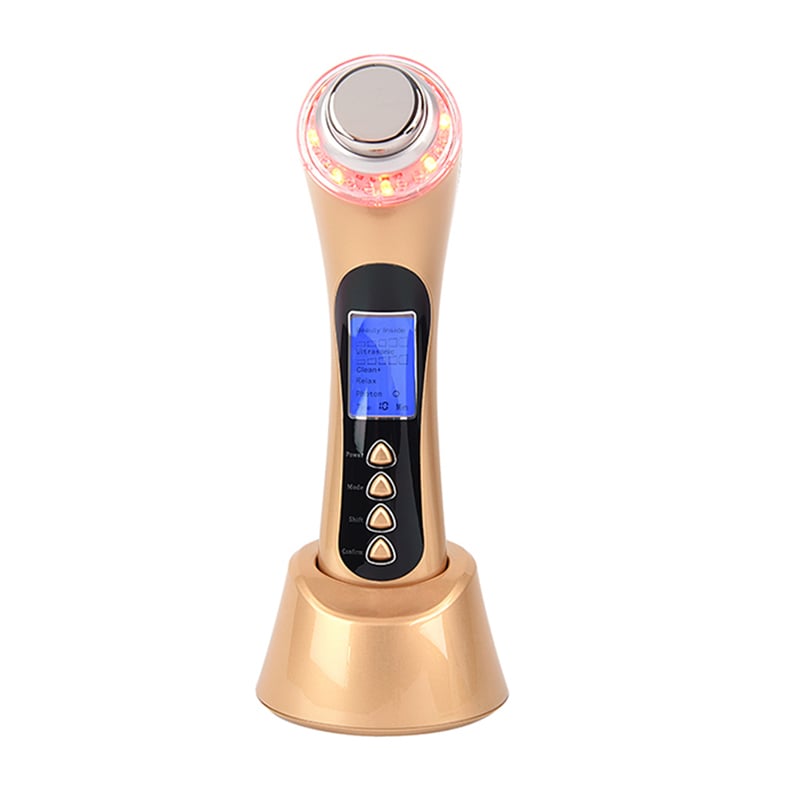
A Beauty equipment producer is rarely judged on a single device idea alone. For brand buyers, distributors, and private-label teams, the harder question is whether that producer can keep a concept, component choice, production run, and quality decision aligned as the project moves from sample to shipment. That is where vertical integration becomes important.
Vertical integration means bringing control of more supply-chain stages inside one operating system instead of handing each stage to unrelated suppliers. It does not have to mean owning every process. For a Beauty equipment producer, it can mean coordinating product engineering, critical-component sourcing, tooling, assembly, testing, packaging, and launch support closely enough that changes do not disappear between handoffs.
From an OEM/ODM brand-development perspective, this is less about claiming that one factory can do everything and more about reducing the gaps where quality, timing, and accountability are often lost. A vertically integrated partner can still use specialist suppliers; the difference is whether it owns the specifications, controls the handoffs, and can trace a decision through the build.
A beauty device program may involve industrial design, electronics, molds, housing materials, surface finishes, firmware, assembly, inspection, and retail packaging. When each area is managed separately, a small change can have a disproportionate effect. A revised LED board may alter heat behavior. A different plastic batch may affect fit. A packaging change may expose a late labeling issue. None of these outcomes is inevitable, but they become harder to identify quickly when the responsible teams work in separate silos.
This is especially relevant when a Beauty equipment producer is supporting customized OEM or ODM work. A buyer needs more than a quotation; they need a clear owner for the product specification. Integrated engineering and manufacturing communication makes it easier to compare a requested change against the original bill of materials, test plan, tooling constraints, and delivery schedule before the change becomes an expensive surprise.
Quality control is strongest when the people setting the acceptance criteria can see the actual production process. With more control over incoming components, assembly instructions, in-process checks, and final inspection, a producer can use the same reference standard throughout the build. That does not guarantee a defect-free result, and buyers should still review the factory’s documented controls. It does make it more practical to trace an issue back to a material lot, process step, or engineering revision.
For beauty equipment, this matters because perceived quality is a combination of function and finish. Stable assembly, consistent fit, clear labeling, appropriate charging behavior, and repeatable cosmetic appearance all affect a brand’s customer experience. A Beauty equipment producer with integrated quality feedback can feed field or sample observations back to design and production rather than treating them as isolated after-sales problems.
Speed is another reason vertical integration matters, but it should not be confused with rushing. When product development, sourcing, and manufacturing teams share a working plan, feasibility questions can surface earlier. The team can evaluate whether a housing shape is practical to mold, whether a selected component has an acceptable supply path, or whether an assembly step needs a fixture before the project reaches mass production.
That early feedback shortens the loop between prototype findings and the next sample. It can also make communication cleaner for international brand teams, which often need timely answers about materials, artwork, packaging, and production readiness. A producer that coordinates these functions internally is usually better positioned to explain trade-offs rather than simply passing a question down the chain.
Vertical integration can improve supply-chain visibility because the producer has a closer view of critical inputs and production capacity. During a component delay or a design update, a connected team can assess alternatives against the product specification and schedule. The benefit is not that shortages vanish; it is that decisions can be made with more context and fewer repeated handoffs.
It can also improve cost visibility. A Beauty equipment producer that understands tooling, materials, labor steps, yield, and packaging together can identify where a cost change genuinely affects the product. For a private-label buyer, that supports more useful conversations about value engineering. A lower unit price is not automatically better if it weakens a component choice, inspection step, or launch timeline. The right decision depends on the product position, target market, order volume, and acceptable risk.
For a brand, vertical integration is valuable when it turns supplier communication into an operating rhythm. The producer can connect brand requirements with engineering reviews, sample feedback, production planning, and final quality records. That alignment is particularly useful when a range needs coordinated colorways, accessories, packaging, or market-specific documentation.
Experienced buyers often learn this after a few uneven production runs: the most competitive quote may not be the most dependable program. A more useful evaluation is whether the factory can show how it manages changes, tests production readiness, and escalates issues. Those questions reveal more about long-term stability than a catalog alone.
Integration adds responsibility as well as control. A producer must maintain capable teams, transparent procedures, and enough capacity to support the stages it manages. Buyers should not assume that a broad capability claim proves depth in every area. Request a process map, ask to review sample and inspection workflows, clarify who owns compliance documentation, and confirm how project changes are approved.
The strongest partnership is usually one where the Beauty equipment producer is candid about what it controls directly, what it manages through qualified partners, and how it protects continuity at every handoff. That clarity lets a buyer match the supplier model to the needs of the brand.
Vertical integration matters because it gives a Beauty equipment producer a better chance to connect design intent with repeatable production. When engineering, sourcing, manufacturing, and quality teams work from a shared specification, brands gain clearer accountability, faster problem resolution, and more informed trade-offs. For buyers choosing an OEM/ODM partner, the practical test is simple: look for evidence that the producer can trace, manage, and improve the journey from component decision to finished device.

2026/10/30
Discover why in-house mold development helps an RF beauty device manufacturer improve product consistency, iteration speed, tooling control, and production readiness.

2026/10/30
Learn how to verify an RF beauty device manufacturer's R&D and prototyping capabilities using practical engineering workflows and audit checklists.

2026/10/30
Learn what shapes MOQ when choosing an RF beauty device manufacturer and how to plan a lower-risk first order with balanced platform and customization.

2026/10/30
Use this RF beauty device manufacturer evaluation checklist to compare safety evidence, OEM and ODM capability, quality control, and launch readiness.

2026/10/30
See how technology makes beauty at home more guided, consistent, and informed—plus a practical checklist for choosing devices wisely.

2026/10/30
Explore how AI and smart devices shape the future of beauty with responsive routines, clear guidance, trustworthy design, and user-controlled care.

Ideal for daily facial care routines, providing easy-to-use beauty solutions at home.

Perfect for spas and salons’ frequent treatments, enhancing client experiences and results.

Supports dermatologists with advanced devices for professional skin therapy sessions.

Delivers innovative solutions for full-body massage and relaxation with home devices.

Features anti-aging technologies to help reduce wrinkles and stimulate skin vitality.

Specialized devices for safe and effective hair removal suitable for home or clinic use.

Our customers love the Perfect Idea beauty devices. Quality, packaging, and results are all outstanding. We saw increased repeat sales after adding their facial cleansers to our lineup. Their support team is responsive and reliable.

Perfect Idea brings innovation and reliability to home beauty appliances. Our collaboration introduced their massage tools to Japanese women, boosting customer satisfaction and growing our brand trust across the region.

We partnered with Shenzhen Perfect Idea Tech for their beauty equipment. The shipping was fast and every product matched our expectations. Their home-use massagers are especially popular with local salons and home users.

The stylish packaging and attractive design make Perfect Idea stand out. French consumers appreciate the easy instructions and visible results. Communication was efficient and orders always arrived on time.

Perfect Idea home use personal care devices have become a favorite with our clients. The beauty device line offers quality at a reasonable price, and technical training for our staff made onboarding easy.

We selected Perfect Idea for our beauty product portfolio and have seen very positive feedback from our customers. Products are easy to market online and the customer support is reliable and helpful.
