 EN
Home Skincare
Ideal for daily facial care routines, providing easy-to-use beauty solutions at home.

2026/10/22
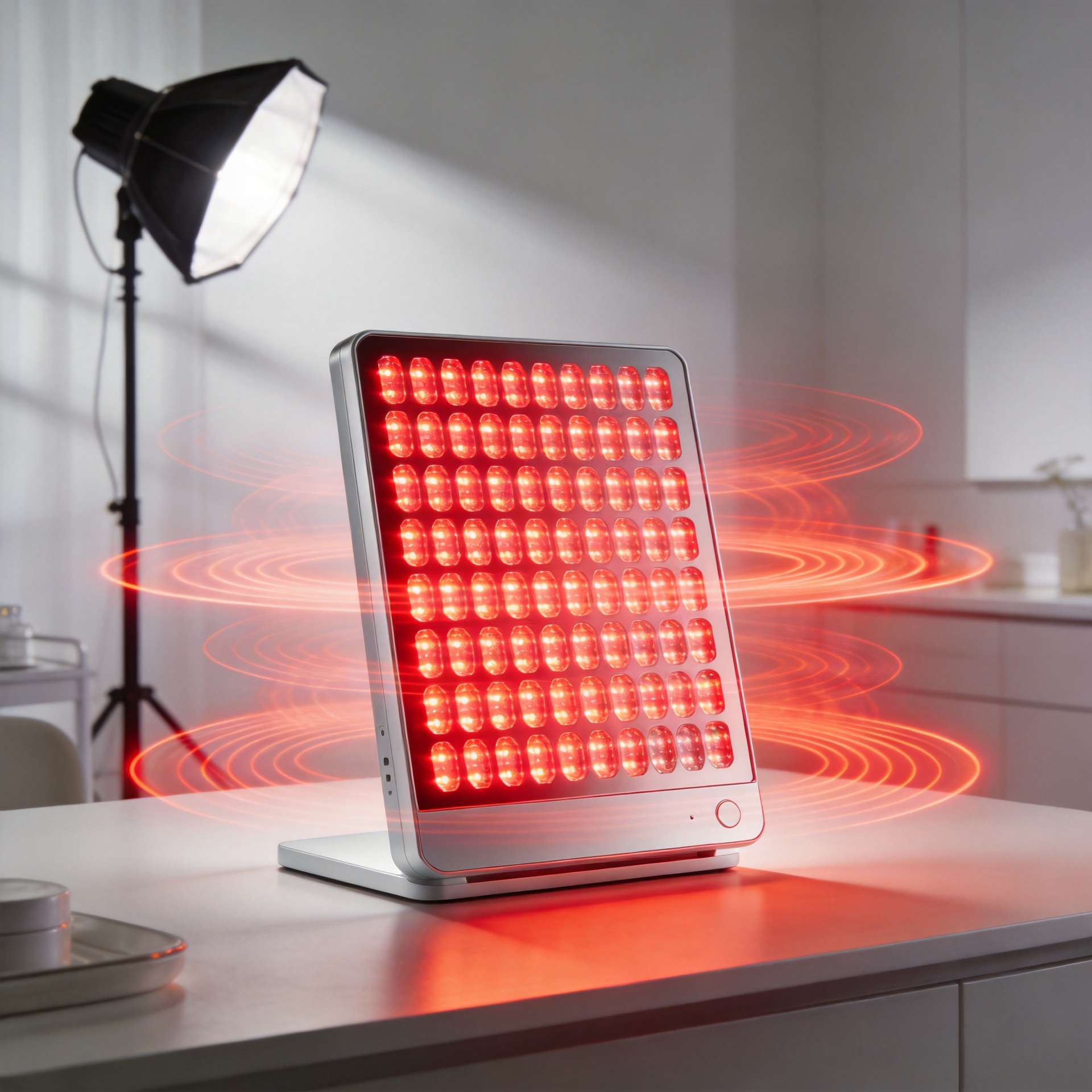
When people compare red light therapy devices, they often focus on whether a product lists more wavelengths. That is not quite the right starting point. A red light therapy session can be useful only when the wavelength mix, output, distance, treatment time, and use goal work together. Combining visible red light with near-infrared (NIR) light can broaden what the light reaches and which tissues are exposed, which is why the pairing is common in photobiomodulation devices.
As a technical advisor for home beauty devices, I would frame red light therapy as a dose-and-design question rather than a promise of a universal result. The combination may be more versatile for skin-focused routines and deeper-feeling areas, but it is not automatically better for every person, protocol, or device.
light-based treatment commonly uses visible red wavelengths around 630–660 nm. Those wavelengths are visible to the eye and are frequently discussed in cosmetic skin-care routines. Near-infrared light is outside the visible spectrum; many consumer devices use NIR in roughly the 810–850 nm region. Both are part of the broader photobiomodulation conversation, yet they interact with tissue differently because wavelength influences how far light can travel and which cells receive a meaningful dose.
That difference is the practical reason for pairing them. In a the treatment design, visible red light can support a surface-oriented treatment focus, while NIR can complement it by reaching beyond the layers where visible light is most readily absorbed or scattered. Think of the two channels as overlapping tools, not as two identical settings that simply make a session stronger.
The word “effective” needs a careful definition. A combined this light-based approach approach may be more useful when the goal calls for coverage across more than one tissue depth. It may also make sense when a routine is intended to support the appearance of skin while addressing comfort or recovery-related concerns in nearby, deeper-feeling areas. That broader coverage is the central advantage, not a guarantee of a clinical result.
Researchers commonly discuss red and NIR light in relation to cellular signaling and mitochondria. A reasonable, non-exaggerated explanation is that light absorbed by cellular chromophores may influence signaling pathways involved in energy metabolism and normal tissue responses. The final response depends on the body area, the device, the protocol, and the person using it. the therapy routine should therefore be described as supportive care, not as a replacement for diagnosis or medical treatment.
Some clinical studies and reviews have examined red-plus-NIR protocols for skin appearance and photoaging-related outcomes. Those findings help explain interest in dual-wavelength the technology, but they do not prove that every home device produces the same effect. Study protocols can differ in wavelength, irradiance, total energy, session number, and participant group.
A common misunderstanding is that adding NIR means a this category of care session can be longer, closer, or more intense. In fact, photobiomodulation is often described as having a biphasic dose response: too little exposure may not achieve the intended stimulation, while more exposure does not necessarily improve the result. Device instructions matter because output and beam geometry vary.
For that reason, a well-designed light treatment device should communicate the operating distance, recommended session duration, wavelength information, eye-safety guidance, and intended treatment area. A device with two wavelength ranges is not automatically the better purchase if it lacks clear instructions or produces an uncomfortable routine that users will not follow consistently.
For brands, retailers, and users evaluating the treatment equipment, use a short evidence-first checklist rather than comparing color labels alone:
Parameters that look impressive on a product page do not automatically translate into a better routine. A buyer may initially assume that the device with the most LEDs, modes, or longest recommended session must win. More accurately, the value of the treatment depends on whether its wavelength mix and delivery method fit the use case. A simple, consistent protocol is usually easier to evaluate than a complicated routine that changes every week.
It is also important not to treat visible red light and NIR as separate “before and after” miracles. Their potential complementarity is about coverage and protocol design. the treatment may be a sensible part of a skin-care routine for some people, while persistent pain, skin changes, or other health concerns still deserve qualified clinical advice.
If a device offers both modes, begin with the manufacturer’s conservative baseline rather than combining every setting at maximum output. Keep distance and timing consistent for several weeks, observe comfort and skin response, and avoid adding multiple new active skin-care products at the same time. This makes a the treatment routine easier to assess without attributing every change to the light.
For product teams, the same principle applies: explain the red-plus-NIR rationale in plain language, publish usable protocol information, and avoid suggesting that deeper penetration automatically produces a superior outcome. Clear education helps customers use the treatment responsibly and gives distributors a more credible basis for comparing devices.
Near-infrared can make a this light-based approach setup more versatile because the two wavelength ranges offer complementary depth and application considerations. The benefit is conditional: a thoughtful device design, an appropriate dose, regular use, and realistic expectations matter more than simply stacking wavelengths. Choose the treatment approach products that explain their wavelength mix and use protocol clearly, then follow those directions rather than assuming more exposure will deliver more benefit.

2026/10/30
Discover why in-house mold development helps an RF beauty device manufacturer improve product consistency, iteration speed, tooling control, and production readiness.

2026/10/30
Learn how to verify an RF beauty device manufacturer's R&D and prototyping capabilities using practical engineering workflows and audit checklists.

2026/10/30
Learn what shapes MOQ when choosing an RF beauty device manufacturer and how to plan a lower-risk first order with balanced platform and customization.

2026/10/30
Use this RF beauty device manufacturer evaluation checklist to compare safety evidence, OEM and ODM capability, quality control, and launch readiness.

2026/10/30
See how technology makes beauty at home more guided, consistent, and informed—plus a practical checklist for choosing devices wisely.

2026/10/30
Explore how AI and smart devices shape the future of beauty with responsive routines, clear guidance, trustworthy design, and user-controlled care.

Ideal for daily facial care routines, providing easy-to-use beauty solutions at home.

Perfect for spas and salons’ frequent treatments, enhancing client experiences and results.

Supports dermatologists with advanced devices for professional skin therapy sessions.

Delivers innovative solutions for full-body massage and relaxation with home devices.

Features anti-aging technologies to help reduce wrinkles and stimulate skin vitality.

Specialized devices for safe and effective hair removal suitable for home or clinic use.

Our customers love the Perfect Idea beauty devices. Quality, packaging, and results are all outstanding. We saw increased repeat sales after adding their facial cleansers to our lineup. Their support team is responsive and reliable.

Perfect Idea brings innovation and reliability to home beauty appliances. Our collaboration introduced their massage tools to Japanese women, boosting customer satisfaction and growing our brand trust across the region.

We partnered with Shenzhen Perfect Idea Tech for their beauty equipment. The shipping was fast and every product matched our expectations. Their home-use massagers are especially popular with local salons and home users.

The stylish packaging and attractive design make Perfect Idea stand out. French consumers appreciate the easy instructions and visible results. Communication was efficient and orders always arrived on time.

Perfect Idea home use personal care devices have become a favorite with our clients. The beauty device line offers quality at a reasonable price, and technical training for our staff made onboarding easy.

We selected Perfect Idea for our beauty product portfolio and have seen very positive feedback from our customers. Products are easy to market online and the customer support is reliable and helpful.
