 EN
Home Skincare
Ideal for daily facial care routines, providing easy-to-use beauty solutions at home.

2026/10/21
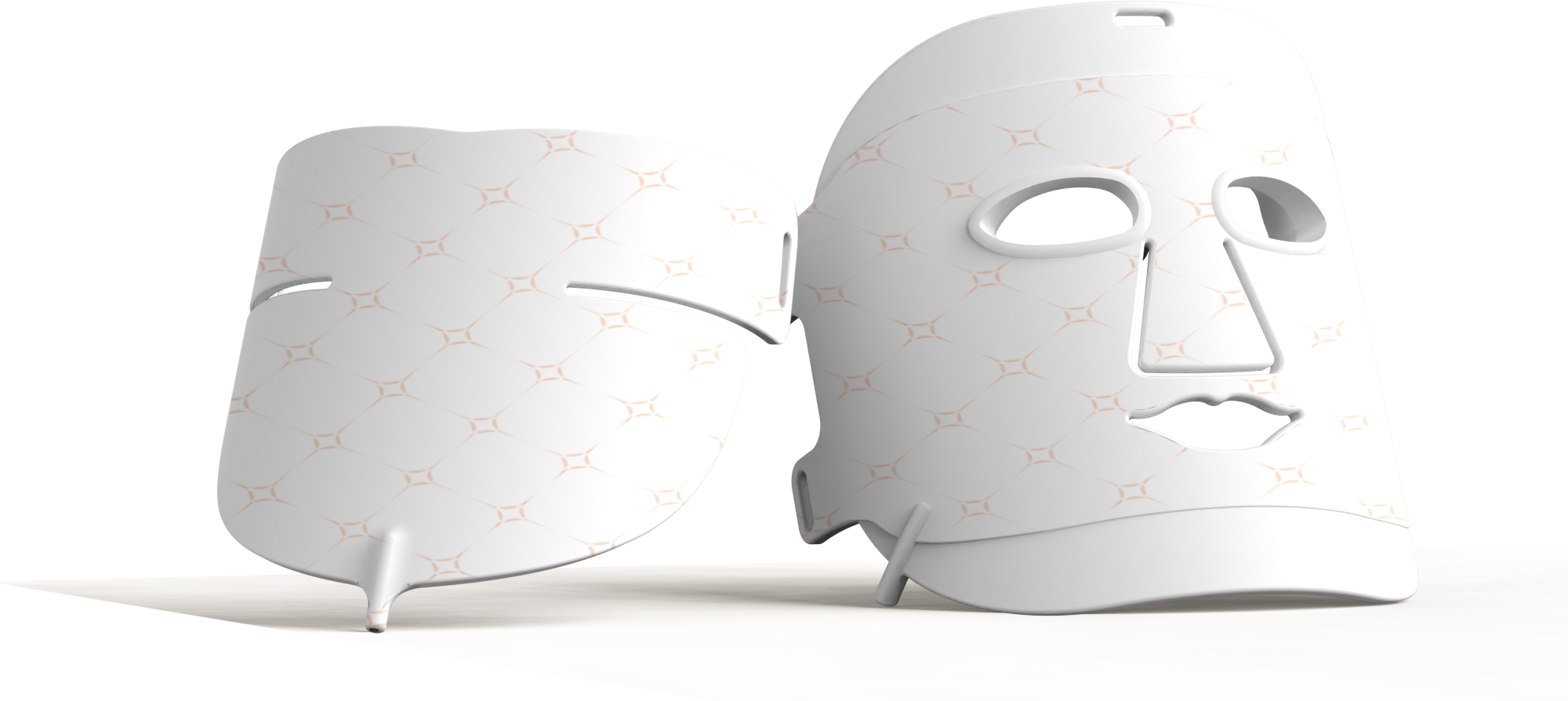
For a brand team developing a silicone led mask, the material decision is more than an industrial-design detail. It affects how the silicone led mask fits, how it feels during a session, how reliably the LED assembly can be positioned, and how consistently a factory can reproduce the part at scale. From an international buyer’s perspective, the key question is not whether a material sounds premium. It is whether the finished silicone led mask can deliver a stable, skin-contact experience while remaining practical to manufacture and inspect.
Liquid silicone rubber (LSR) is often the leading choice for flexible LED masks because it combines softness with durable elasticity and supports repeatable injection-molding processes. That does not mean every LSR mask is automatically safe, comfortable, or effective. The resin grade, the optical and electrical design, the molding process, and the finished-product verification all matter. Still, when those pieces are engineered together, a silicone led mask has clear advantages over a rigid shell for many at-home light-therapy designs.
A silicone led mask has to solve several problems at once. It needs to sit close enough to the face for a predictable physical setup, avoid uncomfortable pressure points, carry or protect light modules and wiring, tolerate routine handling, and look consistent after production. A hard shell can simplify a fixed geometry, but faces are not fixed geometries. Cheekbones, nose bridges, brow shapes, and jawlines vary substantially.
That is why experienced buyers move beyond a simple question such as “How many LEDs does it have?” A well-considered silicone led mask treats fit as a system: flexible body, strap arrangement, eye and nose openings, LED-board layout, edge thickness, and quality controls all influence the user experience. A long feature list is less important than a design people can wear comfortably and consistently; that is usually more useful than a specification sheet that merely looks impressive.
LSR can be molded into a soft, flexible body that follows facial contours rather than forcing the face to match a predetermined curve. This is the most visible reason brands choose liquid silicone. Flexibility can reduce localized pressure around the forehead, temples, nose, and jaw when the pattern, thickness, and straps are properly designed.
There is an engineering benefit as well. Better conformity can help maintain a more repeatable physical relationship between the silicone led mask and the face. It does not guarantee identical irradiance or treatment outcomes for every user—those depend on the LED system, distance, operating conditions, and many other variables—but it gives product teams a better foundation for managing fit-related variation. For a silicone led mask, the practical goal is stable, wearable positioning rather than an unqualified claim of complete coverage.
People judge a silicone led mask in the first few minutes: Does the edge dig in? Does the nose area feel heavy? Can the strap hold it without pulling? Those small details can determine whether a buyer keeps using the device. A liquid-silicone body can be made thin and flexible while retaining elastic recovery, helping designers reduce the sense of bulk compared with a more rigid enclosure.
That said, softness alone is not a quality metric. If the body is too thin, unsupported areas may sag; if it is too thick, the comfort benefit can disappear. The right answer depends on the LED packaging, reinforcement zones, face pattern, and strap loads. Procurement teams should ask to assess samples on several face shapes rather than judging a silicone led mask only on a flat display or mannequin.
LSR is commonly processed through injection molding and curing. For a silicone led mask program, this can support consistent part geometry once tooling, material preparation, injection parameters, and post-molding controls have been validated. Repeatability matters because small differences in thickness, openings, flash, or strap attachment points can alter fit and assembly results across a batch.
For brands, this shifts the supplier discussion from “Can you make a soft silicone led mask?” to “How do you control the process?” Useful questions include whether the supplier has defined incoming-material checks, mold-maintenance procedures, sample-approval gates, visual inspection criteria, and traceability for nonconforming parts. A capable OEM/ODM partner should be able to explain the production-control logic without making unsupported promises about zero defects.
Silicone is widely used in skin-contact applications because appropriate formulations can be soft, stable, and easy to clean. However, “silicone” or “medical grade” on a quotation is not a substitute for evidence. Material selection should match the intended market, contact duration, cleaning guidance, colorants or additives, and the configuration of the finished device.
For example, ISO 10993 is a widely recognized framework for biological evaluation in medical-device contexts, but applicability and testing plans depend on the finished product and its regulatory pathway. A brand should therefore ask what documentation supports the selected material and what verification is planned for the complete device. This approach protects both the user and the marketing team: it avoids turning a material description into an unqualified safety or efficacy claim.
Liquid silicone gives engineers latitude to shape contours, add localized thickness, create soft edge transitions, and integrate attachment features. That flexibility is valuable when a silicone led mask needs to accommodate LED modules, cable routes, a controller connection, or removable straps without creating sharp-feeling interfaces.
It is important not to confuse material flexibility with optical performance. The LED wavelength, drive current, thermal design, emission angle, diffuser or lens choices, and distance from skin still require separate validation. In a strong development program, the material team and electronics team review these decisions together. The silicone led mask body is part of the system that holds the light source in a usable position; it is not proof that a particular skincare result will occur.
| Decision area | Liquid-silicone approach | Hard-shell approach |
|---|---|---|
| Facial fit | Can flex around varied contours when the pattern is engineered well. | Relies on a fixed geometry and may create gaps or pressure points on some faces. |
| Wear comfort | Often supports a softer, lighter-feeling contact experience. | Can feel more structured; comfort depends heavily on padding and geometry. |
| Production focus | Requires disciplined molding, curing, trimming, and visual-quality control. | Requires controlled shell molding and assembly, with different tooling trade-offs. |
| Design integration | Allows soft transitions and flexible attachment features. | May simplify rigid mounting but can constrain contour adaptation. |
| Validation priority | Check material formulation, thickness consistency, fit, and assembly durability. | Check shell geometry, edge comfort, structural fit, and fastening durability. |
Neither route is inherently correct for every product brief. A rigid design may fit a brand that prioritizes a particular structure or component layout. But for a silicone led mask intended to be lightweight, adaptable, and comfortable across a range of facial contours, liquid silicone is usually the more persuasive starting point.
For brands seeking OEM or ODM development, the supplier’s value lies in translating these checks into a controlled product-development process. Shenzhen Perfect Idea Tech. Co., Ltd. supports home-beauty-device development for global buyers, with OEM/ODM collaboration, quality-management attention, and material-selection discussions that can be aligned to a brand’s target market. A productive conversation begins with the intended user, market, product positioning, and verification plan, not just a request for the lowest tooling quotation.
Liquid silicone is preferred in many LED-mask programs because it brings together adaptable fit, comfort potential, durable elasticity, and scalable molding. Its greatest value is not a single marketing phrase. It is the way a carefully engineered silicone led mask can make the mechanical, ergonomic, and manufacturing parts of the product work together.
When comparing suppliers, look past the word “silicone.” Ask how the material is specified, molded, inspected, assembled, and verified in the finished device. That is where a flexible concept becomes a reliable product program.

2026/10/30
Discover why in-house mold development helps an RF beauty device manufacturer improve product consistency, iteration speed, tooling control, and production readiness.

2026/10/30
Learn how to verify an RF beauty device manufacturer's R&D and prototyping capabilities using practical engineering workflows and audit checklists.

2026/10/30
Learn what shapes MOQ when choosing an RF beauty device manufacturer and how to plan a lower-risk first order with balanced platform and customization.

2026/10/30
Use this RF beauty device manufacturer evaluation checklist to compare safety evidence, OEM and ODM capability, quality control, and launch readiness.

2026/10/30
See how technology makes beauty at home more guided, consistent, and informed—plus a practical checklist for choosing devices wisely.

2026/10/30
Explore how AI and smart devices shape the future of beauty with responsive routines, clear guidance, trustworthy design, and user-controlled care.

Ideal for daily facial care routines, providing easy-to-use beauty solutions at home.

Perfect for spas and salons’ frequent treatments, enhancing client experiences and results.

Supports dermatologists with advanced devices for professional skin therapy sessions.

Delivers innovative solutions for full-body massage and relaxation with home devices.

Features anti-aging technologies to help reduce wrinkles and stimulate skin vitality.

Specialized devices for safe and effective hair removal suitable for home or clinic use.

Our customers love the Perfect Idea beauty devices. Quality, packaging, and results are all outstanding. We saw increased repeat sales after adding their facial cleansers to our lineup. Their support team is responsive and reliable.

Perfect Idea brings innovation and reliability to home beauty appliances. Our collaboration introduced their massage tools to Japanese women, boosting customer satisfaction and growing our brand trust across the region.

We partnered with Shenzhen Perfect Idea Tech for their beauty equipment. The shipping was fast and every product matched our expectations. Their home-use massagers are especially popular with local salons and home users.

The stylish packaging and attractive design make Perfect Idea stand out. French consumers appreciate the easy instructions and visible results. Communication was efficient and orders always arrived on time.

Perfect Idea home use personal care devices have become a favorite with our clients. The beauty device line offers quality at a reasonable price, and technical training for our staff made onboarding easy.

We selected Perfect Idea for our beauty product portfolio and have seen very positive feedback from our customers. Products are easy to market online and the customer support is reliable and helpful.
