 EN
Home Skincare
Ideal for daily facial care routines, providing easy-to-use beauty solutions at home.

2026/09/20
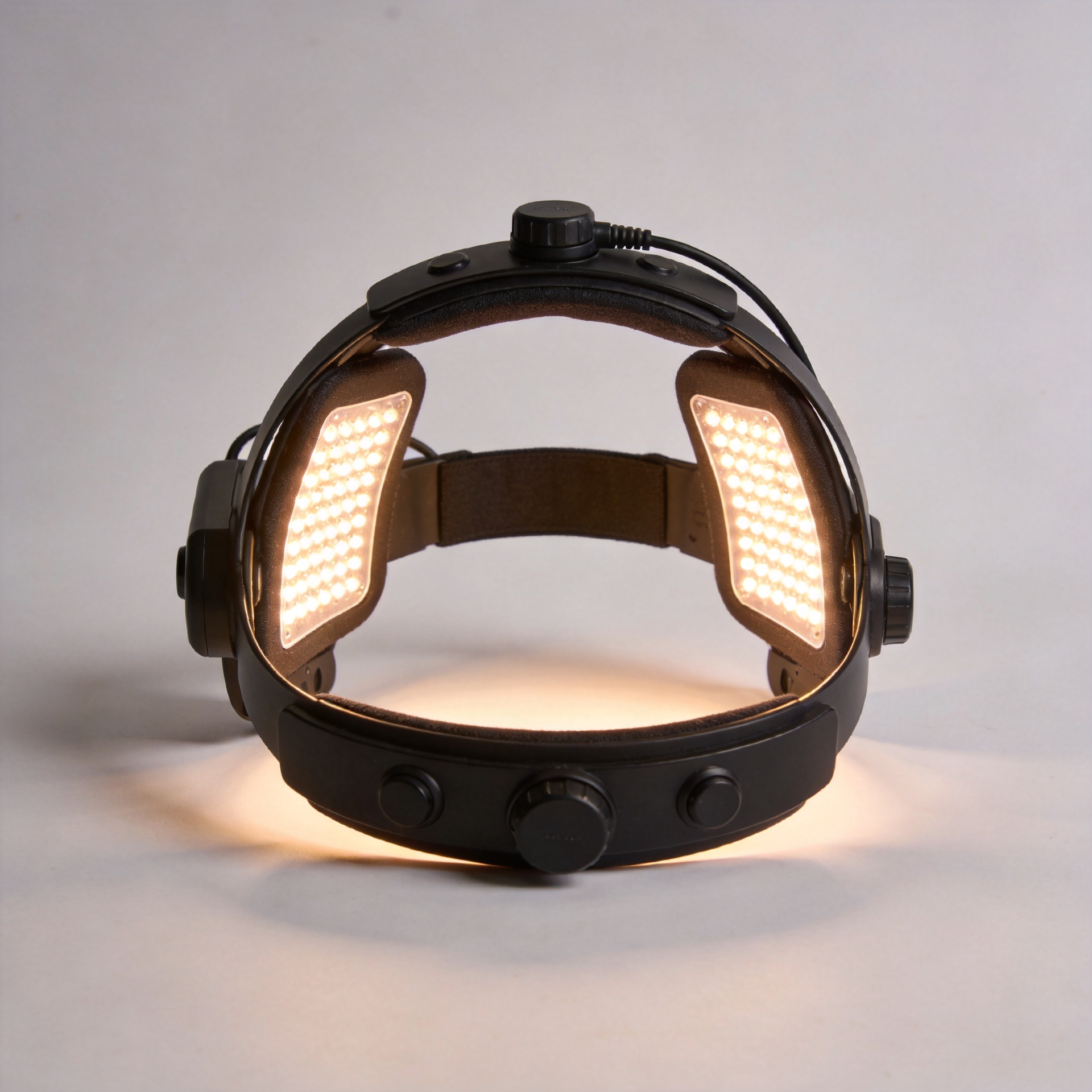
A dual-wavelength LED hair growth cap device can be a more flexible photobiomodulation option than a single-wavelength model, but the word “can” matters. Two wavelengths do not automatically produce better hair outcomes. The practical advantage is that a well-designed device may combine light bands with different tissue interactions while still delivering an appropriate dose across the scalp. If the optical output, coverage, wearability, or use routine is poor, an extra wavelength will not rescue the design.
As a technical adviser for home beauty devices, I recommend starting with the treatment goal and the evidence behind the finished device, rather than treating a longer wavelength list as a quality score. For anyone comparing a LED hair growth cap device, the useful question is: does the combination improve the light delivery plan in a way a user can repeat safely and consistently?
Photobiomodulation devices use low-level light intended to interact with cells in the scalp and hair-follicle environment. A single-wavelength cap commonly centers on a red band near the mid-600-nanometer range. A dual-wavelength design commonly pairs red light with a second red or near-infrared band. The first band may be selected because it has a long clinical history in hair-light research; the second may be included to broaden the optical approach.
Think of wavelength as one part of a delivery system, not the whole system. Different wavelengths are absorbed and scattered differently in tissue. Near-infrared light is often discussed for its deeper tissue reach, while red light has substantial hair-device research history. This does not mean that deeper light is inherently better in every design. Hair, skin tone, cap fit, diode placement, treatment duration, and actual energy delivered all affect how much light reaches the intended area.
A dual-wavelength LED hair growth cap device may be designed to distribute energy across complementary optical bands rather than relying on one band alone. A peer-reviewed review of photobiomodulation for alopecia notes that red wavelengths have the most established clinical history and describes a study in which a 655/808 nm combination performed slightly better than comparison wavelengths. That is an encouraging design signal, not proof that every two-color cap will outperform every single-color cap.
The distinction is important because light therapy follows a dose-response pattern. Too little energy may be ineffective, while simply adding emitters or wavelengths can be unhelpful if total output, timing, heat management, and scalp delivery are not controlled. A credible design specifies its wavelength bands, treatment protocol, and safety approach instead of making broad “more wavelengths, more growth” promises.
In a wearable cap, even coverage is often more useful than an impressive diode count. A well-engineered dual-wavelength layout can place emitters so that the top, crown, temples, and other relevant scalp regions receive a more consistent pattern of light. However, hair can block or scatter light before it reaches the scalp. That is why fit, interior geometry, and instructions about hair parting or placement can matter as much as the chosen wavelength.
Many people focus on the number printed on the box. A better evaluation is to ask whether the cap sits close enough to the scalp, whether the emitter pattern leaves obvious gaps, and whether the treatment schedule is realistic. A cap worn as directed for months is more meaningful than a technically ambitious model that feels too hot, heavy, or inconvenient to use.
For buyers developing an OEM or ODM LED hair growth cap device, dual wavelength should be treated as a validation question. Test the finished configuration, not just the individual LEDs. The relevant work includes confirming optical output at the scalp plane, checking output consistency across production batches, reviewing thermal performance, and documenting the recommended treatment routine. A quality-management process is especially valuable because small assembly or component changes can alter the user experience and output consistency.
This is where a comparison can become clearer. A single-wavelength device with sound output control, close scalp fit, and a practical routine may be a better choice than a poorly executed dual-wavelength cap. Conversely, a dual-band model may be compelling when it has a transparent protocol and the finished device—not merely its components—has evidence supporting its intended use.
| Question | Why it matters |
|---|---|
| Which wavelength bands are used? | Clarifies the device’s optical rationale and whether specifications are transparent. |
| Is the dose and session schedule stated? | Wavelength without dose, duration, and frequency is incomplete information. |
| How is scalp coverage addressed? | Emitter layout, cap fit, and hair obstruction influence real delivery. |
| Is there finished-device evidence? | It is stronger than relying on a component supplier’s claim or unrelated study. |
| Can the intended user follow the routine? | Comfort, weight, charging, and session length shape adherence. |
| Are safety and compliance documents appropriate for the market? | They support responsible product evaluation and market readiness. |
The useful takeaway is not that one wavelength is obsolete. It is that a dual-wavelength LED hair growth cap device has the potential to address light delivery more broadly when the wavelength pairing, dose, coverage, and treatment routine are engineered together. The strongest claims should be reserved for a specific, tested product and its defined user population.
If you are choosing a device for personal use, prioritize transparent specifications, a comfortable routine, and appropriate professional guidance for your situation. If you are sourcing a cap for a brand, ask suppliers for finished-product validation, batch-consistency controls, and market-specific documentation. The better choice is the design that turns a reasonable photobiomodulation concept into repeatable, responsibly communicated use—not simply the cap with the most wavelengths listed.

2026/10/30
Discover why in-house mold development helps an RF beauty device manufacturer improve product consistency, iteration speed, tooling control, and production readiness.

2026/10/30
Learn how to verify an RF beauty device manufacturer's R&D and prototyping capabilities using practical engineering workflows and audit checklists.

2026/10/30
Learn what shapes MOQ when choosing an RF beauty device manufacturer and how to plan a lower-risk first order with balanced platform and customization.

2026/10/30
Use this RF beauty device manufacturer evaluation checklist to compare safety evidence, OEM and ODM capability, quality control, and launch readiness.

2026/10/30
See how technology makes beauty at home more guided, consistent, and informed—plus a practical checklist for choosing devices wisely.

2026/10/30
Explore how AI and smart devices shape the future of beauty with responsive routines, clear guidance, trustworthy design, and user-controlled care.

Ideal for daily facial care routines, providing easy-to-use beauty solutions at home.

Perfect for spas and salons’ frequent treatments, enhancing client experiences and results.

Supports dermatologists with advanced devices for professional skin therapy sessions.

Delivers innovative solutions for full-body massage and relaxation with home devices.

Features anti-aging technologies to help reduce wrinkles and stimulate skin vitality.

Specialized devices for safe and effective hair removal suitable for home or clinic use.

Our customers love the Perfect Idea beauty devices. Quality, packaging, and results are all outstanding. We saw increased repeat sales after adding their facial cleansers to our lineup. Their support team is responsive and reliable.

Perfect Idea brings innovation and reliability to home beauty appliances. Our collaboration introduced their massage tools to Japanese women, boosting customer satisfaction and growing our brand trust across the region.

We partnered with Shenzhen Perfect Idea Tech for their beauty equipment. The shipping was fast and every product matched our expectations. Their home-use massagers are especially popular with local salons and home users.

The stylish packaging and attractive design make Perfect Idea stand out. French consumers appreciate the easy instructions and visible results. Communication was efficient and orders always arrived on time.

Perfect Idea home use personal care devices have become a favorite with our clients. The beauty device line offers quality at a reasonable price, and technical training for our staff made onboarding easy.

We selected Perfect Idea for our beauty product portfolio and have seen very positive feedback from our customers. Products are easy to market online and the customer support is reliable and helpful.
