 EN
Home Skincare
Ideal for daily facial care routines, providing easy-to-use beauty solutions at home.

2026/10/22
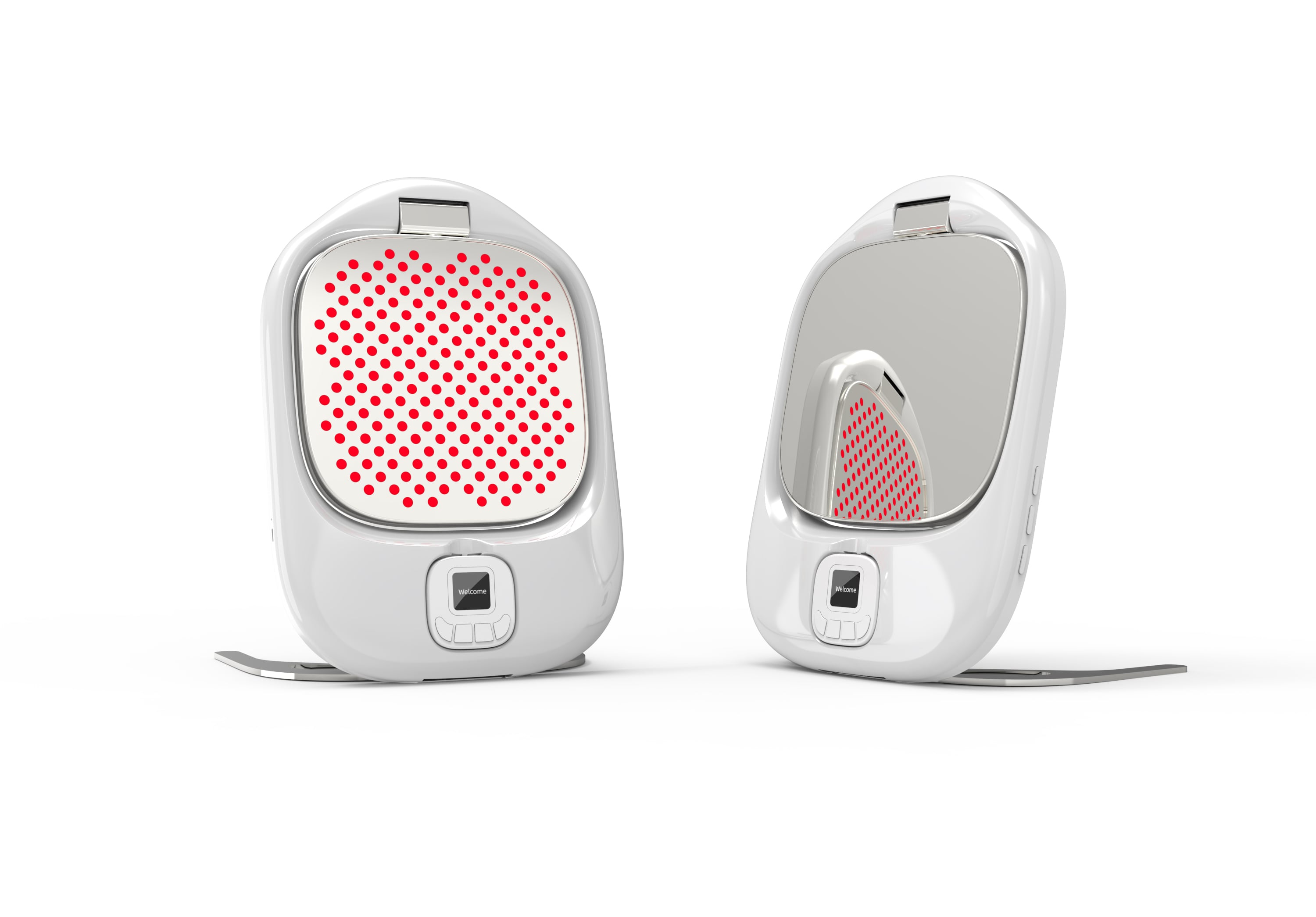
A red light therapy panel is often compared by LED count or headline irradiance, yet panel size can have a larger day-to-day effect on whether a routine feels practical. Size changes the area illuminated at one time, the uniformity of exposure across that area, the distance a person can comfortably use, and the amount of repositioning required. It does not automatically make one device medically more effective. Instead, a well-matched panel helps a user deliver a repeatable, sensible session to the intended body area.
From a home-beauty-device technical adviser’s perspective, the useful question is not simply “Which panel is bigger?” It is “Which red light therapy panel gives the intended treatment area consistent coverage within the time and setup a user can actually maintain?” That shift prevents a common mistake: treating physical dimensions as a shortcut for quality.
The clearest advantage of a larger red light therapy panel is coverage. A compact unit can be a reasonable fit for a small, targeted area or a seated face-and-neck routine. A taller or wider panel can illuminate more of the torso, legs, or back without asking the user to move through as many positions. Fewer positions can mean fewer chances to miss an area, change the distance, or cut a routine short.
For this article, “treatment efficiency” means useful coverage per session, not a promise about a biological result. If two panels are operated according to their instructions, the larger illuminated field may let one person cover a broader area in the same period. For a user who would otherwise need three or four placements with a smaller device, that workflow difference can be significant.
Two panels with similar outer dimensions may not create the same usable light field. LED spacing, beam angle, optics, mounting height, and the recommended operating distance influence where light overlaps and where it falls away. A very large-looking device can still create uneven coverage if the user stands too close or if the layout has sparse edges. Conversely, a thoughtfully designed mid-size red light therapy panel may create a more usable field for a specific routine.
Ask for measurements or guidance that state the test distance. Irradiance naturally changes with distance, but LED arrays are not simple point sources, so a one-line inverse-square calculation is not enough to compare panels. The practical comparison is whether the manufacturer explains the recommended distance, treatment footprint, and session protocol clearly enough for a user to reproduce them.
Repositioning is the hidden time cost in many light routines. With a smaller panel, a user may treat the front of the body, turn for the back, then adjust for lower legs or other areas. There is nothing inherently wrong with this approach. It can suit a focused routine and a smaller room. But every move changes angle, distance, and timing, which makes consistent use harder.
A larger red light therapy panel can simplify that sequence. If its illuminated area matches the user’s standing or seated posture, it may cover adjacent zones together. Not only does this shorten the routine, it can make a protocol easier to remember. In real life, the efficient device is often the one that fits naturally into a routine rather than the one with the most dramatic specification sheet.
Panel size should be evaluated together with placement. When a user steps farther back, the apparent treatment area grows, but intensity at the body may change and the panel’s overlap pattern can change too. When the user stands closer, the center may receive more light while the edges of a wide target area may be less evenly covered. The manufacturer’s instructions should guide distance and session duration; users should not invent a protocol from marketing numbers alone.
Room constraints matter as well. A full-height panel needs a stable mounting arrangement and enough clear floor space for comfortable positioning. A smaller red light therapy panel on a stand may be easier to use in a bedroom or treatment corner. It is better to select a format that can be placed safely and used consistently than to buy a larger unit that is inconvenient to set up.
| Primary use | Helpful size characteristic | Efficiency consideration |
|---|---|---|
| Face, neck, or a small targeted area | Compact, controllable footprint | Easy positioning may matter more than maximum area. |
| Chest, abdomen, or upper legs | Medium panel with broad, even field | May reduce side-to-side adjustments during a session. |
| Broad front or back coverage | Tall or modular panel | Can reduce repositioning if distance and room layout are appropriate. |
| Shared household or brand-program use | Adjustable mounting and clear protocol guidance | Repeatability, safety instructions, and build consistency become especially important. |
There is a trade-off here. A wide panel is not necessarily the right option for every user, and a compact device is not automatically inefficient. The right choice depends on treatment-zone size, available space, frequency of use, and whether the user can follow the recommended setup without strain.
For beauty brands developing a red light therapy panel, panel size affects more than the enclosure. It influences LED layout, thermal design, power management, stand design, packaging, and the instructions needed for safe, repeatable use. A larger format can support broader coverage, but it also requires disciplined consistency checks so that one production batch behaves like the next.
Compliance documentation should also be evaluated by target market and intended claims. Regulatory status or a testing document is not a blanket proof of every performance statement. Brands should align claims, labeling, electrical safety documentation, and user instructions with the markets in which they plan to sell. That is especially important when the product will be used at home without professional supervision.
Panel size affects red light therapy treatment efficiency because it shapes coverage, setup, distance control, and the number of positions needed for a routine. It should not be used as a stand-alone proxy for output, safety, or a promised outcome. Choose a red light therapy panel whose usable light field matches the target area and whose instructions make repeatable use realistic. For brands, that same logic should guide design validation: a larger panel earns its place when it improves the user workflow without compromising uniformity, usability, or quality consistency.

2026/10/30
Discover why in-house mold development helps an RF beauty device manufacturer improve product consistency, iteration speed, tooling control, and production readiness.

2026/10/30
Learn how to verify an RF beauty device manufacturer's R&D and prototyping capabilities using practical engineering workflows and audit checklists.

2026/10/30
Learn what shapes MOQ when choosing an RF beauty device manufacturer and how to plan a lower-risk first order with balanced platform and customization.

2026/10/30
Use this RF beauty device manufacturer evaluation checklist to compare safety evidence, OEM and ODM capability, quality control, and launch readiness.

2026/10/30
See how technology makes beauty at home more guided, consistent, and informed—plus a practical checklist for choosing devices wisely.

2026/10/30
Explore how AI and smart devices shape the future of beauty with responsive routines, clear guidance, trustworthy design, and user-controlled care.

Ideal for daily facial care routines, providing easy-to-use beauty solutions at home.

Perfect for spas and salons’ frequent treatments, enhancing client experiences and results.

Supports dermatologists with advanced devices for professional skin therapy sessions.

Delivers innovative solutions for full-body massage and relaxation with home devices.

Features anti-aging technologies to help reduce wrinkles and stimulate skin vitality.

Specialized devices for safe and effective hair removal suitable for home or clinic use.

Our customers love the Perfect Idea beauty devices. Quality, packaging, and results are all outstanding. We saw increased repeat sales after adding their facial cleansers to our lineup. Their support team is responsive and reliable.

Perfect Idea brings innovation and reliability to home beauty appliances. Our collaboration introduced their massage tools to Japanese women, boosting customer satisfaction and growing our brand trust across the region.

We partnered with Shenzhen Perfect Idea Tech for their beauty equipment. The shipping was fast and every product matched our expectations. Their home-use massagers are especially popular with local salons and home users.

The stylish packaging and attractive design make Perfect Idea stand out. French consumers appreciate the easy instructions and visible results. Communication was efficient and orders always arrived on time.

Perfect Idea home use personal care devices have become a favorite with our clients. The beauty device line offers quality at a reasonable price, and technical training for our staff made onboarding easy.

We selected Perfect Idea for our beauty product portfolio and have seen very positive feedback from our customers. Products are easy to market online and the customer support is reliable and helpful.
