 EN
Home Skincare
Ideal for daily facial care routines, providing easy-to-use beauty solutions at home.

2026/10/08
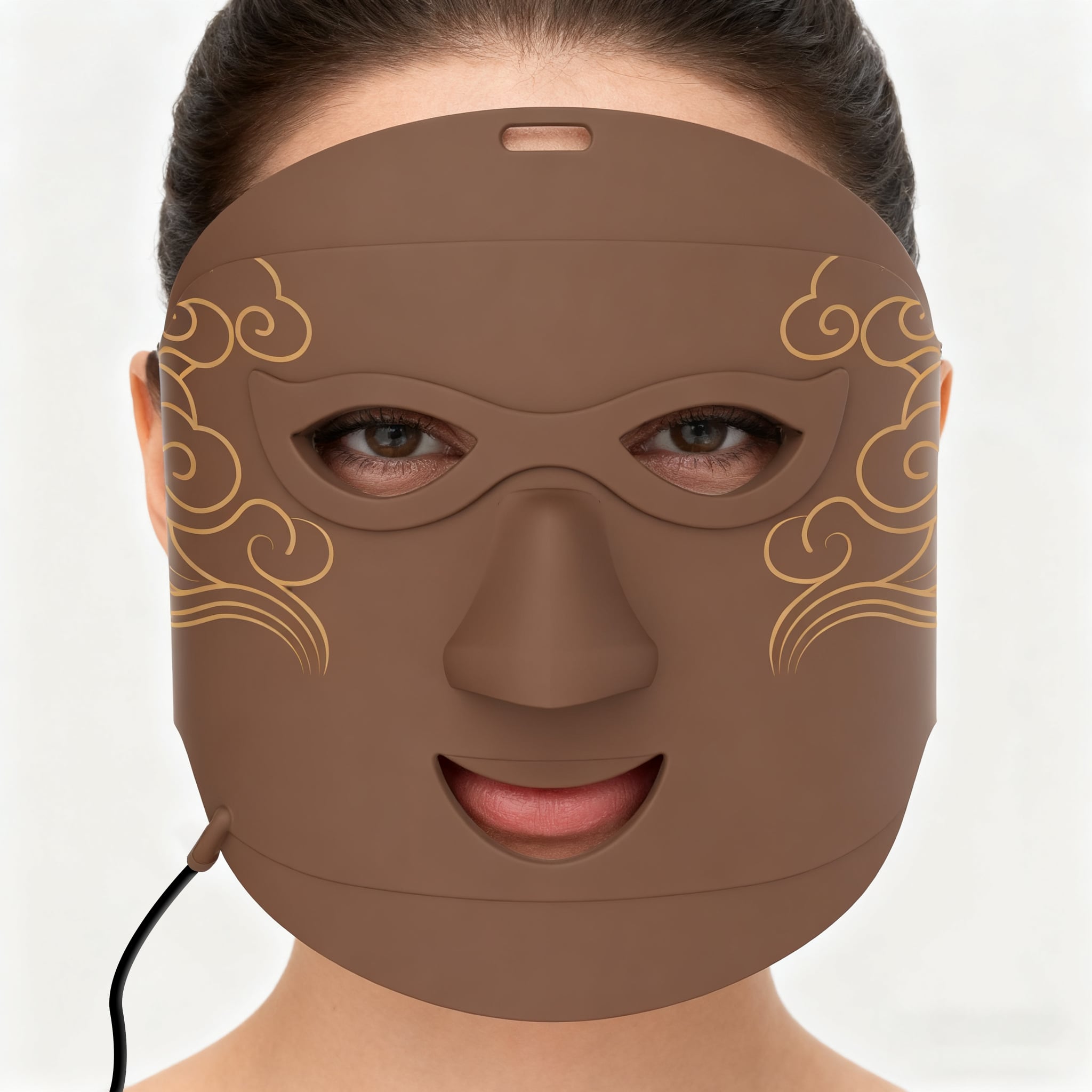
When people compare an LED light therapy mask, the LED count is often the first number they notice. That makes sense: a face mask with more light sources looks more advanced than one with only a few. But count is not a score by itself. In a well-designed LED light therapy mask, the number, placement, wavelength, output, fit, and treatment schedule work together. The useful question is not “Which mask has the biggest number?” but “Does this design deliver reasonably even, appropriate light to the parts of the face it is meant to treat?”
From a skin-management perspective, an at-home light-based face mask should be judged as a light-delivery system. Results are influenced by the dose reaching the skin over repeated sessions, not by a diode total printed on a package. This is a more careful way to compare devices, and it helps avoid paying for a headline number that does not translate into a better at-home routine.
A higher count can be useful, but it does not automatically make one light-based face mask more effective than another. Two masks can list very different LED totals because one counts individual diodes while another counts multi-chip modules, or because they use different layouts and light modes. Comparing those totals without knowing what is being counted is like comparing the number of shower heads without asking about water pressure or where the water lands.
More accurately, LED count is one design input. It can help a manufacturer place emitters closer together, cover more contours, or create separate zones. Yet a high count paired with weak output, poor wavelength selection, a rigid fit that leaves gaps, or uneven spacing may still produce inconsistent exposure. Conversely, a thoughtfully designed mask with fewer emitters may deliver more uniform usable light over its intended treatment area.
The strongest reason to look at count is coverage. Faces are not flat: the sides of the nose, under-eye area, temples, jawline, and chin sit at different angles. More strategically positioned LEDs can reduce dark zones and large gaps between light sources. In a face-worn light device, close, even spacing may help make the exposure across these contours more consistent.
Placement matters as much as the total. A mask can have many LEDs concentrated in the forehead and cheeks while leaving the lower face comparatively sparse. A buyer should therefore look for a clear layout image or a description of the treatment zones, rather than relying on a total alone. If a design claims whole-face treatment, its array should make practical sense around areas where a mask normally lifts away from the skin.
Fit also changes real-world coverage. A flexible mask that sits comfortably and repeatedly in a similar position may be more useful than a crowded but uncomfortable design that shifts during each session. This is not a minor lifestyle detail: consistency of use and consistency of placement are part of consistent exposure.
LED count does not identify the wavelength being delivered. Light color labels are broad consumer shorthand; product documentation should identify the actual wavelength or wavelength range for each mode. A larger array does not compensate for a wavelength that is poorly specified or unrelated to the intended use. When comparing a mask, read the wavelength information before treating the count as meaningful.
Irradiance describes the light power reaching a given skin area, commonly reported in milliwatts per square centimeter. Treatment dose depends on irradiance and session time. Put simply, a mask’s LED total cannot tell you how much light reaches the skin during a treatment. A device with many tiny emitters is not necessarily delivering a higher dose than one with fewer, appropriately driven emitters.
Specifications deserve context. Irradiance should be described at the treatment surface, and the suggested session length should be clear. Very high output is not automatically a benefit either; a practical device should pair its output with instructions designed for at-home use. Do not assume that a longer session will improve results beyond the stated protocol.
Emitter angle, diffusion, circuit design, and heat management all influence how the mask performs in practice. These details are not consistently easy for a shopper to verify, which is why transparent specifications and sensible treatment guidance matter. A count alone reveals none of them.
Use LED count as a screening question, not a final verdict. A higher number is more promising when it comes with a clearly distributed array and useful information about the rest of the system. This comparison order is more reliable:
It is easy to focus on a large LED total because it is simple to compare. In a regular skincare routine, though, a comfortable device with clear instructions and a repeatable schedule may be the more sensible choice. I would correct one common assumption here: a device is not disappointing merely because it has fewer LEDs. The more precise question is whether its light is distributed appropriately and whether you can follow its protocol consistently.
Home LED use also has boundaries. An FDA-cleared status, where applicable, relates to the device’s regulatory pathway and risk profile; it should not be treated as a universal promise of results. Follow the manufacturer’s instructions, observe eye-protection guidance, and consult a qualified clinician if you have a medical condition, photosensitivity, use relevant medications, or are uncertain whether light-based treatment is appropriate for you.
LED count matters in a facial light mask because it can affect the opportunity for even coverage across a curved face. It matters most when the LEDs are well distributed and supported by clearly stated wavelengths, measured irradiance, realistic session instructions, fit, and safety design. Count is useful evidence of an array design; it is not proof of dose, quality, or results.
For shoppers, compare the complete light-delivery system. For product teams, communicate the layout and operating specifications instead of relying on a single large number. That approach creates clearer expectations and helps users choose a suitable mask for a routine they can follow safely and consistently.

2026/10/30
Discover why in-house mold development helps an RF beauty device manufacturer improve product consistency, iteration speed, tooling control, and production readiness.

2026/10/30
Learn how to verify an RF beauty device manufacturer's R&D and prototyping capabilities using practical engineering workflows and audit checklists.

2026/10/30
Learn what shapes MOQ when choosing an RF beauty device manufacturer and how to plan a lower-risk first order with balanced platform and customization.

2026/10/30
Use this RF beauty device manufacturer evaluation checklist to compare safety evidence, OEM and ODM capability, quality control, and launch readiness.

2026/10/30
See how technology makes beauty at home more guided, consistent, and informed—plus a practical checklist for choosing devices wisely.

2026/10/30
Explore how AI and smart devices shape the future of beauty with responsive routines, clear guidance, trustworthy design, and user-controlled care.

Ideal for daily facial care routines, providing easy-to-use beauty solutions at home.

Perfect for spas and salons’ frequent treatments, enhancing client experiences and results.

Supports dermatologists with advanced devices for professional skin therapy sessions.

Delivers innovative solutions for full-body massage and relaxation with home devices.

Features anti-aging technologies to help reduce wrinkles and stimulate skin vitality.

Specialized devices for safe and effective hair removal suitable for home or clinic use.

Our customers love the Perfect Idea beauty devices. Quality, packaging, and results are all outstanding. We saw increased repeat sales after adding their facial cleansers to our lineup. Their support team is responsive and reliable.

Perfect Idea brings innovation and reliability to home beauty appliances. Our collaboration introduced their massage tools to Japanese women, boosting customer satisfaction and growing our brand trust across the region.

We partnered with Shenzhen Perfect Idea Tech for their beauty equipment. The shipping was fast and every product matched our expectations. Their home-use massagers are especially popular with local salons and home users.

The stylish packaging and attractive design make Perfect Idea stand out. French consumers appreciate the easy instructions and visible results. Communication was efficient and orders always arrived on time.

Perfect Idea home use personal care devices have become a favorite with our clients. The beauty device line offers quality at a reasonable price, and technical training for our staff made onboarding easy.

We selected Perfect Idea for our beauty product portfolio and have seen very positive feedback from our customers. Products are easy to market online and the customer support is reliable and helpful.
