 EN
Home Skincare
Ideal for daily facial care routines, providing easy-to-use beauty solutions at home.

2026/10/05
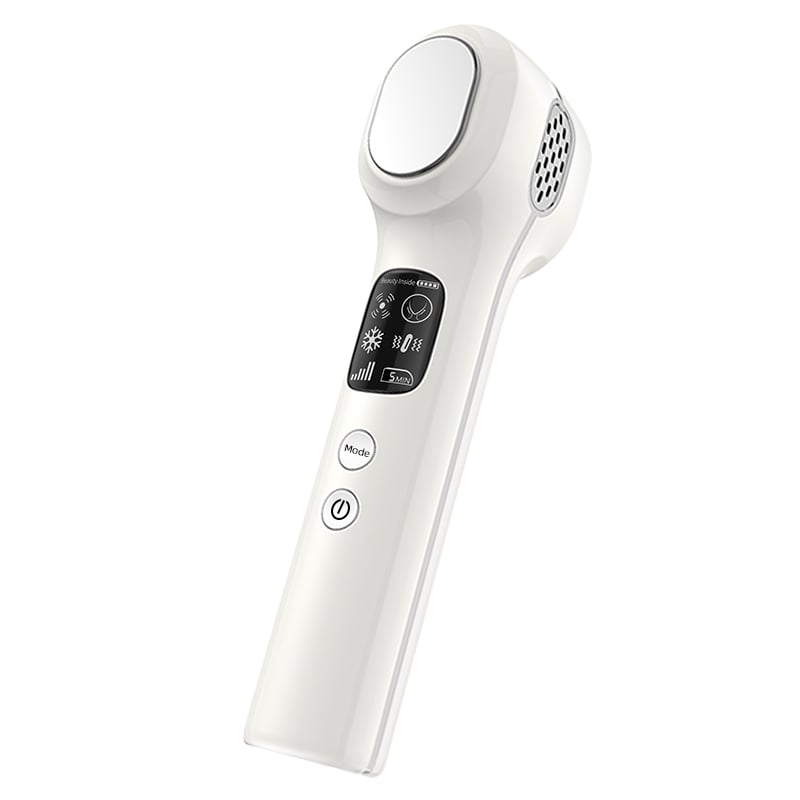
Buying a beauty device for OEM manufacturing is not the same as selecting a finished item from a catalog. A promising sample can still become an expensive problem if the supplier cannot translate your brief into repeatable production, controlled changes, and market-appropriate documentation. From an international brand buyer’s perspective, the useful question is not “Which beauty device has the longest feature list?” It is “Which supplier can consistently deliver the product, evidence, and support our brand needs?”
That distinction matters whether you are evaluating a beauty machine for home use, a clinical beauty device for a professional channel, or bulk beauty equipment for a wider product launch. Use the following framework before you commit to tooling, packaging, or a purchase order.
Before comparing factories, write a one-page product brief that defines the user, use environment, target markets, price position, channel, launch volume, and the problem the product is meant to solve. Separate “must-have” requirements from ideas that are still negotiable. For example, a portable beauty device aimed at daily home routines creates different decisions around battery, handling, instructions, and packaging than a salon-oriented clinical beauty device.
Also define the intended-use language early. A cosmetic or wellness positioning should not quietly evolve into a medical claim through packaging or advertising. Classification and market-entry obligations depend on the final product, claims, and destination market. Treat regulatory review as a design input, not a last-minute label check.
Ask the OEM to explain the working principle in plain language and to connect every claimed benefit to a testable requirement. LED, RF, EMS, microcurrent, ultrasound, and thermal approaches are not interchangeable. Each affects component selection, energy management, safety controls, user instructions, verification methods, and the claims your brand can responsibly make.
A practical review asks: What is the intended treatment area? What controls prevent misuse or overheating? Which settings are fixed, adjustable, or locked? What verification records exist for the final configuration? A supplier should be comfortable explaining limitations as well as capabilities. More functions are not automatically better; for many brands, a focused beauty device with a clear user journey is easier to validate, support, and differentiate.
OEM capability is demonstrated by process discipline, not by a polished showroom. Request a walkthrough of the path from concept to mass production: requirements review, industrial design, prototype builds, design verification, pilot run, production transfer, incoming inspection, final inspection, and corrective action. Confirm who owns the product specification, tooling files, firmware version, artwork approvals, and any custom test fixtures.
Then ask how changes are handled after approval. If a battery cell, LED supplier, plastic resin, or firmware version changes, will you receive a documented impact assessment and approval request before production resumes? This matters especially when buying a beauty machine that will be sold under your own brand. A low initial quotation loses value if uncontrolled substitutions create returns, inconsistent performance, or a compliance review later.
Ask for the evidence relevant to your target countries and product positioning rather than accepting a generic certificate bundle. For a product that falls within medical-device requirements in a particular market, a quality system aligned with ISO 13485 can be a meaningful signal because the standard addresses quality management for medical-device design and manufacture. It is not, however, a universal shortcut to market approval or proof that every beauty device qualifies as a medical device.
For the United States, FDA registration and listing obligations apply to establishments and products within applicable medical-device rules; they are not a blanket label for all beauty products. Ask a qualified regulatory adviser to review the intended use, claims, labeling, and route to market. At the factory level, request traceability examples, incoming-material controls, inspection plans, nonconformance records, and complaint-handling procedures. The point is to test whether the supplier can produce evidence when a question arises.
Do not approve a sample after a short demonstration. Build a written validation plan that reflects real use and foreseeable misuse. It should cover charging, cleaning, button response, heat or current behavior where relevant, handling, accessories, packaging transit, instructions, and repeated-use durability. If your brand expects a premium experience, evaluate noise, finish consistency, fit, charging convenience, and the clarity of warnings alongside core function.
Use at least three gates: an engineering sample review, a pilot-production review, and a pre-shipment review. Record open issues, owners, deadlines, and the exact sample version. This protects both sides: it gives the OEM an unambiguous target and gives your team evidence that the final beauty device matches the approved baseline.
When comparing bulk beauty equipment quotations, map the full cost and risk picture. Include tooling, minimum order quantity, component lead times, packaging development, testing, spare parts, warranty exposure, defect handling, and the cost of a delayed launch. Ask for capacity by production stage rather than a single monthly output number. A factory may assemble sufficient units yet lack the test capacity, aging space, or quality staff required for stable delivery.
It is also worth asking whether one partner can support adjacent categories when that fits your roadmap. A supplier with coordinated design, packaging, and product-development resources may reduce management overhead, but only if it still provides clear ownership and evidence for each product program.
A weighted scorecard makes trade-offs visible. Give more weight to the risks that would hurt your launch most, then score each shortlisted OEM from the documents, factory discussions, samples, and pilot data you actually reviewed.
| Evaluation area | Questions to score |
|---|---|
| Product fit | Does the technology, form factor, and user flow match the approved brief? |
| Engineering control | Can the OEM document design transfer, revisions, tooling ownership, and change approval? |
| Quality evidence | Are inspection, traceability, and corrective-action records available and relevant? |
| Market readiness | Can the supplier support the documentation and testing needed for your intended claims and markets? |
| Supply reliability | Are component sources, capacity, lead times, and contingency plans credible? |
| Commercial fit | Do MOQ, payment terms, warranty responsibilities, and communication practices fit your launch plan? |
The right OEM partner is rarely the one that promises the most. It is the one that can show how a beauty device moves from a defined brief to a controlled, supportable product. If your priority is a faster launch, start with a proven platform and focus customization on the parts customers can see and use. If your priority is differentiation, allow more time for engineering validation, claims review, and pilot learning. In either case, choose evidence, change control, and fit-for-market support over a feature list alone.

2026/10/30
Discover why in-house mold development helps an RF beauty device manufacturer improve product consistency, iteration speed, tooling control, and production readiness.

2026/10/30
Learn how to verify an RF beauty device manufacturer's R&D and prototyping capabilities using practical engineering workflows and audit checklists.

2026/10/30
Learn what shapes MOQ when choosing an RF beauty device manufacturer and how to plan a lower-risk first order with balanced platform and customization.

2026/10/30
Use this RF beauty device manufacturer evaluation checklist to compare safety evidence, OEM and ODM capability, quality control, and launch readiness.

2026/10/30
See how technology makes beauty at home more guided, consistent, and informed—plus a practical checklist for choosing devices wisely.

2026/10/30
Explore how AI and smart devices shape the future of beauty with responsive routines, clear guidance, trustworthy design, and user-controlled care.

Ideal for daily facial care routines, providing easy-to-use beauty solutions at home.

Perfect for spas and salons’ frequent treatments, enhancing client experiences and results.

Supports dermatologists with advanced devices for professional skin therapy sessions.

Delivers innovative solutions for full-body massage and relaxation with home devices.

Features anti-aging technologies to help reduce wrinkles and stimulate skin vitality.

Specialized devices for safe and effective hair removal suitable for home or clinic use.

Our customers love the Perfect Idea beauty devices. Quality, packaging, and results are all outstanding. We saw increased repeat sales after adding their facial cleansers to our lineup. Their support team is responsive and reliable.

Perfect Idea brings innovation and reliability to home beauty appliances. Our collaboration introduced their massage tools to Japanese women, boosting customer satisfaction and growing our brand trust across the region.

We partnered with Shenzhen Perfect Idea Tech for their beauty equipment. The shipping was fast and every product matched our expectations. Their home-use massagers are especially popular with local salons and home users.

The stylish packaging and attractive design make Perfect Idea stand out. French consumers appreciate the easy instructions and visible results. Communication was efficient and orders always arrived on time.

Perfect Idea home use personal care devices have become a favorite with our clients. The beauty device line offers quality at a reasonable price, and technical training for our staff made onboarding easy.

We selected Perfect Idea for our beauty product portfolio and have seen very positive feedback from our customers. Products are easy to market online and the customer support is reliable and helpful.
