 EN
Home Skincare
Ideal for daily facial care routines, providing easy-to-use beauty solutions at home.

2026/10/23
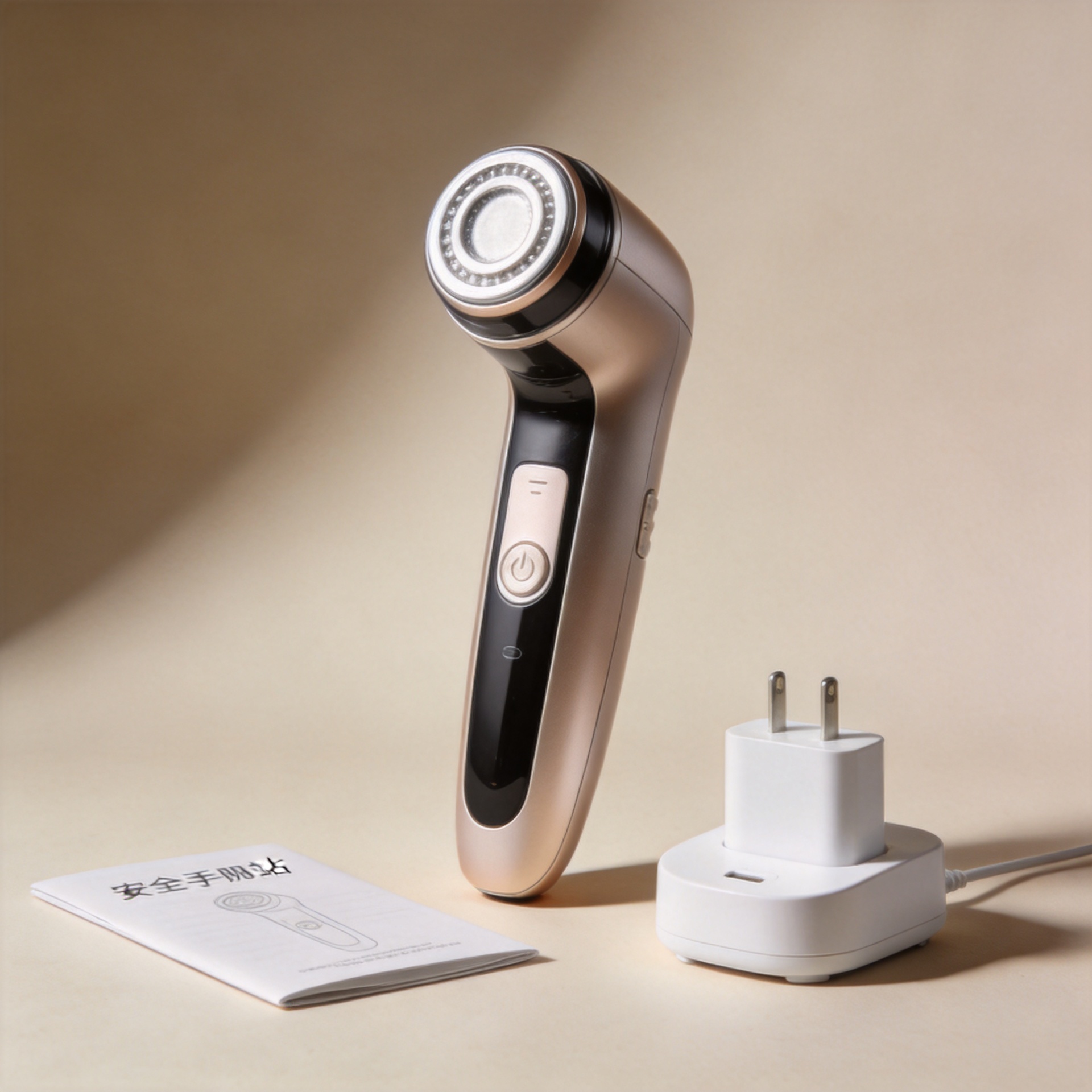
Buying home use beauty equipment can feel more technical than expected. One listing may promise warmth, light, vibration, or microcurrent, while another highlights a sleek shape and a long feature list. Safety is a more useful place to begin. As a technical advisor who helps people compare at-home devices, I suggest looking past the headline claim and asking whether the device gives an ordinary person clear, practical ways to use it safely.
A good purchase decision is not about finding the most complicated device. It is about finding home use beauty equipment whose instructions, controls, construction, and limits make sense for your skin, routine, and home environment. The checklist below is educational rather than medical advice; follow the product’s own instructions and consult a qualified clinician when your health situation or skin condition makes suitability uncertain.
The instruction manual is a safety feature in its own right. Before buying home use beauty equipment, look for a version of the instructions that is specific enough to answer basic questions: what area may be treated, how long a session should last, how often the device may be used, what preparation is required, and how to clean it. Vague directions such as “use as needed” are not as helpful as step-by-step limits.
Also check that warnings, precautions, and contraindications are easy to find. Regulatory guidance for patient-facing device information treats these sections as essential: they explain who should not use a device, what risks may apply, and what a user should do if a problem occurs. That does not mean every beauty tool is a medical device or that every label has the same requirements. It does mean that clear boundaries are a positive sign.
Many problems with home use beauty equipment come from applying too much intensity, using it for too long, or treating an unsuitable area. Controls should help prevent those mistakes rather than assume the user will get every detail right on the first try.
Useful safeguards may include a limited set of intensity levels, a default low setting, a visible session timer, an automatic shutoff, and a treatment-area guide. For heat-, energy-, or current-based tools, check whether the instructions explain how to begin conservatively and when to stop. A higher setting is not automatically a better setting; skin tolerance, treatment area, and the device’s intended use all matter.
A particularly practical feature is feedback the user can understand. It might be a status light, a clear battery indicator, a lock that prevents accidental activation, or an alert when contact is poor. The goal is not to collect features; it is to make home use beauty equipment easier to operate predictably.
At home, the user, the device, and the environment all interact. That is why the physical condition of home use beauty equipment matters as much as a product description. Before first use and before charging, inspect the casing, plug, cable, connector, and charging dock. Do not use a device with a frayed lead, loose connection, cracked housing, unusual odor, swollen battery area, or unexplained overheating.
Read the charging instructions closely. Use the supplied or maker-approved power accessory when the manual requires it, keep electrical parts dry unless the instructions explicitly say they are water-resistant for the intended use, and do not charge on soft bedding or around moisture. If the device becomes unusually hot, repeatedly loses power, or behaves inconsistently, stop using it and contact the seller or manufacturer through the stated support route.
For tools used near water, distinguish “easy to clean” from “safe to immerse.” A sealed treatment head and a fully submersible charging body are not the same thing. This small distinction prevents a common, avoidable error.
Skin-contact surfaces should be smooth, intact, and cleanable according to the instructions. For home use beauty equipment with removable heads, brushes, or caps, check whether replacement and cleaning guidance is available. Avoid sharing contact parts unless the manufacturer explicitly permits it and gives a disinfection process.
Pay attention to materials and cleaning agents. If you know you react to certain materials or skincare ingredients, review the contact materials and any required gel or serum before use. Do not apply a device over open wounds, active irritation, or an area that feels unusually sensitive unless its instructions and a suitable healthcare professional tell you otherwise. If your skin barrier is already compromised, pausing first is often more sensible than trying to “treat through” discomfort.
Even well-designed home use beauty equipment is not appropriate for every person or every day. The manual should help you identify when to avoid use, but it cannot replace individualized advice. Check its restrictions if you have a known skin condition, a recent cosmetic procedure, implanted electronic equipment, altered sensation, a history of light sensitivity, or questions about pregnancy, medication, or a medical condition.
Here is a simple self-check: can you explain the device’s intended use, your planned setting, the session limit, the cleaning method, and the reason you would stop? If not, pause and get the missing information before switching it on. Put simply, confidence should come from understanding the instructions, not from assuming that a home device is harmless.
Well-designed home use beauty equipment does not ask users to guess at safety. It pairs sensible design with readable instructions, clear limits, and support after purchase. Compare those fundamentals before comparing cosmetic claims, and you will be better prepared to choose a device you can use with care.

2026/10/30
Discover why in-house mold development helps an RF beauty device manufacturer improve product consistency, iteration speed, tooling control, and production readiness.

2026/10/30
Learn how to verify an RF beauty device manufacturer's R&D and prototyping capabilities using practical engineering workflows and audit checklists.

2026/10/30
Learn what shapes MOQ when choosing an RF beauty device manufacturer and how to plan a lower-risk first order with balanced platform and customization.

2026/10/30
Use this RF beauty device manufacturer evaluation checklist to compare safety evidence, OEM and ODM capability, quality control, and launch readiness.

2026/10/30
See how technology makes beauty at home more guided, consistent, and informed—plus a practical checklist for choosing devices wisely.

2026/10/30
Explore how AI and smart devices shape the future of beauty with responsive routines, clear guidance, trustworthy design, and user-controlled care.

Ideal for daily facial care routines, providing easy-to-use beauty solutions at home.

Perfect for spas and salons’ frequent treatments, enhancing client experiences and results.

Supports dermatologists with advanced devices for professional skin therapy sessions.

Delivers innovative solutions for full-body massage and relaxation with home devices.

Features anti-aging technologies to help reduce wrinkles and stimulate skin vitality.

Specialized devices for safe and effective hair removal suitable for home or clinic use.

Our customers love the Perfect Idea beauty devices. Quality, packaging, and results are all outstanding. We saw increased repeat sales after adding their facial cleansers to our lineup. Their support team is responsive and reliable.

Perfect Idea brings innovation and reliability to home beauty appliances. Our collaboration introduced their massage tools to Japanese women, boosting customer satisfaction and growing our brand trust across the region.

We partnered with Shenzhen Perfect Idea Tech for their beauty equipment. The shipping was fast and every product matched our expectations. Their home-use massagers are especially popular with local salons and home users.

The stylish packaging and attractive design make Perfect Idea stand out. French consumers appreciate the easy instructions and visible results. Communication was efficient and orders always arrived on time.

Perfect Idea home use personal care devices have become a favorite with our clients. The beauty device line offers quality at a reasonable price, and technical training for our staff made onboarding easy.

We selected Perfect Idea for our beauty product portfolio and have seen very positive feedback from our customers. Products are easy to market online and the customer support is reliable and helpful.
