 EN
Home Skincare
Ideal for daily facial care routines, providing easy-to-use beauty solutions at home.

2026/10/08
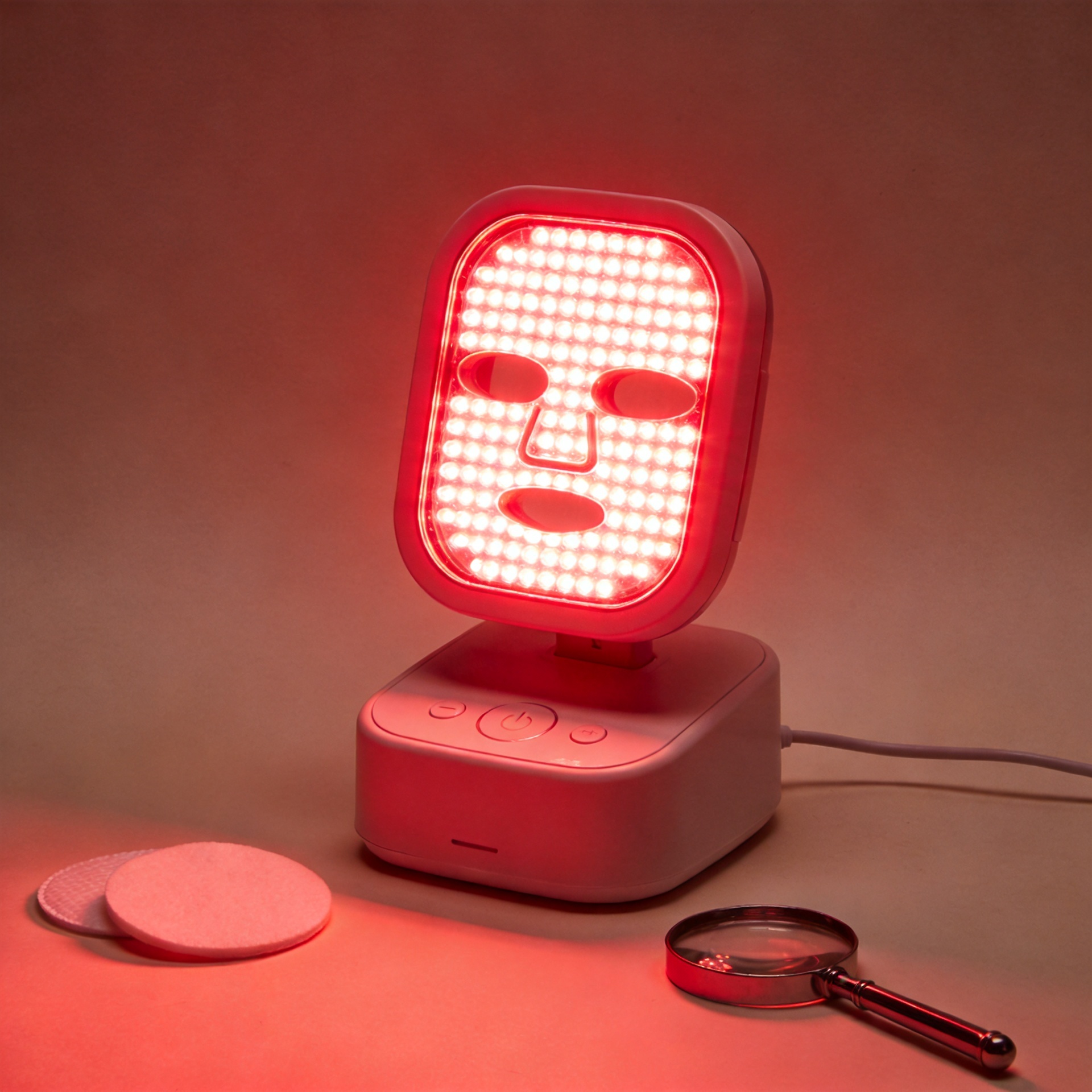
For an LED face device aimed at visible signs of aging, there is no single magic color. The most practical starting point is a well-designed combination of red light in the roughly 630–660 nm range and near-infrared (NIR) light in the roughly 830–850 nm range. That answer needs an important qualifier: an the spectrum is only one part of a useful device. Irradiance, fluence, treatment time, fit, eye protection, and a realistic routine all influence the experience.
As a skin-care professional, I would frame the choice this way: red and NIR are the wavelengths most often discussed for a home LED face anti-aging program because they are used in photobiomodulation research. They are not a promise to erase wrinkles, replace clinical care, or make every user respond the same way. A thoughtful spectrum helps set a credible foundation; consistent, safe use and appropriate expectations do the rest.
For an anti-aging-focused LED face product, look first for red light around 630–660 nm, often paired with NIR around 830–850 nm. Red light is generally described as acting more superficially, while NIR is commonly used when a design seeks deeper tissue reach. Together, these ranges make more sense than choosing a device solely because it lists many colors.
That does not mean every LED face mask needs the same wavelength mix or that a higher number of LEDs automatically means better results. Light output must be delivered evenly and comfortably to the face. A device with transparent specifications and sensible instructions is more useful than one that relies on dramatic before-and-after language.
Red light in the 630–660 nm neighborhood is the core option people usually mean when they ask about an LED face device for fine lines, texture, and a healthier-looking complexion. Reviews of photobiomodulation commonly discuss this red range in relation to surface-oriented skin goals and cellular signaling. In everyday language, it is the range most closely associated with a gradual, non-invasive skin-rejuvenation routine.
For product developers and buyers, the useful lesson is not that 630 nm or 660 nm is universally superior. Rather, a red-light setting should be specified clearly, delivered consistently, and paired with directions that help users avoid improvising longer sessions. If a supplier cannot explain its nominal wavelengths and use protocol, it is difficult to judge whether the spectrum supports the intended positioning.
NIR is invisible to the eye, so users may not notice it even when it is operating in a mask. Commonly discussed NIR ranges include approximately 830–850 nm. Evidence summaries often distinguish NIR from visible red light by its deeper penetration profile, which is why many anti-aging-oriented designs combine the two rather than treating blue, green, and red modes as interchangeable.
A red-plus-NIR LED face configuration can therefore be a reasonable design choice for an adult skin-care audience seeking gradual support for overall skin appearance. The wording matters. It is more responsible to say that a spectrum may support a cosmetic routine than to promise collagen changes, clinical treatment outcomes, or a promised reduction in wrinkles.
The spectrum on an LED face label is only the beginning. Four related questions are often more useful during evaluation:
Research reviews regularly point out that wavelength, irradiance, fluence, pulse structure, and treatment duration all affect photobiomodulation responses. This is a helpful corrective to parameter chasing. A nominal 660 nm LED face product cannot be evaluated responsibly without knowing how it delivers that light and how the user is instructed to use it.
Multi-color marketing can make an LED face device appear more advanced, but the colors answer different skin-care conversations. Blue light is commonly discussed in acne-oriented contexts; it is not the central reason to choose an anti-aging spectrum. Green, amber, and other colors may have a place in a broader product concept, yet the evidence base and specifications should be considered separately rather than bundled into an all-purpose claim.
If the primary goal is visible aging concerns, start with a credible red-plus-NIR LED face configuration. Then ask whether any additional modes have a clear role, clear parameters, and instructions that do not distract from the main routine. Feature stacking is not the same as a better treatment plan.
Whether you are buying for personal use or evaluating a private-label concept, use a short checklist. Confirm the stated red and NIR wavelengths; ask for the intended session length and frequency; examine mask fit and eye-comfort features; and review the documentation for warnings and care instructions. For an LED face product intended for international markets, documentation and market-specific compliance review should be part of the development process rather than an afterthought.
Home beauty devices are easy to overpromise. The more credible position is gradual maintenance: an LED face routine may complement sunscreen, gentle cleansing, moisturization, and professional advice when needed. It should not be presented as a substitute for diagnosing a skin condition or treating a medical problem.
Follow the manufacturer’s instructions rather than extending an LED face session in pursuit of faster results. Stop if you experience discomfort or an unexpected skin reaction. People with photosensitivity, those using medicines that increase light sensitivity, and anyone managing an eye or skin condition should seek qualified medical guidance before using light-based devices. Avoid looking directly into bright LEDs unless the product’s eye-safety instructions specifically allow it.
For brands, this is not merely legal fine print. Clear contraindications, understandable controls, and honest expectation-setting help create a better LED face experience and reduce the gap between marketing language and real-world use.
When comparing an LED face concept, ask the supplier to document the wavelength mix, output measurement method, session protocol, materials, and warnings in one specification package. This makes an LED face product easier to evaluate across samples and production batches.
For users, the same discipline is useful: select one LED face protocol, follow it consistently for the stated period, and assess comfort and visible skin appearance gradually. Do not combine an LED face session with aggressive exfoliation simply to chase a quicker change.
Finally, a comfortable fit supports adherence. If an LED face mask leaves large untreated gaps, creates pressure around the eyes, or has unclear controls, a technically appealing wavelength list may not translate into a practical routine.
The optimal LED face light spectrum for anti-aging is usually not one wavelength but a purposeful red-plus-NIR combination: roughly 630–660 nm red light with roughly 830–850 nm near-infrared light is a sound starting framework. Compare the whole system—spectrum, dose, coverage, protocol, comfort, and safety—before drawing conclusions. With a consistent routine and realistic expectations, an LED face device can be positioned as a supportive cosmetic-care tool rather than a shortcut or medical cure.

2026/10/30
Discover why in-house mold development helps an RF beauty device manufacturer improve product consistency, iteration speed, tooling control, and production readiness.

2026/10/30
Learn how to verify an RF beauty device manufacturer's R&D and prototyping capabilities using practical engineering workflows and audit checklists.

2026/10/30
Learn what shapes MOQ when choosing an RF beauty device manufacturer and how to plan a lower-risk first order with balanced platform and customization.

2026/10/30
Use this RF beauty device manufacturer evaluation checklist to compare safety evidence, OEM and ODM capability, quality control, and launch readiness.

2026/10/30
See how technology makes beauty at home more guided, consistent, and informed—plus a practical checklist for choosing devices wisely.

2026/10/30
Explore how AI and smart devices shape the future of beauty with responsive routines, clear guidance, trustworthy design, and user-controlled care.

Ideal for daily facial care routines, providing easy-to-use beauty solutions at home.

Perfect for spas and salons’ frequent treatments, enhancing client experiences and results.

Supports dermatologists with advanced devices for professional skin therapy sessions.

Delivers innovative solutions for full-body massage and relaxation with home devices.

Features anti-aging technologies to help reduce wrinkles and stimulate skin vitality.

Specialized devices for safe and effective hair removal suitable for home or clinic use.

Our customers love the Perfect Idea beauty devices. Quality, packaging, and results are all outstanding. We saw increased repeat sales after adding their facial cleansers to our lineup. Their support team is responsive and reliable.

Perfect Idea brings innovation and reliability to home beauty appliances. Our collaboration introduced their massage tools to Japanese women, boosting customer satisfaction and growing our brand trust across the region.

We partnered with Shenzhen Perfect Idea Tech for their beauty equipment. The shipping was fast and every product matched our expectations. Their home-use massagers are especially popular with local salons and home users.

The stylish packaging and attractive design make Perfect Idea stand out. French consumers appreciate the easy instructions and visible results. Communication was efficient and orders always arrived on time.

Perfect Idea home use personal care devices have become a favorite with our clients. The beauty device line offers quality at a reasonable price, and technical training for our staff made onboarding easy.

We selected Perfect Idea for our beauty product portfolio and have seen very positive feedback from our customers. Products are easy to market online and the customer support is reliable and helpful.
