 EN
Home Skincare
Ideal for daily facial care routines, providing easy-to-use beauty solutions at home.

2026/10/21
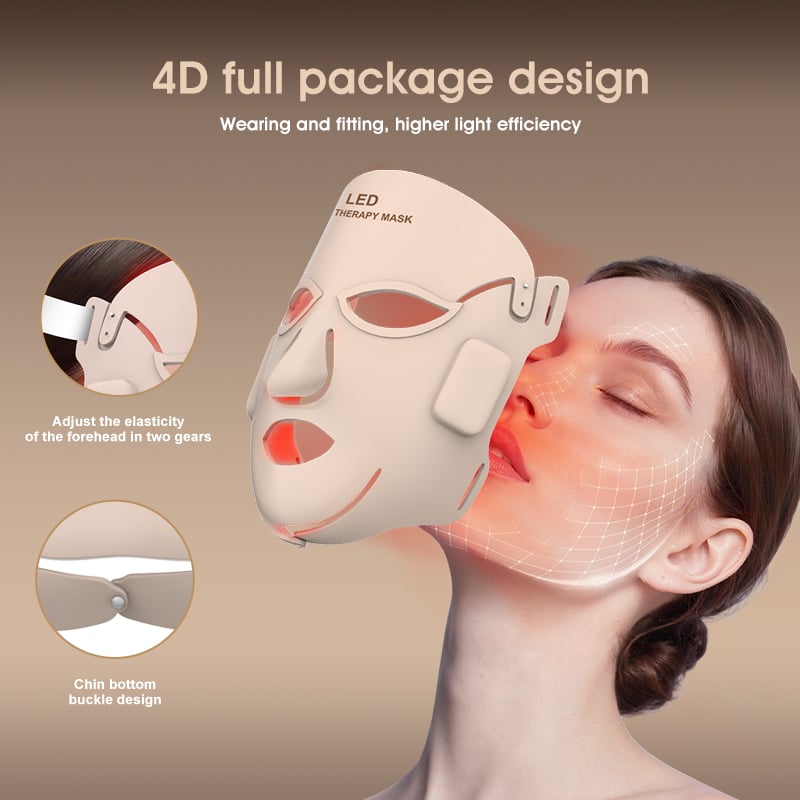
A light panel and an LED mask both place light-based care within a home routine, but they are built for different jobs. The shortest answer is that a light panel is usually a freestanding device that can be positioned for a face, scalp, or larger body area, while an LED mask sits against or close to the face for a hands-free facial session. Neither format is automatically “better.” The useful choice depends on the area you want to address, the routine you can repeat, and the instructions supplied with the device.
As a beauty-device technical consultant, I suggest starting with geometry rather than marketing language. A panel changes how you position yourself; an LED mask changes how you wear the device. That difference affects coverage, setup, comfort, storage, and the way you compare specifications.
| Decision factor | Red light therapy panel | LED mask |
|---|---|---|
| Typical format | Stationary or stand-mounted light source used at a chosen distance | Wearable face-shaped device held close to the skin |
| Practical coverage | Can be aimed at the face, scalp, neck, torso, limbs, or another selected area | Primarily designed around facial coverage; some designs extend toward the neck |
| Routine style | Requires positioning, distance control, and a place to use it | Hands-free once fitted, often easier to combine with quiet seated time |
| Comparison priority | Coverage, distance guidance, stability, output information, and room setup | Fit, comfort, eye-area design, charging, controls, and facial coverage |
The table is a planning tool, not a promise about results. A red light therapy panel may be more flexible because you can aim it at different areas, yet that flexibility also means the user needs to follow the distance and session guidance carefully. A mask may be simpler to put on, but a poor fit or uncomfortable weight can make a supposedly convenient routine hard to maintain.
The clearest distinction is treatment area. A red light therapy panel generally has an open, flat light surface. You can sit or stand in front of it and adjust which part of the body faces the device. That makes a panel a practical format for someone who wants one device for facial care plus a broader area, such as the neck, chest, back, legs, or a joint area. The exact usable coverage still depends on the panel size, placement, and the manufacturer’s directions.
An LED mask has a narrower purpose: consistent placement around the face. Its shape can be useful when facial convenience is the priority. A red light therapy panel is not automatically a replacement for that close, face-specific routine. You do not need to hold a device at a particular angle, and the face remains in roughly the same relation to the LEDs during a session. On the other hand, a facial mask cannot simply become a body device because the format is constrained by its size and fit.
So, if you are comparing a panel with an LED mask only for facial use, coverage alone may not settle the decision. If you expect to use the device beyond the face, a panel usually gives you more positioning options.
A panel is normally used from a specified distance rather than pressed against the skin. That is why the manual for a red light therapy panel matters: distance, angle, session length, and positioning may all affect how the device is intended to be used. Do not assume that moving closer, staying longer, or choosing a larger panel will produce a better outcome. More is not automatically better, especially when the product instructions set clear limits.
With an LED mask, fit replaces distance as the everyday concern. Check whether the mask sits comfortably at the bridge of the nose, whether straps feel stable, and whether the eye area is designed in a way you can tolerate. Small practical details matter. A mask that leaves pressure marks or slides during a session can become a drawer item, even if its specification sheet looks strong.
For many households, this is the real trade-off: a panel asks for a dedicated spot and a few minutes of positioning, whereas a mask asks you to accept something on your face. Be honest about which friction you are more likely to repeat several times a week.
Shoppers often start with wavelength labels, LED counts, or irradiance claims. Those details can be relevant, but a red light therapy panel and a mask should not be judged by one headline number alone. A panel’s stated output may be measured at a particular distance; a mask’s design may distribute LEDs across a much smaller, curved area. Without knowing the measurement conditions, the figures are not directly interchangeable.
When comparing a panel, ask for the distance at which output is stated, the recommended session protocol, electrical information, operating instructions, and any safety warnings. For a red light therapy panel, documentation should make setup limits clear. For a mask, ask about facial fit, session controls, charging method, eye-area guidance, cleanability, and the same documentation around intended use. If a brand cannot explain how to use its product safely and consistently, a long feature list should not compensate for that gap.
Also separate device information from health claims. Red and near-infrared light are often discussed in wellness and skincare conversations, but an at-home device is not a substitute for medical assessment. Anyone with a diagnosed skin condition, photosensitivity, an eye concern, or a medication that may affect light sensitivity should seek appropriate professional advice before use.
A red light therapy panel can suit people who prefer an open setup. You can sit at a desk, read, or build a short routine around a chosen area, provided you follow the product’s safety guidance. Some users like that a red light therapy panel does not touch the face. Others find the setup inconvenient because it needs a stable surface, nearby power, and storage space.
An LED mask may work better for a person who values a contained facial ritual. It can feel more automatic: charge it, wear it, and follow the timer. But convenience is personal. The more suitable format is the one you can use comfortably and according to its instructions, not the one with the most dramatic advertisement.
In short, a panel is a flexible, broader-coverage format, while an LED mask is a close-fitting facial format. Decide from your intended area and daily habits first. Then compare the documentation carefully, use the device as directed, and give consistency more weight than a single impressive-looking specification.

2026/10/30
Discover why in-house mold development helps an RF beauty device manufacturer improve product consistency, iteration speed, tooling control, and production readiness.

2026/10/30
Learn how to verify an RF beauty device manufacturer's R&D and prototyping capabilities using practical engineering workflows and audit checklists.

2026/10/30
Learn what shapes MOQ when choosing an RF beauty device manufacturer and how to plan a lower-risk first order with balanced platform and customization.

2026/10/30
Use this RF beauty device manufacturer evaluation checklist to compare safety evidence, OEM and ODM capability, quality control, and launch readiness.

2026/10/30
See how technology makes beauty at home more guided, consistent, and informed—plus a practical checklist for choosing devices wisely.

2026/10/30
Explore how AI and smart devices shape the future of beauty with responsive routines, clear guidance, trustworthy design, and user-controlled care.

Ideal for daily facial care routines, providing easy-to-use beauty solutions at home.

Perfect for spas and salons’ frequent treatments, enhancing client experiences and results.

Supports dermatologists with advanced devices for professional skin therapy sessions.

Delivers innovative solutions for full-body massage and relaxation with home devices.

Features anti-aging technologies to help reduce wrinkles and stimulate skin vitality.

Specialized devices for safe and effective hair removal suitable for home or clinic use.

Our customers love the Perfect Idea beauty devices. Quality, packaging, and results are all outstanding. We saw increased repeat sales after adding their facial cleansers to our lineup. Their support team is responsive and reliable.

Perfect Idea brings innovation and reliability to home beauty appliances. Our collaboration introduced their massage tools to Japanese women, boosting customer satisfaction and growing our brand trust across the region.

We partnered with Shenzhen Perfect Idea Tech for their beauty equipment. The shipping was fast and every product matched our expectations. Their home-use massagers are especially popular with local salons and home users.

The stylish packaging and attractive design make Perfect Idea stand out. French consumers appreciate the easy instructions and visible results. Communication was efficient and orders always arrived on time.

Perfect Idea home use personal care devices have become a favorite with our clients. The beauty device line offers quality at a reasonable price, and technical training for our staff made onboarding easy.

We selected Perfect Idea for our beauty product portfolio and have seen very positive feedback from our customers. Products are easy to market online and the customer support is reliable and helpful.
