 EN
Home Skincare
Ideal for daily facial care routines, providing easy-to-use beauty solutions at home.

2026/10/15
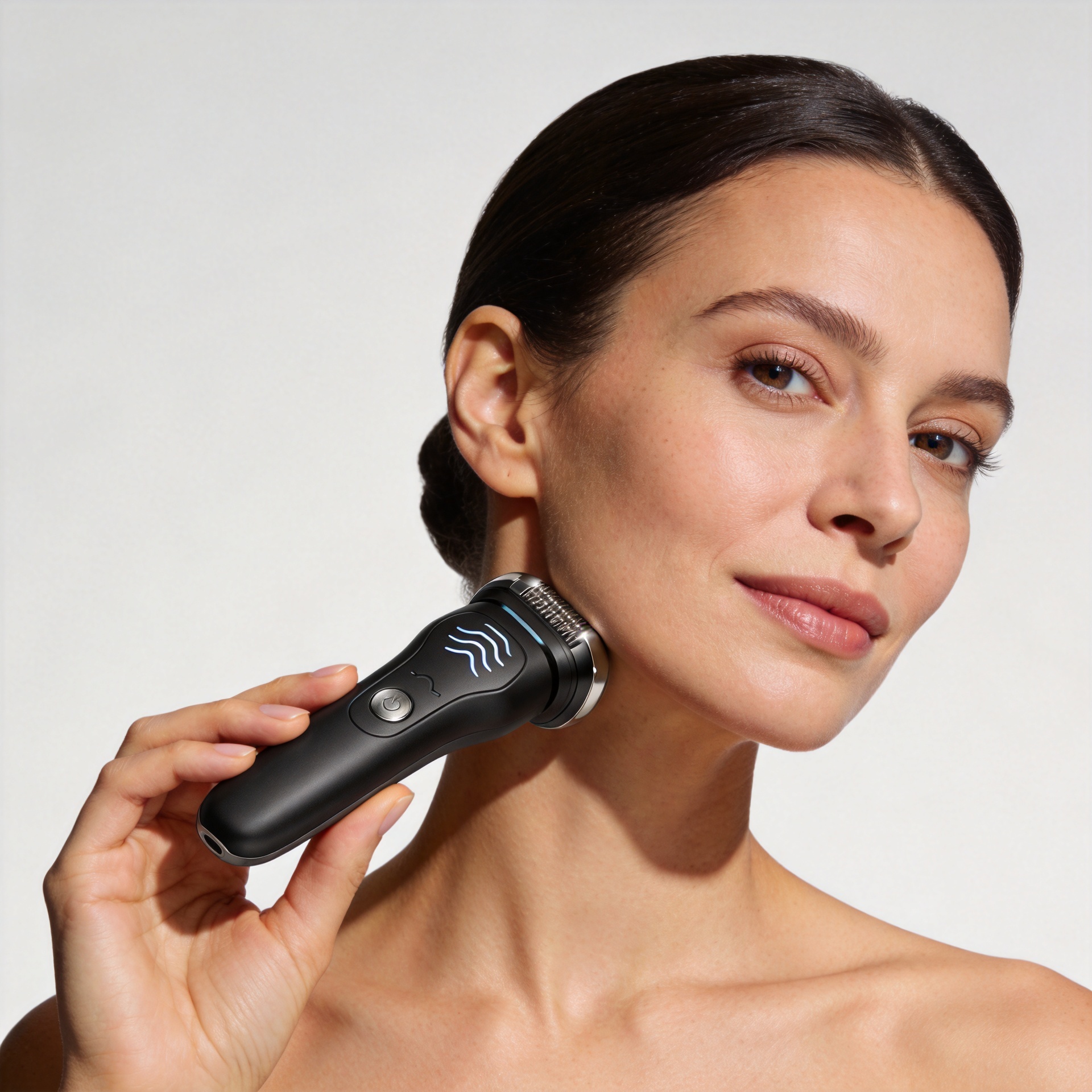
If you are comparing an EMS face device with a microcurrent tool, the names can make the choice sound simpler than it is. Both use low-level electrical stimulation at the skin’s surface, both are commonly sold for at-home facial routines, and some products combine more than one technology. Yet an EMS face device is generally positioned around muscle stimulation, while a microcurrent device is commonly positioned around very low-level current and a gentle facial-toning routine. The practical question is not which label is “better.” It is which technology, controls, instructions, and safety information match the result you hope to support.
For beauty buyers and product teams, the most useful comparison begins with the product’s actual specifications and intended use. A label alone does not tell you the waveform, output, electrode placement, treatment program, or the evidence behind a claim. That matters because the EMS face category is not one uniform treatment, and neither is the microcurrent category.
| Question | EMS face devices | Microcurrent devices |
|---|---|---|
| Typical positioning | Electrical muscle stimulation; often framed around facial muscle activation and contour-focused routines. | Very low-level current; often framed around a gentle toning or skin-care routine. |
| What you may feel | A noticeable pulse, tapping, or contraction-like sensation depending on the program and settings. | A mild tingling sensation or little sensation when contact and conductive medium are adequate. |
| Buying priority | Clear intensity controls, placement guidance, and a conservative ramp-up plan. | Reliable conductive-medium instructions, gliding technique, and consistent contact. |
| Expectation to avoid | Do not equate “stronger” with safer, better, or permanent results. | Do not equate a gentle sensation with a permanent lifting result. |
EMS stands for electrical muscle stimulation. In an EMS face routine, the device is designed to deliver electrical pulses through contact points on the face. Depending on its design and settings, a user may feel a rhythmic twitching, tapping, or brief contraction-like sensation. The intended emphasis is usually the facial-muscle side of a contouring routine rather than a topical skin-care step alone.
That description should not be turned into a promise of a surgical-style lift. Facial anatomy, electrode placement, output settings, regularity of use, and individual sensitivity all affect what a person experiences. An EMS face device can be a category worth considering when a shopper wants a more perceptible stimulation program, but the instruction manual should explain exactly where it may be used and how long a session lasts.
Microcurrent tools use a very low-level electrical current and are often used with a conductive gel or serum. The medium is not an optional marketing accessory: it helps support even contact and smoother gliding across the skin. A well-designed microcurrent routine usually depends on slow, repeatable passes and following the device’s stated sequence rather than pressing harder or increasing session length.
The boundary between microcurrent and an EMS face device can be blurred in retail language. Some devices include multiple modes, and brands may use broad phrases such as “toning,” “lifting,” or “sculpting” for different technologies. Instead of assuming that every microcurrent tool feels identical or every EMS face device has the same intensity, compare the manual, treatment modes, electrode design, and listed contraindications.
Search results for EMS face products frequently place EMS, microcurrent, LED, and other beauty technologies in the same shopping category. That is helpful for browsing, but it can blur important distinctions. A product that mentions both terms may be a multifunction device, or it may use one term loosely in its marketing. Ask the seller or manufacturer for the operating modes and intended treatment areas before treating the names as interchangeable.
For a private-label or OEM evaluation, this is also a documentation issue. A responsible supplier discussion should cover the device’s intended use, user instructions, warnings, charging and cleaning guidance, packaging claims, and the markets where it will be sold. BEPERFECT develops home beauty devices for global brand customers, so clear product positioning and documentation should be considered part of the product decision, not an afterthought.
Choose based on the routine you will realistically follow. A microcurrent tool may suit someone who prefers a very gentle, gel-assisted glide and wants a skin-care-adjacent ritual. An EMS face device may suit someone comfortable with a more noticeable stimulation sensation and a program that focuses on facial muscle activation. Neither choice replaces sunscreen, a basic skin-care routine, sleep, nutrition, or professional medical advice.
Electrical facial devices are not appropriate for every person or every situation. FDA guidance for powered muscle stimulators identifies cardiac demand pacemakers as a contraindication and warns against stimulation over swollen, infected, or inflamed areas or skin eruptions. That guidance does not replace the instructions for a particular consumer device, but it illustrates why a careful EMS face purchase should begin with the manual—not a social-media demonstration.
Pause and seek advice from a qualified clinician when you have an implanted electronic device, a relevant medical condition, recent procedures, unusual skin sensitivity, or uncertainty about a product’s warnings. Use only on clean, intact skin in the areas specified by the manufacturer. If a session is painful, causes persistent irritation, or feels wrong, stop using the device. More intensity is not a shortcut to better results.
The difference between an EMS face device and a microcurrent device is mainly about the way the product is designed and positioned to deliver electrical stimulation, not a universal ranking of one technology over the other. EMS is commonly associated with muscle stimulation and may feel more noticeable; microcurrent is commonly associated with a very low-level, gel-assisted facial routine. Read the exact model’s instructions, start conservatively, and make safety information the deciding factor. That approach gives you a much better basis for choosing an EMS face or microcurrent device than the label alone.

2026/10/30
Discover why in-house mold development helps an RF beauty device manufacturer improve product consistency, iteration speed, tooling control, and production readiness.

2026/10/30
Learn how to verify an RF beauty device manufacturer's R&D and prototyping capabilities using practical engineering workflows and audit checklists.

2026/10/30
Learn what shapes MOQ when choosing an RF beauty device manufacturer and how to plan a lower-risk first order with balanced platform and customization.

2026/10/30
Use this RF beauty device manufacturer evaluation checklist to compare safety evidence, OEM and ODM capability, quality control, and launch readiness.

2026/10/30
See how technology makes beauty at home more guided, consistent, and informed—plus a practical checklist for choosing devices wisely.

2026/10/30
Explore how AI and smart devices shape the future of beauty with responsive routines, clear guidance, trustworthy design, and user-controlled care.

Ideal for daily facial care routines, providing easy-to-use beauty solutions at home.

Perfect for spas and salons’ frequent treatments, enhancing client experiences and results.

Supports dermatologists with advanced devices for professional skin therapy sessions.

Delivers innovative solutions for full-body massage and relaxation with home devices.

Features anti-aging technologies to help reduce wrinkles and stimulate skin vitality.

Specialized devices for safe and effective hair removal suitable for home or clinic use.

Our customers love the Perfect Idea beauty devices. Quality, packaging, and results are all outstanding. We saw increased repeat sales after adding their facial cleansers to our lineup. Their support team is responsive and reliable.

Perfect Idea brings innovation and reliability to home beauty appliances. Our collaboration introduced their massage tools to Japanese women, boosting customer satisfaction and growing our brand trust across the region.

We partnered with Shenzhen Perfect Idea Tech for their beauty equipment. The shipping was fast and every product matched our expectations. Their home-use massagers are especially popular with local salons and home users.

The stylish packaging and attractive design make Perfect Idea stand out. French consumers appreciate the easy instructions and visible results. Communication was efficient and orders always arrived on time.

Perfect Idea home use personal care devices have become a favorite with our clients. The beauty device line offers quality at a reasonable price, and technical training for our staff made onboarding easy.

We selected Perfect Idea for our beauty product portfolio and have seen very positive feedback from our customers. Products are easy to market online and the customer support is reliable and helpful.
