 EN
Home Skincare
Ideal for daily facial care routines, providing easy-to-use beauty solutions at home.

2026/09/20
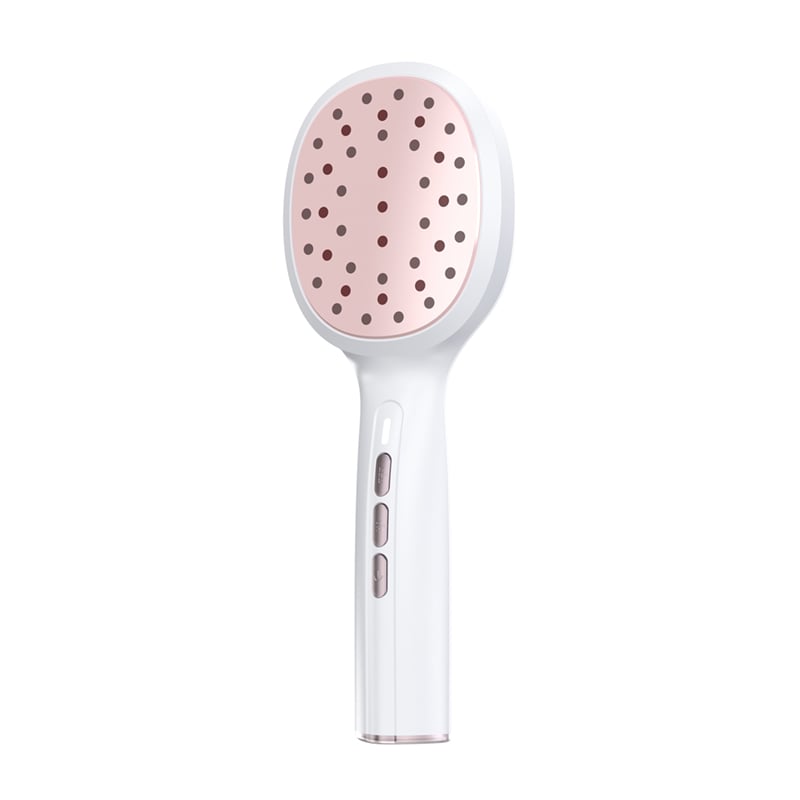
For anyone evaluating an LED hair growth cap device, the useful question is not whether red light sounds plausible. It is whether a device has been studied in people with the same type of hair loss, using a comparable light source and treatment schedule. The clinical literature on low-level light therapy (LLLT), also called photobiomodulation, is encouraging for androgenetic alopecia, but it does not make every cap equally proven.
As a practical way to assess home beauty technology, start with reproducible outcomes rather than promotional before-and-after images. The more reliable studies count hairs, assess density or shaft diameter, use standardized photographs, and compare an active device with a sham device. Those details matter because pattern hair loss changes slowly and subjective impressions are easy to overread.
Clinical trials and systematic reviews suggest that low-level light therapy can improve hair-density-related outcomes in some men and women with androgenetic alopecia. A review and meta-analysis of randomized trials of FDA-cleared home-use light or laser devices reported a statistically significant advantage in hair density versus sham treatment, with a standardized mean difference of 1.27 (95% confidence interval 0.993 to 1.639).
That finding supports the treatment category; it is not a guarantee that a particular LED hair growth cap device will produce the same result. Studies vary in wavelength, energy delivery, treatment duration, device design, participant selection, and the outcome they measure. A cap should be judged against the evidence for its own configuration, not merely by the presence of red LEDs.
The more informative trials are randomized, double-blind, and sham-controlled. Participants are assigned to an active light device or an inactive look-alike device, and neither the participant nor the assessor should know which is which. This design helps separate a true treatment signal from expectation, changes in hair care, and the natural variability of hair shedding.
Several helmet- and cap-style studies in androgenetic alopecia have followed participants for roughly 16 to 24 weeks. Common endpoints include terminal-hair density, hair-shaft diameter, hair coverage, global photographic assessment, and participant-reported change. Across these studies, active low-level-light groups have often shown statistically better density or diameter outcomes than sham groups. A 24-week multicenter, sham-controlled trial, for example, is part of the evidence base cited in clinical reviews of LLLT for androgenetic alopecia.
These results are meaningful because they use objective or semi-objective measures. They are still limited: many studies are modest in size, protocols differ, and follow-up is often measured in months rather than years. The most defensible conclusion is that consistent use may help some appropriately selected people with pattern hair loss; it is not a promise of full regrowth.
Marketing language can blur important technical distinctions. “Red light,” “LED,” “laser,” and “LLLT” may appear together on a product page, but a clinical paper may have tested a specific combination of wavelengths, power output, treatment time, and scalp coverage. Some studies use laser diodes, some use LEDs, and some use mixed arrays. The evidence should be matched to the actual device rather than to a broad category label.
When reviewing an LED hair growth cap device, ask whether the manufacturer identifies the wavelengths, the number and type of emitters, session length, weekly schedule, and the clinical study behind the claim. A claim based on a different device or a different protocol is weaker than a study of the exact model. It can still be relevant background, but it should not be presented as direct proof.
One 2021 evidence review of FDA-cleared home-use devices found that the available trials generally reported improved density compared with sham treatment. That is useful context, but the studies do not establish one universal percentage improvement for all users. Individual response can vary with the stage of miniaturization, diagnosis, concurrent treatment, and whether the recommended routine is followed.
For U.S. consumers, a device may be described as FDA cleared through the 510(k) pathway. Clearance is different from FDA approval of a drug. It can be an important product-specific checkpoint, but it should not be read as proof that every generic cap has been independently tested in a large clinical trial.
A sensible review asks for the device’s cleared indication, the exact model covered, and the evidence supporting the claimed use. Be careful with broad phrases such as “clinically proven” when they do not name the study, the population, the duration, or the outcome. Transparent documentation is more useful than a large percentage claim without a comparator.
The current clinical picture is most relevant to adults with androgenetic alopecia, often called male- or female-pattern hair loss. An LED hair growth cap device may be considered as a non-drug adjunct or as part of a plan discussed with a dermatologist. It should not delay evaluation when hair loss is sudden, patchy, painful, associated with scalp inflammation, or accompanied by other symptoms. Those patterns can have causes that light therapy will not address.
People using treatments such as topical minoxidil should also ask a clinician how to coordinate their routine. Some studies examine light therapy alone, while others examine it alongside medication; those are different questions. A realistic goal is often stabilization or a modest density improvement in existing miniaturized follicles, not restoration of hair where follicles are no longer viable.
The clinical evidence behind an LED hair growth cap device is most accurately described as cautiously positive for pattern hair loss when the device and protocol resemble those used in controlled LLLT studies. Randomized sham-controlled trials and a meta-analysis support improvements in density-related measures for some users. The evidence does not mean that all caps are equivalent, that every type of hair loss will respond, or that a product can guarantee regrowth.
Choose claims that are specific, transparent, and tied to an identifiable device study. If the diagnosis is uncertain or the hair loss is progressing quickly, medical assessment comes first. That approach keeps the technology in proportion: a potentially useful tool for selected users, not a substitute for diagnosis or a promise of a particular outcome.

2026/10/30
Discover why in-house mold development helps an RF beauty device manufacturer improve product consistency, iteration speed, tooling control, and production readiness.

2026/10/30
Learn how to verify an RF beauty device manufacturer's R&D and prototyping capabilities using practical engineering workflows and audit checklists.

2026/10/30
Learn what shapes MOQ when choosing an RF beauty device manufacturer and how to plan a lower-risk first order with balanced platform and customization.

2026/10/30
Use this RF beauty device manufacturer evaluation checklist to compare safety evidence, OEM and ODM capability, quality control, and launch readiness.

2026/10/30
See how technology makes beauty at home more guided, consistent, and informed—plus a practical checklist for choosing devices wisely.

2026/10/30
Explore how AI and smart devices shape the future of beauty with responsive routines, clear guidance, trustworthy design, and user-controlled care.

Ideal for daily facial care routines, providing easy-to-use beauty solutions at home.

Perfect for spas and salons’ frequent treatments, enhancing client experiences and results.

Supports dermatologists with advanced devices for professional skin therapy sessions.

Delivers innovative solutions for full-body massage and relaxation with home devices.

Features anti-aging technologies to help reduce wrinkles and stimulate skin vitality.

Specialized devices for safe and effective hair removal suitable for home or clinic use.

Our customers love the Perfect Idea beauty devices. Quality, packaging, and results are all outstanding. We saw increased repeat sales after adding their facial cleansers to our lineup. Their support team is responsive and reliable.

Perfect Idea brings innovation and reliability to home beauty appliances. Our collaboration introduced their massage tools to Japanese women, boosting customer satisfaction and growing our brand trust across the region.

We partnered with Shenzhen Perfect Idea Tech for their beauty equipment. The shipping was fast and every product matched our expectations. Their home-use massagers are especially popular with local salons and home users.

The stylish packaging and attractive design make Perfect Idea stand out. French consumers appreciate the easy instructions and visible results. Communication was efficient and orders always arrived on time.

Perfect Idea home use personal care devices have become a favorite with our clients. The beauty device line offers quality at a reasonable price, and technical training for our staff made onboarding easy.

We selected Perfect Idea for our beauty product portfolio and have seen very positive feedback from our customers. Products are easy to market online and the customer support is reliable and helpful.
