 EN
Home Skincare
Ideal for daily facial care routines, providing easy-to-use beauty solutions at home.

2026/10/14
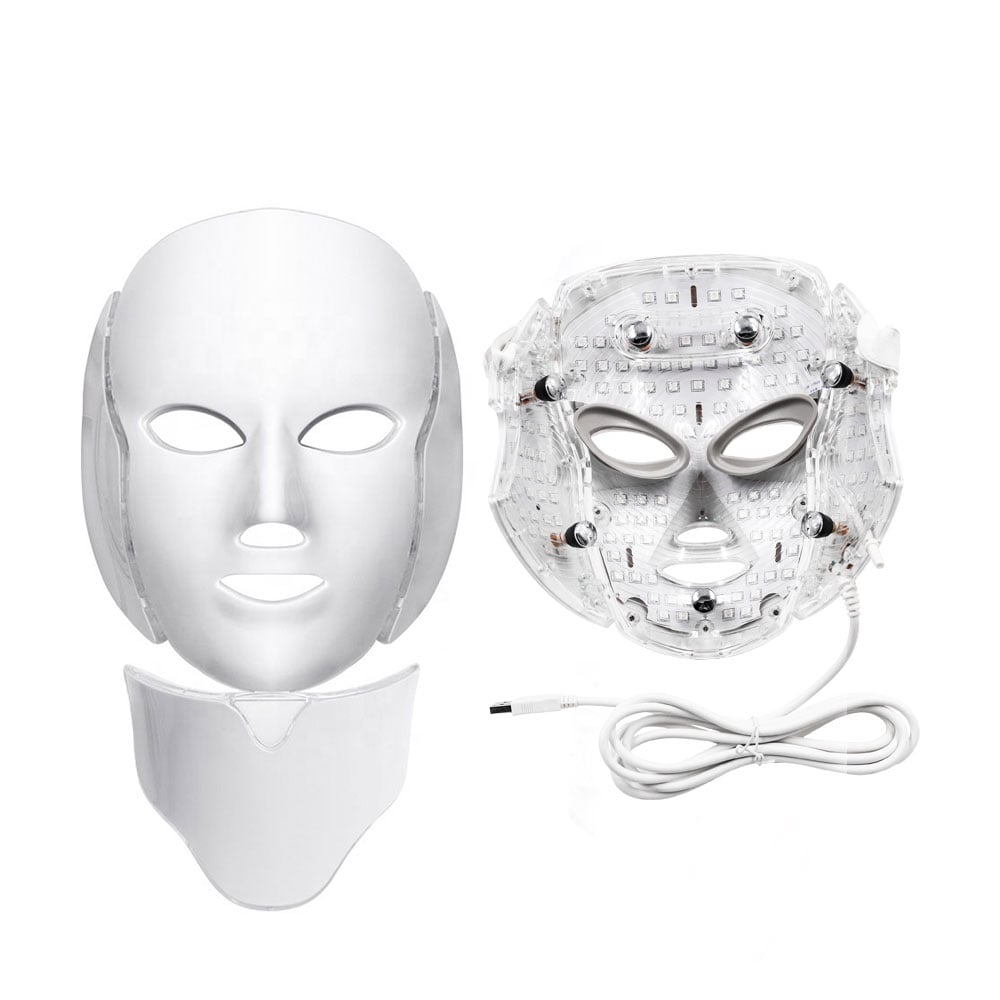
A red light therapy panel is easy to compare badly. A listing may lead with a dramatic wattage number, a long LED count, or a crowded wavelength list, while leaving out the measurement distance, beam spread, heat management, and treatment instructions that make those numbers useful. As a technical adviser who helps people compare home beauty devices, I start with the intended treatment area and routine rather than the brightest headline claim.
The right red light therapy panel is not necessarily the one with the most modes. It is the one whose documented output, coverage, controls, and safety information make sense for your goal and the way you can realistically use it. Use the checklist below to compare like with like.
Most red light therapy panel designs combine visible red light with near-infrared (NIR) light. In consumer discussions, red wavelengths around 630–660 nm are commonly associated with more superficial targets, while NIR bands around 810–850 nm are often selected when deeper tissue is part of the intended use. Those ranges provide context; they do not prove that a particular device will deliver a particular result.
When comparing a red light therapy panel, ask for the exact nominal wavelengths, the ratio of red to NIR LEDs, and whether the wavelengths can be controlled separately. Separate control can be useful when a user wants to avoid visible brightness at a particular time or tailor a session to a documented protocol. A panel with many wavelengths is not automatically better. What matters is whether the manufacturer explains why each wavelength is included and how it is delivered.
Irradiance, usually reported in mW/cm², is one of the most useful red light therapy panel specifications because it describes power arriving at a surface area. It is also one of the easiest figures to misuse. A peak measurement taken directly against the LEDs cannot be fairly compared with an average measurement at 6 or 12 inches away.
Look for a test distance, meter model or testing method, and preferably a map or average across the usable treatment area. Ask whether the reading combines red and NIR output and whether it was taken with a meter appropriate for the wavelengths. A credible red light therapy panel specification lets you see how output changes as you move away from the device. If the brand reports only electrical power consumption or a very large total watt figure, you still do not know the irradiance at your skin.
Output is not a treatment plan. Fluence, or energy density, is commonly expressed in J/cm² and is conceptually calculated from irradiance and time. For example, an irradiance of 20 mW/cm² equals 0.02 W/cm²; over 10 minutes (600 seconds), the simple surface calculation is 12 J/cm². Real-world dose can differ with distance, angle, skin reflection, and the device’s actual output, so follow the manufacturer’s instructions rather than treating this calculation as a prescription.
This matters because photobiomodulation research describes a biphasic dose response: more light is not reliably better. A good red light therapy panel provides a timer, clear distance guidance, and a usable protocol. That information is more actionable than a claim that the panel is “high power.”
Panel size determines how much of the body you can address without constantly repositioning. Measure the active LED area, not just the outer housing. Then compare it with your likely use: a compact red light therapy panel may suit face or joint sessions, while a larger format can reduce time spent treating larger areas.
Beam angle affects coverage and intensity distribution. A narrow beam can concentrate output at the center; a wider beam may cover more area at a given distance but lower intensity per square centimeter. Neither is universally superior. Look for a coverage diagram or independent-style map showing center-to-edge consistency. This prevents a common disappointment: buying a large-looking panel that performs unevenly at the distance needed for comfortable use.
An LED count by itself is incomplete. Ask what type of LEDs are used, how red and NIR emitters are arranged, whether dual-chip LEDs are being counted transparently, and how the optics shape the beam. For a red light therapy panel, the goal is not to chase the largest count; it is to understand how the arrangement supports even, repeatable coverage.
Also consider serviceability. A clear warranty, accessible support, and a documented replacement policy are practical specifications. They matter more on a device intended for frequent use than an impressive but unexplained component list.
Small usability details determine whether a red light therapy panel becomes part of a routine. Useful features include a stable stand or mounting option, adjustable intensity, separate red/NIR switching, a timer, ventilation that does not distract, and controls that can be used without looking directly at the LEDs. Remote or app functions may be convenient, but they are secondary to reliable core controls.
Consider heat at your intended treatment distance. Warmth may be expected from a high-output light source, but excessive discomfort can shorten sessions or push you farther away than the tested distance. Compare stated operating guidance, fan noise expectations, and room placement before treating convenience as an afterthought.
“Zero flicker,” “low EMF,” “medical grade,” and “FDA cleared” are not interchangeable labels. For any red light therapy panel, ask what was measured, under what conditions, and whether a report identifies the test method. A region-specific regulatory claim should be verifiable for the exact model and intended use; it should not be inferred from a related product or from a general discussion of light therapy.
Eye safety deserves the same care. Check whether the manual calls for protective eyewear, whether it is included, and whether the directions address distance and direct viewing. People who have photosensitivity, use photosensitizing medication, have an eye condition, are pregnant, or are managing a medical condition should seek advice from an appropriate clinician before using light-based devices.
The most useful red light therapy panel comparison is a documented one. Put each candidate’s irradiance at the same distance, active area, wavelength controls, timer range, warranty, and safety instructions into one table. Then choose the red light therapy panel that fits your treatment area and routine without relying on unverified output or outcome claims. That approach separates meaningful specifications from marketing shorthand and gives you a device you can use consistently and cautiously.

2026/10/30
Discover why in-house mold development helps an RF beauty device manufacturer improve product consistency, iteration speed, tooling control, and production readiness.

2026/10/30
Learn how to verify an RF beauty device manufacturer's R&D and prototyping capabilities using practical engineering workflows and audit checklists.

2026/10/30
Learn what shapes MOQ when choosing an RF beauty device manufacturer and how to plan a lower-risk first order with balanced platform and customization.

2026/10/30
Use this RF beauty device manufacturer evaluation checklist to compare safety evidence, OEM and ODM capability, quality control, and launch readiness.

2026/10/30
See how technology makes beauty at home more guided, consistent, and informed—plus a practical checklist for choosing devices wisely.

2026/10/30
Explore how AI and smart devices shape the future of beauty with responsive routines, clear guidance, trustworthy design, and user-controlled care.

Ideal for daily facial care routines, providing easy-to-use beauty solutions at home.

Perfect for spas and salons’ frequent treatments, enhancing client experiences and results.

Supports dermatologists with advanced devices for professional skin therapy sessions.

Delivers innovative solutions for full-body massage and relaxation with home devices.

Features anti-aging technologies to help reduce wrinkles and stimulate skin vitality.

Specialized devices for safe and effective hair removal suitable for home or clinic use.

Our customers love the Perfect Idea beauty devices. Quality, packaging, and results are all outstanding. We saw increased repeat sales after adding their facial cleansers to our lineup. Their support team is responsive and reliable.

Perfect Idea brings innovation and reliability to home beauty appliances. Our collaboration introduced their massage tools to Japanese women, boosting customer satisfaction and growing our brand trust across the region.

We partnered with Shenzhen Perfect Idea Tech for their beauty equipment. The shipping was fast and every product matched our expectations. Their home-use massagers are especially popular with local salons and home users.

The stylish packaging and attractive design make Perfect Idea stand out. French consumers appreciate the easy instructions and visible results. Communication was efficient and orders always arrived on time.

Perfect Idea home use personal care devices have become a favorite with our clients. The beauty device line offers quality at a reasonable price, and technical training for our staff made onboarding easy.

We selected Perfect Idea for our beauty product portfolio and have seen very positive feedback from our customers. Products are easy to market online and the customer support is reliable and helpful.
