 EN
Home Skincare
Ideal for daily facial care routines, providing easy-to-use beauty solutions at home.

2026/10/08
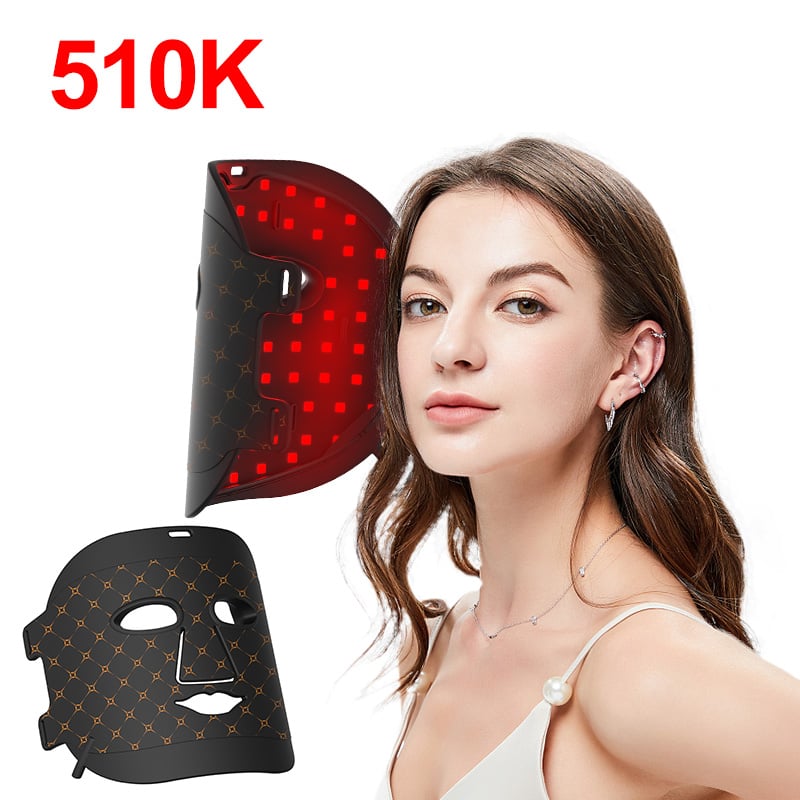
When people shop for an at-home LED facial device, color labels can sound more precise than they are. “Red,” “blue,” and “infrared” describe broad parts of the spectrum, while a useful comparison starts with the stated wavelength in nanometers (nm), the delivered dose, the schedule, and the device’s safety instructions. As a skin-management professional, I suggest treating an LED face routine as supportive cosmetic care—not a replacement for diagnosis or treatment of a persistent skin condition.
The practical ranges below are the ones most often encountered in photobiomodulation research and consumer-device specifications. They help explain why a blue-light setting is discussed differently from a red or near-infrared setting. They do not mean that every device within a range produces the same result.
Wavelength is the distance between light waves, measured in nm. It influences how light is absorbed and how deeply it can reach, but it is only one part of a device’s design. Irradiance, treatment time, total energy dose, distance from the skin, coverage, heat management, and consistency all change the real-world experience. That is why a long list of colors is not automatically a better LED face option.
For responsible comparison, look for a manufacturer that names the wavelengths rather than relying only on color marketing. Also check the instructions for session length, eye protection, contraindications, and the intended use. A comfortable schedule that you can follow consistently matters more than chasing the highest-looking number on a specification sheet.
Blue-light settings on a home LED device are commonly in the 405–420 nm neighborhood, although some systems may list nearby blue wavelengths. This range is studied because light-sensitive compounds associated with Cutibacterium acnes can respond to blue light. In practice, blue light is usually discussed for mild, acne-prone skin and oil-related breakouts rather than for lines or firmness.
That distinction is important: blue light does not make every blemish disappear, and acne has many causes. A blue-light program may be an adjunct to a clinician-approved routine, especially when breakouts are mild. Painful cysts, scarring, sudden adult acne, or a worsening rash deserve professional advice rather than more at-home sessions.
Blue light also needs sensible caution. Follow the device’s eye-protection instructions exactly, stop if irritation occurs, and seek advice if you use photosensitizing medicines or have a light-sensitive condition. For a light-therapy routine, more exposure is not automatically better.
Red light around 630–660 nm is one of the most familiar ranges in an LED mask. Research on red-light photobiomodulation often focuses on the appearance of fine lines, texture, and overall skin quality. Because red light reaches beyond the most superficial layers more readily than blue light, it is frequently positioned for mature-looking or stressed-looking skin.
A realistic expectation is gradual cosmetic support: some users may notice smoother-looking skin or a more even-looking glow with regular use, while others may see little change. A home device cannot erase deep wrinkles, replace sunscreen, or substitute for medically indicated procedures. Daily sun protection and a simple, tolerable skincare routine remain the foundation.
For brands and buyers evaluating a red-light program, the useful question is not merely “Does it have red LEDs?” Ask for the actual range, the recommended schedule, output information where available, and the evidence that matches that exact device or a genuinely comparable protocol.
Near-infrared (NIR) light is not visible to the eye, but it is often included beside red light in a facial LED mask. Consumer and clinical references commonly place NIR offerings around 810–850 nm; 830 nm is a frequently cited example. The red-plus-NIR combination is generally discussed in research on skin appearance, elasticity, and recovery-oriented photobiomodulation.
NIR should not be marketed as a shortcut to dramatic rejuvenation. It is better understood as one component of a controlled at-home protocol. Product claims should match the device’s supported use, and anyone with an active medical issue, a history of photosensitivity, or uncertainty about a medication should ask a qualified clinician before using a light-based device.
| Typical range | Common discussion area | What to keep in mind |
|---|---|---|
| 405–420 nm blue | Mild, acne-prone skin; bacteria- and inflammation-related support | Use only as directed; it is not a stand-alone cure for acne. |
| 630–660 nm red | Fine-line, texture, and overall skin-appearance support | Results depend on dose, consistency, and the specific device. |
| 810–850 nm near-infrared | Often paired with red for photobiomodulation and recovery-oriented routines | Invisible light still requires adherence to the manufacturer’s safety guidance. |
This map is a starting point for comparing a home LED product, not a prescription. Yellow, green, purple, and mixed-color modes appear in the marketplace too, but their claims and evidence are less uniform. Do not assume a color label has a single agreed clinical meaning.
Prioritize a device that clearly identifies a blue-light range near 405–420 nm and provides practical eye-safety guidance. If inflammatory breakouts persist, combine device research with dermatology advice rather than layering multiple strong home treatments at once.
Look first at red around 630–660 nm and, if relevant, a red-plus-NIR configuration around 810–850 nm. A well-designed LED routine should fit into a sustainable schedule, not encourage excessive sessions or unrealistic promises.
Start cautiously. Patch-test only if the manufacturer permits it, use the lowest appropriate schedule, and stop if your skin reacts. An LED face mask is not the right first response to an unexplained rash, severe rosacea flare, infection, or a suspicious lesion.
When you see an LED face label, compare the stated nm range with the concern you want to address. An LED face device that lists blue, red, or near-infrared output plainly is easier to evaluate than one that only lists colors. Keep the LED face session length within its instructions, and use the provided eye protection where applicable. If an LED face routine leaves skin uncomfortable, pause rather than increasing the frequency. A well-documented LED face device should make its intended schedule and precautions clear. For changing or severe symptoms, do not let an LED face purchase delay clinical advice. The most appropriate LED face choice is the one whose specifications, safety guidance, and expected benefit fit your situation.
The most useful wavelength shorthand is blue around 405–420 nm for acne-oriented discussions, red around 630–660 nm for visible-aging and texture discussions, and NIR around 810–850 nm when a red-plus-NIR approach is desired. Choose an LED face device by the complete specification and its safety guidance, not color claims alone. If your concern is severe, persistent, or medically diagnosed, put professional care ahead of an at-home LED face routine.

2026/10/30
Discover why in-house mold development helps an RF beauty device manufacturer improve product consistency, iteration speed, tooling control, and production readiness.

2026/10/30
Learn how to verify an RF beauty device manufacturer's R&D and prototyping capabilities using practical engineering workflows and audit checklists.

2026/10/30
Learn what shapes MOQ when choosing an RF beauty device manufacturer and how to plan a lower-risk first order with balanced platform and customization.

2026/10/30
Use this RF beauty device manufacturer evaluation checklist to compare safety evidence, OEM and ODM capability, quality control, and launch readiness.

2026/10/30
See how technology makes beauty at home more guided, consistent, and informed—plus a practical checklist for choosing devices wisely.

2026/10/30
Explore how AI and smart devices shape the future of beauty with responsive routines, clear guidance, trustworthy design, and user-controlled care.

Ideal for daily facial care routines, providing easy-to-use beauty solutions at home.

Perfect for spas and salons’ frequent treatments, enhancing client experiences and results.

Supports dermatologists with advanced devices for professional skin therapy sessions.

Delivers innovative solutions for full-body massage and relaxation with home devices.

Features anti-aging technologies to help reduce wrinkles and stimulate skin vitality.

Specialized devices for safe and effective hair removal suitable for home or clinic use.

Our customers love the Perfect Idea beauty devices. Quality, packaging, and results are all outstanding. We saw increased repeat sales after adding their facial cleansers to our lineup. Their support team is responsive and reliable.

Perfect Idea brings innovation and reliability to home beauty appliances. Our collaboration introduced their massage tools to Japanese women, boosting customer satisfaction and growing our brand trust across the region.

We partnered with Shenzhen Perfect Idea Tech for their beauty equipment. The shipping was fast and every product matched our expectations. Their home-use massagers are especially popular with local salons and home users.

The stylish packaging and attractive design make Perfect Idea stand out. French consumers appreciate the easy instructions and visible results. Communication was efficient and orders always arrived on time.

Perfect Idea home use personal care devices have become a favorite with our clients. The beauty device line offers quality at a reasonable price, and technical training for our staff made onboarding easy.

We selected Perfect Idea for our beauty product portfolio and have seen very positive feedback from our customers. Products are easy to market online and the customer support is reliable and helpful.
