 EN
Home Skincare
Ideal for daily facial care routines, providing easy-to-use beauty solutions at home.

2026/09/29
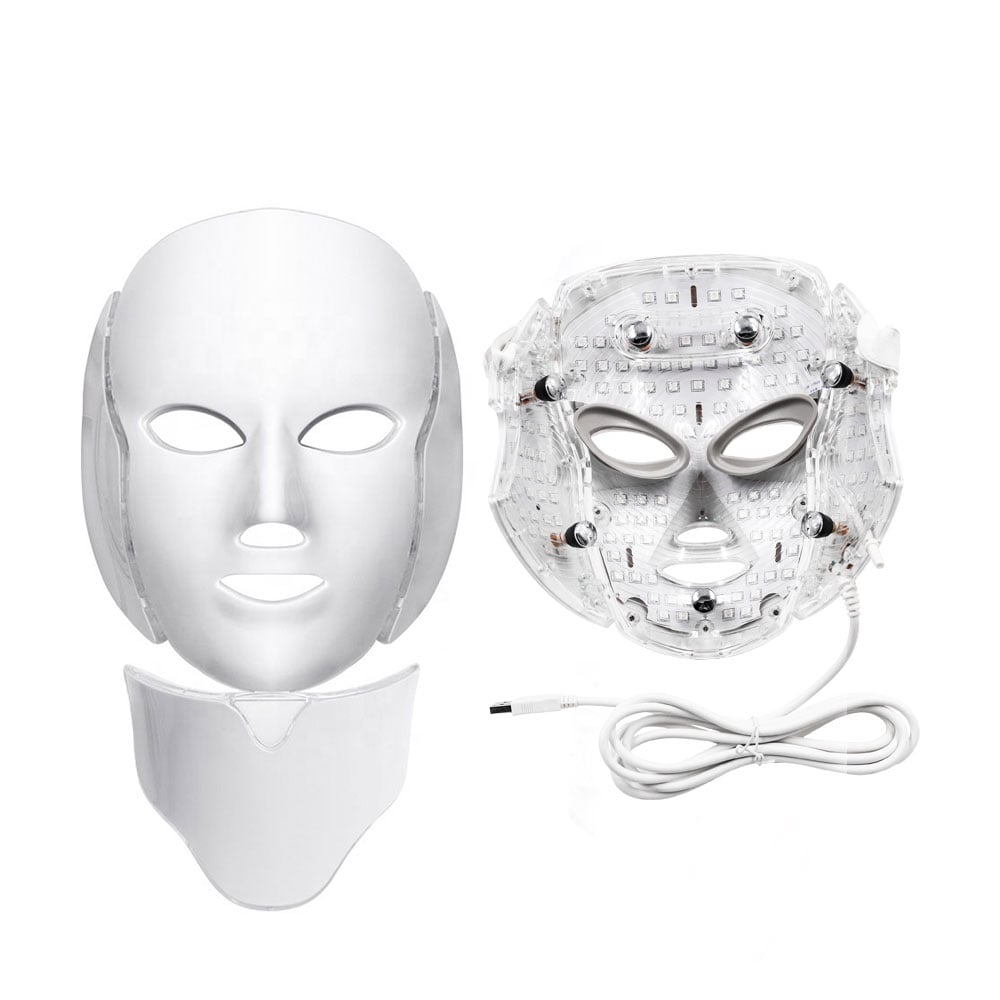
Choosing a Beauty equipment producer is not only a sourcing decision. For a clinic chain, distributor, or private-label brand, the choice between OEM and ODM affects who owns the design, how quickly a launch can move, what can be changed later, and how much technical responsibility stays with the buyer. The labels are often used loosely, so a practical comparison is more useful than a dictionary definition.
In brief, an OEM arrangement starts with the buyer’s defined product or specification and asks the factory to make it. An ODM arrangement starts with a producer’s existing platform or development capability and lets the buyer adapt, brand, or select it. Either model can be appropriate; the better fit depends on your product strategy and internal resources.
With OEM, the buyer normally brings a clear concept, industrial design, technical brief, or performance requirements. The Beauty equipment producer translates that package into a manufacturable product, sources components, builds units, tests agreed checkpoints, and packs the product under the buyer’s brand. The buyer has more influence over the specification, but must be ready to make more decisions.
With ODM, the Beauty equipment producer has already developed a base device or platform. The buyer selects from available functions, housing options, labeling, packaging, and sometimes limited configuration changes. This can reduce development time because the producer has already done much of the platform work. It also means that some core design choices may be shared with other customers or may be difficult to alter.
| Decision area | OEM model | ODM model |
|---|---|---|
| Starting point | Buyer-led specification | Producer-led platform |
| Design control | Usually higher for the buyer | Usually limited to agreed options |
| Speed to market | Can take longer because development is customized | Often faster when an existing platform fits |
| Up-front work | More buyer input on requirements and approvals | More reliance on the producer’s established package |
| Differentiation | Potentially stronger if the design is genuinely distinct | Depends on available customization and branding |
| Change control | Needs a detailed agreement between both parties | Needs clarity on what the platform owner may change |
This is the first issue many buyers should clarify with a Beauty equipment producer. “OEM” does not automatically mean the buyer owns every drawing, mold, firmware element, or production fixture. Likewise, “ODM” does not automatically mean the buyer has no rights to branding or packaging. Ownership depends on the contract and on what each party contributes.
Ask for a written schedule that separates: product appearance files, mechanical drawings, electronics and firmware, molds and fixtures, test methods, packaging artwork, and marketing claims. For every item, identify the owner, the permitted use, the handover conditions, and what happens if the relationship ends. A buyer that pays for custom tooling should also establish where it is stored, how it is maintained, and whether it can be used for another customer.
An OEM project asks the buyer to supply more direction. A capable Beauty equipment producer can advise on manufacturability, component availability, and assembly methods, yet the buyer still needs a disciplined approval path. Expect iterations around samples, materials, interfaces, packaging, and production checks. The advantage is a product that can align more closely with a defined brand position.
An ODM path can be more efficient when the buyer needs a proven product format and can accept the platform’s boundaries. It is useful for a new distributor testing demand, a salon brand expanding a range, or a company that wants to focus on sales, training, and service rather than device development. Fast is not the same as automatic: buyers still need to assess the version offered, approved configuration, labeling, instructions, and market requirements.
Not all customization changes the same thing. A Beauty equipment producer may offer cosmetic customization such as color, logo, carton, or user-interface language. Functional customization can include attachments, settings, protocols, or component substitutions. Exclusivity may concern a territory, a channel, an appearance, or a configuration. Each level has different cost, timing, and validation implications.
Before approving an ODM offer, request a list of changes that are standard options, changes that need engineering review, and changes the producer will not make. Before approving an OEM program, ask which requirements are still assumptions and which have been proven in samples. This avoids a common problem: treating a marketing mock-up as a production commitment.
Quality diligence should be equally serious in both models. A Beauty equipment producer should be able to explain its incoming inspection, assembly controls, final testing, nonconformance handling, and traceability approach in language that matches the product and destination market. Do not treat a generic certificate image as a complete answer. Review the documents relevant to the specific device, factory, and intended configuration.
Change control deserves special attention in ODM. If a component becomes unavailable, a platform owner may propose a substitution across several customers. Your agreement should state which changes require notice, which require approval, how samples are revalidated, and how the buyer receives revised records. OEM programs need the same discipline, especially where buyer-specified components or artwork are involved.
OEM may involve design work, engineering samples, custom tooling, and more approval cycles. Those investments can make sense when a brand expects volume or needs differentiation that a catalog device cannot provide. ODM can reduce initial development effort, but the buyer should still compare the total commercial picture: minimum order quantities, sample charges, spare parts, packaging, inspection, warranty handling, and future change costs.
Rather than asking only for a unit price, ask the Beauty equipment producer for a phased quotation. Separate recurring unit costs from one-time costs, list the assumptions behind each quote, and state the validity period. This makes competing offers easier to compare and prevents a low initial number from hiding later requirements.
Choose OEM when your team has a defined concept, can manage approvals, and needs meaningful control over the final product. Choose ODM when an existing platform meets your market needs and launch speed or lower development burden matters more than building a device from the ground up. Many mature buyers use both: ODM for proven range extensions and OEM for signature products.
The most reliable Beauty equipment producer relationship is built on explicit decisions rather than labels. Define the product boundary, responsibilities, rights, evidence, and approval process early. With that structure in place, OEM and ODM become workable operating models—not vague promises in a quotation.

2026/10/30
Discover why in-house mold development helps an RF beauty device manufacturer improve product consistency, iteration speed, tooling control, and production readiness.

2026/10/30
Learn how to verify an RF beauty device manufacturer's R&D and prototyping capabilities using practical engineering workflows and audit checklists.

2026/10/30
Learn what shapes MOQ when choosing an RF beauty device manufacturer and how to plan a lower-risk first order with balanced platform and customization.

2026/10/30
Use this RF beauty device manufacturer evaluation checklist to compare safety evidence, OEM and ODM capability, quality control, and launch readiness.

2026/10/30
See how technology makes beauty at home more guided, consistent, and informed—plus a practical checklist for choosing devices wisely.

2026/10/30
Explore how AI and smart devices shape the future of beauty with responsive routines, clear guidance, trustworthy design, and user-controlled care.

Ideal for daily facial care routines, providing easy-to-use beauty solutions at home.

Perfect for spas and salons’ frequent treatments, enhancing client experiences and results.

Supports dermatologists with advanced devices for professional skin therapy sessions.

Delivers innovative solutions for full-body massage and relaxation with home devices.

Features anti-aging technologies to help reduce wrinkles and stimulate skin vitality.

Specialized devices for safe and effective hair removal suitable for home or clinic use.

Our customers love the Perfect Idea beauty devices. Quality, packaging, and results are all outstanding. We saw increased repeat sales after adding their facial cleansers to our lineup. Their support team is responsive and reliable.

Perfect Idea brings innovation and reliability to home beauty appliances. Our collaboration introduced their massage tools to Japanese women, boosting customer satisfaction and growing our brand trust across the region.

We partnered with Shenzhen Perfect Idea Tech for their beauty equipment. The shipping was fast and every product matched our expectations. Their home-use massagers are especially popular with local salons and home users.

The stylish packaging and attractive design make Perfect Idea stand out. French consumers appreciate the easy instructions and visible results. Communication was efficient and orders always arrived on time.

Perfect Idea home use personal care devices have become a favorite with our clients. The beauty device line offers quality at a reasonable price, and technical training for our staff made onboarding easy.

We selected Perfect Idea for our beauty product portfolio and have seen very positive feedback from our customers. Products are easy to market online and the customer support is reliable and helpful.
