 EN
Home Skincare
Ideal for daily facial care routines, providing easy-to-use beauty solutions at home.

2026/09/17
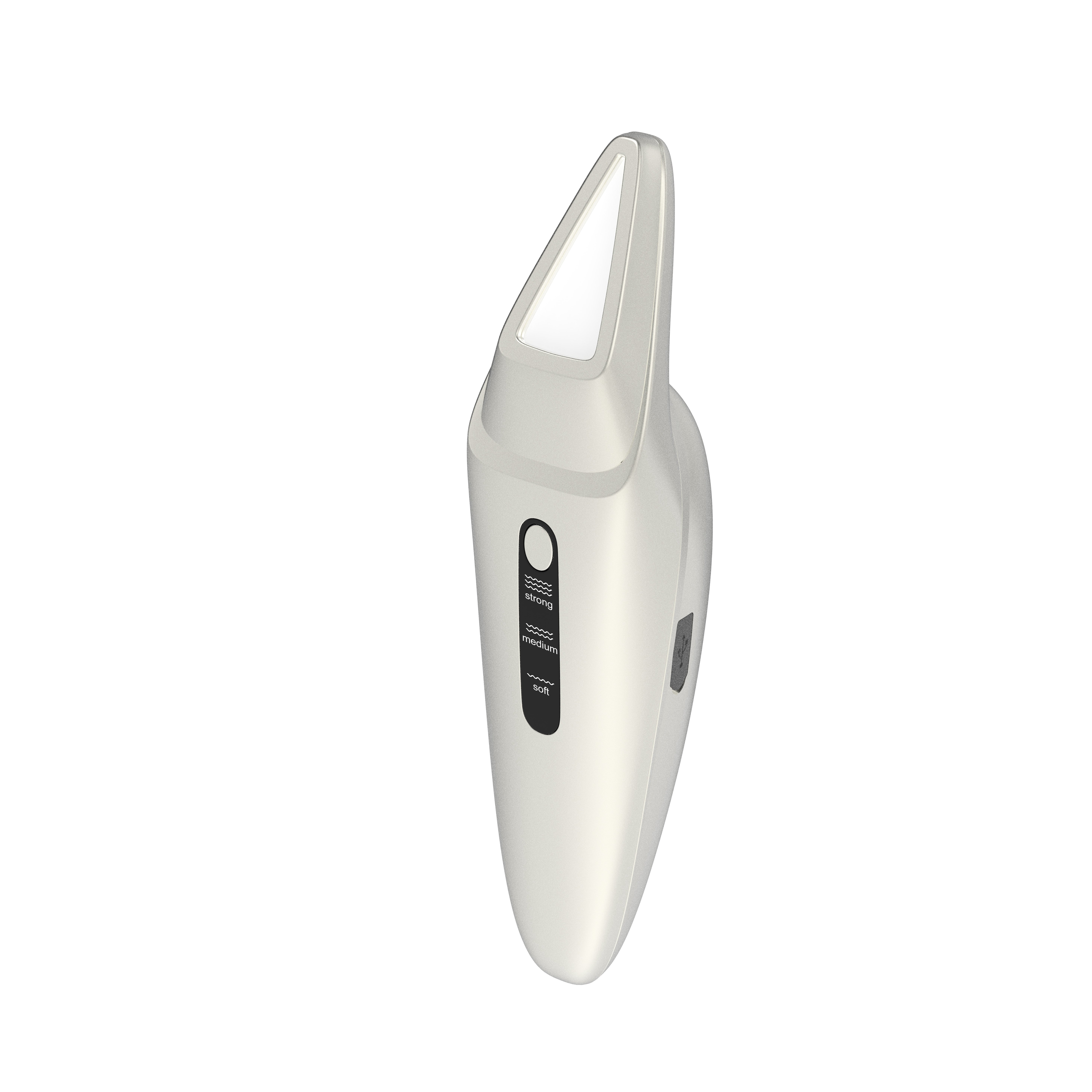
When brands approach me about launching a custom beauty device, the first question is usually about price. But the real question — the one that determines whether a project succeeds or stalls — is what actually drives that price. A custom beauty device is not a single cost; it's a sum of decisions made across technology, customization depth, compliance, and production volume. Getting those decisions right early is the difference between a sustainable margin and an expensive surprise.
The global cosmetics OEM/ODM market is projected to grow from approximately USD 37 billion in 2026 to USD 61 billion by 2035 at a CAGR of around 5.6%. More brand buyers are investing in custom beauty device development than ever before, and more brands are discovering that cost structures are far more layered than a factory quote suggests.
The core technology of any custom beauty device is its primary cost anchor. LED light therapy devices, RF skin-tightening devices, EMS facial toners, microcurrent tools, and ultrasonic instruments each carry a distinct component cost profile. Multi-function platforms that combine two or more technologies are not simply the sum of their parts; integration adds circuit complexity, housing requirements, and firmware scope that compound costs.
In practice, a single-technology custom beauty device such as a dedicated LED mask or a standalone microcurrent unit tends to offer the most predictable cost structure. If differentiation and premium positioning are the goal, a multi-technology custom beauty device can deliver both, but the budget must account for significantly higher BOM and engineering investment.
The model of engagement with your manufacturing partner is one of the most consequential decisions in any custom beauty device project. There are three primary paths:
For brands entering the space with a clear category strategy, ODM frequently delivers a strong cost-to-differentiation ratio. For private label beauty equipment projects that prioritize brand identity without full engineering ownership, ODM also provides the most practical balance between speed and distinction.
Any new enclosure design for a custom beauty device requires tooling investment. Injection molds for plastic housings can range from a few thousand dollars for simple geometries to tens of thousands for multi-piece assemblies with tight tolerances or complex aesthetic features. Tooling is a one-time fixed investment, but it is paid before the first production unit ships, meaning it must be accounted for separately from per-unit cost.
Brands that treat tooling as part of the per-unit cost often miscalculate their breakeven point. For any custom beauty device with a bespoke enclosure, treat tooling as a capital line item that is amortized across your projected production volume.
No custom beauty device reaches a major market without regulatory certification, and those certifications carry real cost:
Many brands entering custom beauty device development for the first time underestimate certification as an optional or deferrable cost. In practice, if you have a defined target market, certification costs are budgeted line items, not optional add-ons. Working with a professional beauty device manufacturer that has established certification workflows can reduce both cost and time-to-market.
MOQ directly affects unit cost. For any custom beauty device, lower-volume production runs carry higher per-unit cost because setup and inspection overhead is fixed regardless of quantity. Higher MOQ orders reduce per-unit cost but increase inventory exposure.
For oem beauty equipment partnerships, MOQ ranges vary by technology category. LED-based platforms typically support lower minimums than RF or ultrasonic platforms because of assembly simplicity. Brands that negotiate MOQ without modeling their inventory economics often find themselves either under-invested in cost reduction or over-exposed in working capital.
Packaging for a professional beauty device or private label beauty equipment line is a visible, tangible cost that is frequently underestimated in initial budgets. Custom branded packaging (retail boxes, inserts, user manuals, and accessories) typically adds 10–25% to the total per-unit cost after the device itself. Brands that plan packaging as an afterthought often face margin compression at the SKU level.
Systematic quality management is a cost built into responsible custom beauty device manufacturing. Pre-shipment inspection, aging tests, electrical safety checks, and batch sampling all add cost per unit. Partnering with a manufacturer that has embedded QC in its production flow — not bolted on after assembly — reduces both inspection cost and the downstream cost of warranty claims and returns.
The most common cost mistake I observe across custom beauty device projects is treating the factory per-unit quote as the project budget. A complete cost model for any custom beauty device must include: BOM + tooling amortization + certification + packaging + QC + logistics + warranty reserve.
Short-term, the upfront investment in tooling and certification may seem significant. From a long-term brand perspective, launching a properly certified, consistently manufactured custom beauty device on a clear cost model is far more durable than entering the market with an incomplete cost picture and discovering the gap later.
When evaluating manufacturing partners for your next custom beauty device project — whether you are pursuing an OEM, ODM, or fully custom path — ask for a transparent breakdown across all of these cost dimensions. A partner who provides that clarity understands what it takes to bring a professional beauty device to market successfully.

2026/10/30
Discover why in-house mold development helps an RF beauty device manufacturer improve product consistency, iteration speed, tooling control, and production readiness.

2026/10/30
Learn how to verify an RF beauty device manufacturer's R&D and prototyping capabilities using practical engineering workflows and audit checklists.

2026/10/30
Learn what shapes MOQ when choosing an RF beauty device manufacturer and how to plan a lower-risk first order with balanced platform and customization.

2026/10/30
Use this RF beauty device manufacturer evaluation checklist to compare safety evidence, OEM and ODM capability, quality control, and launch readiness.

2026/10/30
See how technology makes beauty at home more guided, consistent, and informed—plus a practical checklist for choosing devices wisely.

2026/10/30
Explore how AI and smart devices shape the future of beauty with responsive routines, clear guidance, trustworthy design, and user-controlled care.

Ideal for daily facial care routines, providing easy-to-use beauty solutions at home.

Perfect for spas and salons’ frequent treatments, enhancing client experiences and results.

Supports dermatologists with advanced devices for professional skin therapy sessions.

Delivers innovative solutions for full-body massage and relaxation with home devices.

Features anti-aging technologies to help reduce wrinkles and stimulate skin vitality.

Specialized devices for safe and effective hair removal suitable for home or clinic use.

Our customers love the Perfect Idea beauty devices. Quality, packaging, and results are all outstanding. We saw increased repeat sales after adding their facial cleansers to our lineup. Their support team is responsive and reliable.

Perfect Idea brings innovation and reliability to home beauty appliances. Our collaboration introduced their massage tools to Japanese women, boosting customer satisfaction and growing our brand trust across the region.

We partnered with Shenzhen Perfect Idea Tech for their beauty equipment. The shipping was fast and every product matched our expectations. Their home-use massagers are especially popular with local salons and home users.

The stylish packaging and attractive design make Perfect Idea stand out. French consumers appreciate the easy instructions and visible results. Communication was efficient and orders always arrived on time.

Perfect Idea home use personal care devices have become a favorite with our clients. The beauty device line offers quality at a reasonable price, and technical training for our staff made onboarding easy.

We selected Perfect Idea for our beauty product portfolio and have seen very positive feedback from our customers. Products are easy to market online and the customer support is reliable and helpful.
