 EN
Home Skincare
Ideal for daily facial care routines, providing easy-to-use beauty solutions at home.

2026/09/24
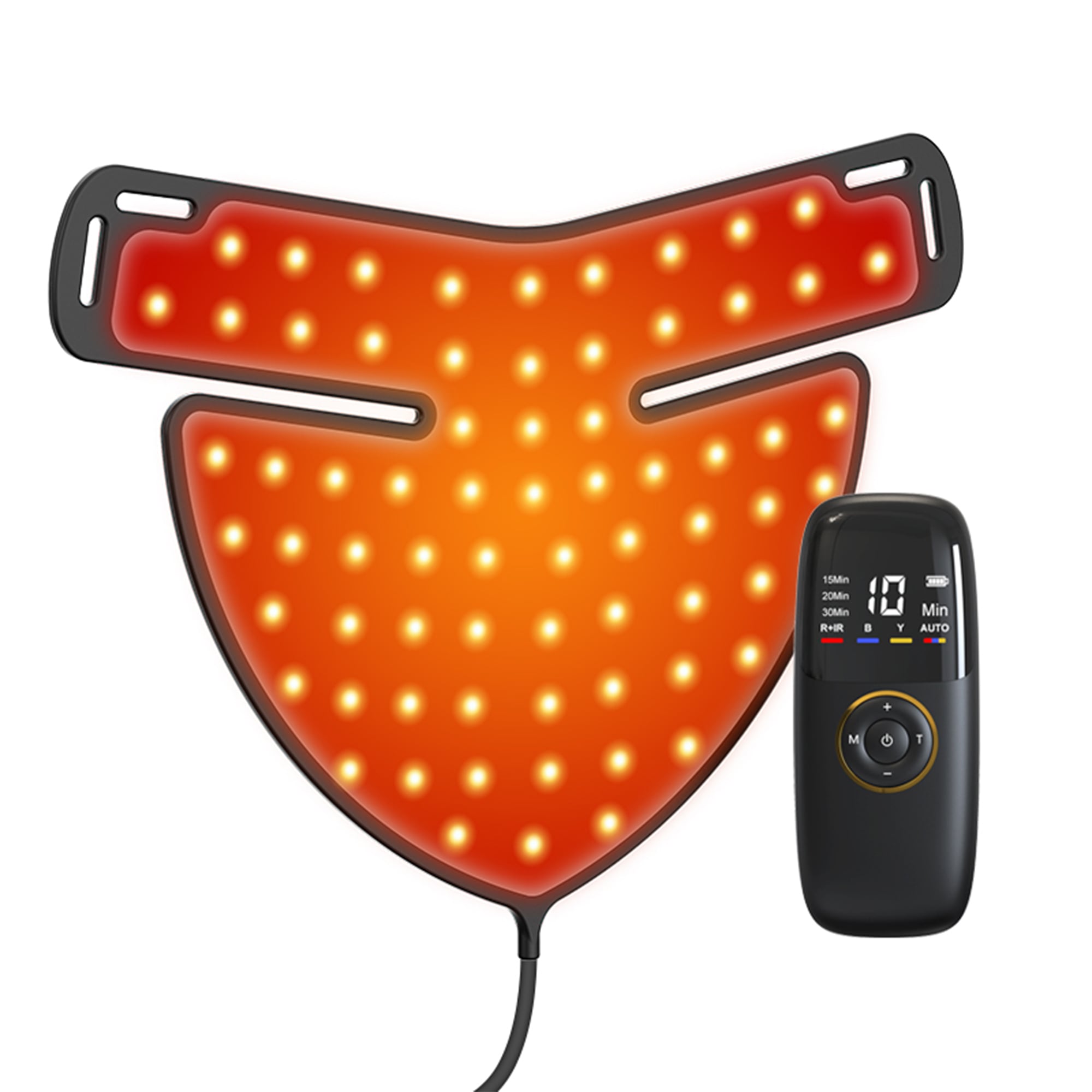
For the neck and décolletage, the most useful LED therapy question is not which color looks most impressive. It is whether the wavelength, dose, coverage, and use instructions suit thin, often sun-exposed skin. In LED therapy product development, red light in the low-to-mid 600 nm range and near-infrared light in the low-to-mid 800 nm range are commonly considered first for appearance-focused routines.
That does not make one setting universally right. A practical LED therapy device should deliver even light across the full neck and upper-chest area, remain comfortable long enough for a repeatable routine, and provide transparent operating guidance. For brands sourcing an at-home beauty device, those details are as meaningful as the LED therapy wavelength listed on a specification sheet.
For skin appearance goals such as the look of fine lines, uneven texture, or loss of radiance, an LED therapy design commonly combines red light around 630–660 nm with near-infrared light around 830–850 nm. These are frequently discussed photobiomodulation ranges in published reviews. They should be treated as design ranges, not as a promise that every user will see the same result.
Red LED therapy is visible, so users can tell when a session is active. Near-infrared LED therapy is largely invisible to the eye; its inclusion is usually about the intended tissue interaction rather than a visible glow. A 630–660 nm plus 830–850 nm pairing can be a sensible starting brief for a neck-and-décolletage device, provided the finished product is tested for its actual output and user experience.
The neck and chest are not simply an extension of the face. The area is broad, curved, and exposed to daylight, fragrance, jewelry, and clothing friction. A face-only LED therapy mask may leave the lower neck or the centre chest outside the most even treatment zone. Coverage should therefore be verified on the intended body position rather than inferred from a facial product photo.
There is also a comfort issue. A neck LED therapy panel that sits too close, traps heat, or shifts during normal breathing is harder to use consistently. In an OEM or ODM review, ask how LEDs are spaced, how the device manages warmth, what contact or distance the instructions assume, and whether the material can be cleaned without damaging the light window.
| Range | Typical LED therapy role | What to check beyond wavelength |
|---|---|---|
| 630–660 nm red | Commonly selected for appearance-oriented skin routines | Uniform coverage, session guidance, measured output |
| 830–850 nm near-infrared | Often paired with red in photobiomodulation-oriented designs | Heat comfort, eye-safety design, documented protocol |
| Blue light | More often considered for blemish-oriented applications | Whether that use case belongs on the neck or chest at all |
Blue LED therapy may be relevant when a product brief centres on acne-prone skin, but it is not automatically the priority for a neck and décolletage article focused on visible photoaging. More colors do not necessarily mean more useful LED therapy. Adding modes can complicate controls, claims review, thermal design, and customer instructions.
A common sourcing mistake is to compare LED therapy products only by their nanometres. Two devices can use the same nominal wavelength and still perform differently because irradiance, treatment distance, session duration, beam angle, and coverage vary. Published studies also use different protocols, which is why a wavelength claim should not be copied directly into a consumer benefit claim.
Ask the manufacturer for a plain-language output protocol: where measurements were taken, at what distance, over what treatment area, and for what recommended session length. LED therapy instructions should state who should avoid use or seek professional advice, including people with photosensitivity, those using photosensitising medication, or anyone with an unexplained skin condition. Eye protection and the device’s intended use also deserve clear treatment in the user manual.
When comparing LED therapy options, keep the procurement question simple: can the supplier explain the wavelength range, the measured output, and the intended routine in one consistent set of documents? That is a stronger LED therapy signal than an unqualified color claim. A well-designed LED therapy program also makes it easier for customers to follow the stated session plan. For a neck-and-chest device, LED therapy coverage should be assessed on the body, not assumed from a face-mask layout. Clear LED therapy instructions support safe, repeatable use.
Evidence summaries often mention red light around 630–660 nm and near-infrared light around 830–850 nm, but they also show that protocols differ. That nuance matters. A credible LED therapy page explains the design rationale, gives users realistic expectations, and recommends following the specific device instructions rather than creating an improvised high-frequency schedule.
For BEPERFECT’s OEM/ODM context, the useful takeaway is a specification conversation: match LED therapy wavelengths to the intended cosmetic use, then validate coverage, output, comfort, and compliance documentation as a complete system. The result is a clearer product brief and a more honest customer experience.
For a buyer comparing suppliers, LED therapy documentation should connect the LED therapy wavelength to measured output and stated session timing. That makes an LED therapy brief easier to review across engineering, compliance, and marketing teams.
660 nm sits within a red-light range commonly used in appearance-focused photobiomodulation discussions. Suitability still depends on the device’s measured output, coverage, instructions, and individual circumstances.
Near-infrared light around 830–850 nm is often paired with red light in product concepts for this category. It is a design decision, not a substitute for testing the complete device protocol.
Follow the schedule supplied for the specific device. More frequent LED therapy sessions are not automatically better, because output and session duration differ between products.

2026/10/30
Discover why in-house mold development helps an RF beauty device manufacturer improve product consistency, iteration speed, tooling control, and production readiness.

2026/10/30
Learn how to verify an RF beauty device manufacturer's R&D and prototyping capabilities using practical engineering workflows and audit checklists.

2026/10/30
Learn what shapes MOQ when choosing an RF beauty device manufacturer and how to plan a lower-risk first order with balanced platform and customization.

2026/10/30
Use this RF beauty device manufacturer evaluation checklist to compare safety evidence, OEM and ODM capability, quality control, and launch readiness.

2026/10/30
See how technology makes beauty at home more guided, consistent, and informed—plus a practical checklist for choosing devices wisely.

2026/10/30
Explore how AI and smart devices shape the future of beauty with responsive routines, clear guidance, trustworthy design, and user-controlled care.

Ideal for daily facial care routines, providing easy-to-use beauty solutions at home.

Perfect for spas and salons’ frequent treatments, enhancing client experiences and results.

Supports dermatologists with advanced devices for professional skin therapy sessions.

Delivers innovative solutions for full-body massage and relaxation with home devices.

Features anti-aging technologies to help reduce wrinkles and stimulate skin vitality.

Specialized devices for safe and effective hair removal suitable for home or clinic use.

Our customers love the Perfect Idea beauty devices. Quality, packaging, and results are all outstanding. We saw increased repeat sales after adding their facial cleansers to our lineup. Their support team is responsive and reliable.

Perfect Idea brings innovation and reliability to home beauty appliances. Our collaboration introduced their massage tools to Japanese women, boosting customer satisfaction and growing our brand trust across the region.

We partnered with Shenzhen Perfect Idea Tech for their beauty equipment. The shipping was fast and every product matched our expectations. Their home-use massagers are especially popular with local salons and home users.

The stylish packaging and attractive design make Perfect Idea stand out. French consumers appreciate the easy instructions and visible results. Communication was efficient and orders always arrived on time.

Perfect Idea home use personal care devices have become a favorite with our clients. The beauty device line offers quality at a reasonable price, and technical training for our staff made onboarding easy.

We selected Perfect Idea for our beauty product portfolio and have seen very positive feedback from our customers. Products are easy to market online and the customer support is reliable and helpful.
