 EN
Home Skincare
Ideal for daily facial care routines, providing easy-to-use beauty solutions at home.

2026/10/22
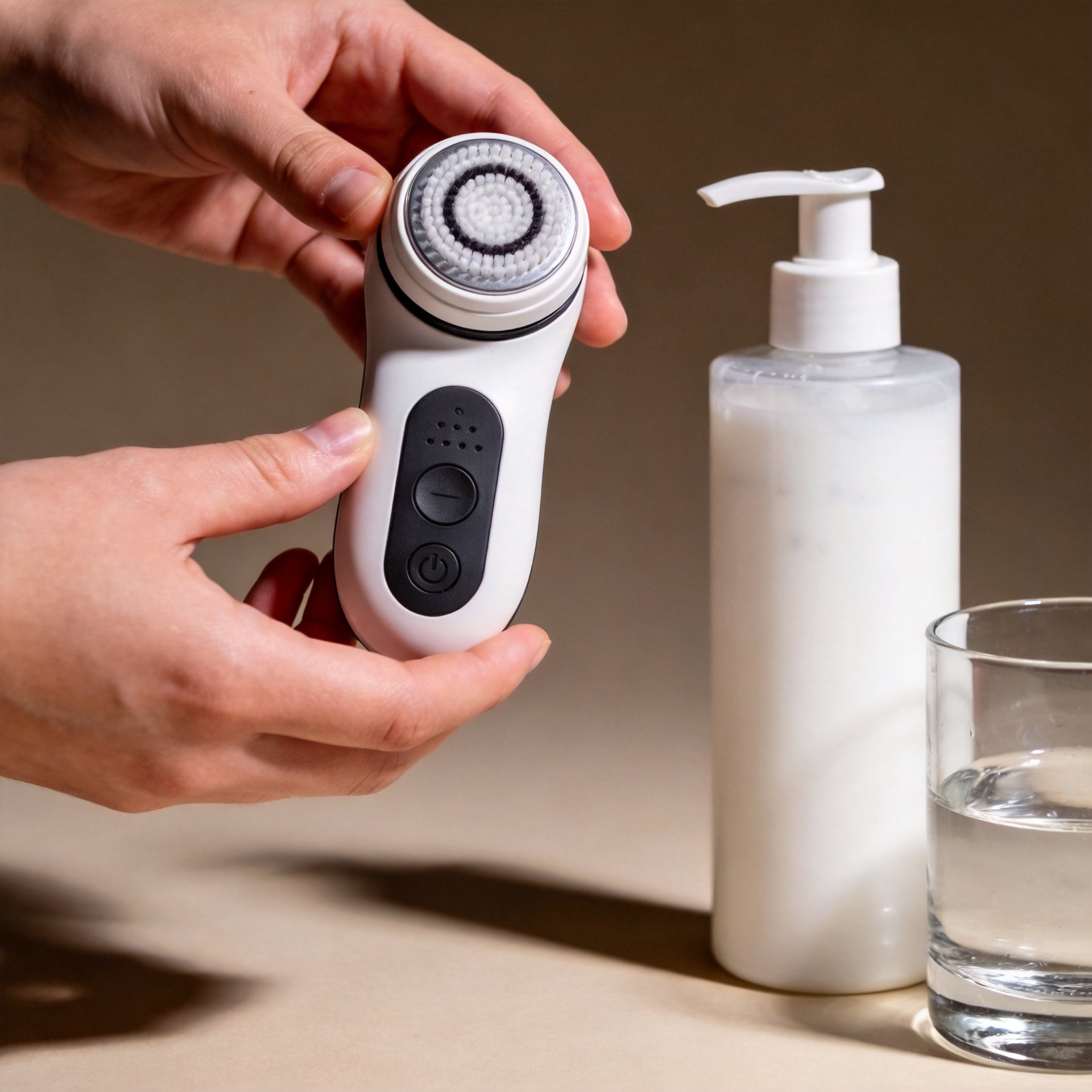
Ultrasonic face care devices are often presented as a shortcut to a cleaner-looking complexion. In practice, their most useful role is narrower: they can help lift surface residue from the skin when they are used gently, on the right routine, and with sensible expectations. As a skin-management professional, I advise treating any device as an optional assist—not a replacement for a mild cleanser, careful technique, or attention to irritation.
For many people, the appeal is simple. A compact tool can make a cleansing routine feel more deliberate, especially in areas where sunscreen, makeup, or oil tend to collect. The meaningful face care question is not whether vibration is automatically “better,” but whether the tool helps you cleanse comfortably without turning a basic routine into over-cleansing.
Most ultrasonic face care devices use rapid mechanical vibration at the treatment head. Depending on the design, the tool may be a silicone cleansing brush, a flat spatula-like scrubber, or a device with several attachments. When used with water or a compatible cleanser, the movement can help loosen a mix of sebum, product residue, and superficial debris so it is easier to rinse away.
That mechanism does not mean the device “pulls toxins” from skin or permanently clears pores. Pores do not open and close like doors, and blackheads or inflammatory acne need more than a vibrating tool. A realistic benefit is better attention to a cleansing pass: light contact, even coverage, and less temptation to scrub with a rough cloth.
At the end of a day, face care skin may carry sunscreen, makeup, perspiration, oil, and airborne particles. A gentle ultrasonic pass can help distribute cleanser and dislodge residue around the nose, jawline, and hairline. This may leave the skin feeling smoother and more thoroughly rinsed. The benefit is most relevant when it replaces harsh manual rubbing rather than adds another aggressive step.
Face care results often come from consistency, not intensity in a balanced face care routine. A device with a short timer can encourage users to spend a controlled amount of time cleansing instead of rushing or repeatedly going over the same spot. That structure is useful for people who wear long-wear makeup or water-resistant sunscreen, provided they still remove eye makeup gently and do not chase a squeaky-clean feeling.
Some users reach for grainy scrubs, stiff brushes, or washcloths when they feel congested. Those approaches can create too much friction. An ultrasonic face care device used with light pressure may offer a more controlled alternative for occasional surface cleansing. It is not automatically gentle, however: too much time, pressure, or frequency can still leave skin tight, red, or reactive.
A clean, comfortably hydrated surface can make the rest of a routine easier to apply. That is different from claiming that a device forces active ingredients deep into skin. For a basic face care routine, the practical face care goal is simply to rinse cleanser and residue well, pat dry, and then apply products that suit the person’s skin type.
A 2021 study indexed by PubMed evaluated facial cleansing combined with an electric sonic device and did not report a significant reduction in hydration under its study conditions. That is reassuring context, but it is not a guarantee for every device, cleanser, skin condition, or technique. Device design, contact time, pressure, frequency, and individual sensitivity all matter.
The larger face care principle remains conservative for a gentle face care routine. The American Academy of Dermatology recommends a gentle, non-abrasive cleanser, lukewarm water, and avoiding scrubbing; it also advises limiting facial washing to twice a day and after heavy sweating. An ultrasonic face care tool should fit inside those face care basics, not override them. If face care leaves skin dry, stinging, flaky, or persistently red, that face care routine is doing too much.
Skip this face care device on broken skin, sunburn, active irritation, or a flare of eczema or rosacea unless a qualified clinician has advised otherwise. People using prescription acne treatments, retinoids, exfoliating acids, or other potentially irritating products should be particularly conservative. Active inflamed acne can also be aggravated by friction. When in doubt, pause the face care tool and return to gentle hand cleansing.
Face care safety also includes hygiene. Clean and dry the device after use according to its instructions, do not share it without proper sanitation, and replace worn attachments. If a device feels hot, rough, painful, or difficult to clean, it is not a good fit for a delicate face care routine.
For face care cleansing, prioritize a washable treatment surface, simple controls, a timer, clear care instructions, and a comfortable shape. Look for a brand that provides realistic use guidance rather than dramatic medical-style claims. Multiple modes can be useful only if they are easy to understand; a gentle face care setting that you can use correctly is more valuable than a long list of features.
Brands developing ultrasonic face care products should also make safe use easy to understand. Practical instruction, skin-contact material choices, controllable intensity, and cleaning guidance matter more than inflated promises. In home beauty devices, clear face care claims and thoughtful routine education help users get a better experience while reducing avoidable misuse.
Ultrasonic face care devices can offer a convenient, low-friction way to support daily cleansing and remove routine surface buildup. Their face care benefits are most credible when they make gentle cleansing easier—not when they are expected to solve acne, erase pores, or replace proven skin care. Start slowly, use light pressure, protect the skin barrier, and let comfort be the deciding signal. If your skin is calm after use, the device may be a useful optional tool; if it is irritated, simpler face care is the better choice.

2026/10/30
Discover why in-house mold development helps an RF beauty device manufacturer improve product consistency, iteration speed, tooling control, and production readiness.

2026/10/30
Learn how to verify an RF beauty device manufacturer's R&D and prototyping capabilities using practical engineering workflows and audit checklists.

2026/10/30
Learn what shapes MOQ when choosing an RF beauty device manufacturer and how to plan a lower-risk first order with balanced platform and customization.

2026/10/30
Use this RF beauty device manufacturer evaluation checklist to compare safety evidence, OEM and ODM capability, quality control, and launch readiness.

2026/10/30
See how technology makes beauty at home more guided, consistent, and informed—plus a practical checklist for choosing devices wisely.

2026/10/30
Explore how AI and smart devices shape the future of beauty with responsive routines, clear guidance, trustworthy design, and user-controlled care.

Ideal for daily facial care routines, providing easy-to-use beauty solutions at home.

Perfect for spas and salons’ frequent treatments, enhancing client experiences and results.

Supports dermatologists with advanced devices for professional skin therapy sessions.

Delivers innovative solutions for full-body massage and relaxation with home devices.

Features anti-aging technologies to help reduce wrinkles and stimulate skin vitality.

Specialized devices for safe and effective hair removal suitable for home or clinic use.

Our customers love the Perfect Idea beauty devices. Quality, packaging, and results are all outstanding. We saw increased repeat sales after adding their facial cleansers to our lineup. Their support team is responsive and reliable.

Perfect Idea brings innovation and reliability to home beauty appliances. Our collaboration introduced their massage tools to Japanese women, boosting customer satisfaction and growing our brand trust across the region.

We partnered with Shenzhen Perfect Idea Tech for their beauty equipment. The shipping was fast and every product matched our expectations. Their home-use massagers are especially popular with local salons and home users.

The stylish packaging and attractive design make Perfect Idea stand out. French consumers appreciate the easy instructions and visible results. Communication was efficient and orders always arrived on time.

Perfect Idea home use personal care devices have become a favorite with our clients. The beauty device line offers quality at a reasonable price, and technical training for our staff made onboarding easy.

We selected Perfect Idea for our beauty product portfolio and have seen very positive feedback from our customers. Products are easy to market online and the customer support is reliable and helpful.
