 EN
Home Skincare
Ideal for daily facial care routines, providing easy-to-use beauty solutions at home.

2026/10/08
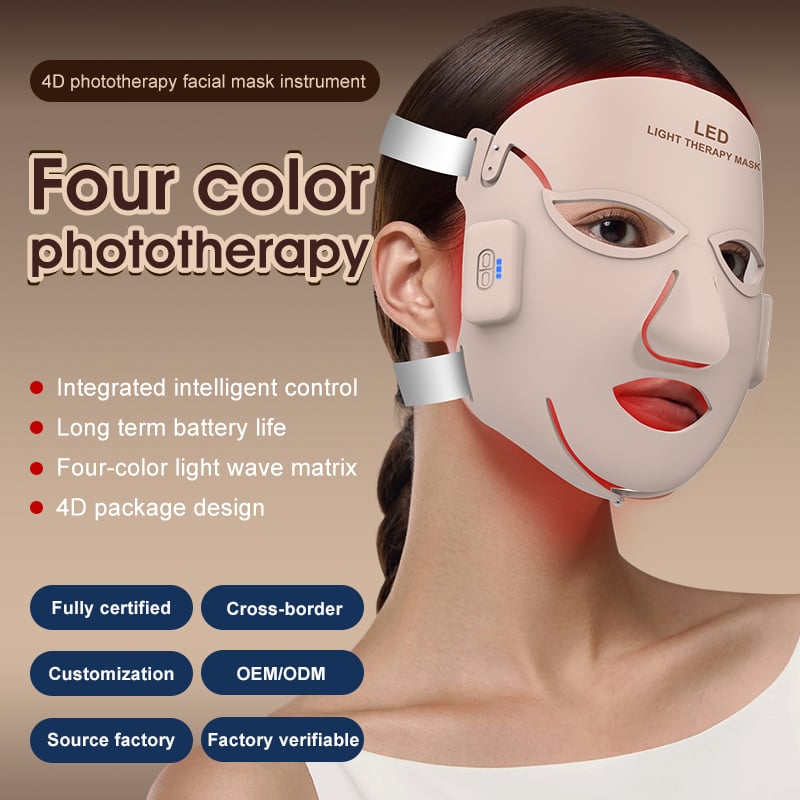
A wireless led mask earns its place in a skincare routine when it removes friction rather than adding another appointment to the day. For people who move between a morning desk, a commute, a workout, and an evening wind-down, the useful question is not simply whether a mask has LEDs. It is whether the device feels manageable enough to use consistently and safely.
As a regular home-device user, I would assess it through the ordinary moments that decide whether a device stays in a drawer: putting it on, moving around carefully, charging it, cleaning it, and following its instructions. The five features below give consumers and beauty-device buyers a practical framework for evaluating lifestyle fit without assuming that every model offers the same result or regulatory status.
The defining advantage of a wireless led mask is freedom from a wall outlet during a session. That can make a routine easier to fit into a quiet evening, a hotel room, or the few minutes between household tasks. Still, “wireless” deserves a closer look. Some designs place the battery in the mask, while others use a rechargeable controller that can be clipped to clothing or set nearby.
For this type of cordless mask, check where the controller sits, whether the cable between controller and mask catches on clothing, and whether buttons are easy to reach without removing the device. A compact controller may suit people who prefer to sit still; a secure wearable controller may be more comfortable for someone who wants gentle mobility. The goal is not to turn treatment into multitasking that compromises safety, but to avoid being anchored to a socket.
Battery design is the feature people notice after purchase. A wireless led mask should make charging status understandable and charging steps easy to remember. Look for a clear indicator, a charging connection that feels robust, and instructions that explain when the device is ready. These details help prevent a planned session from ending before it starts.
It is tempting to compare devices only by advertised runtime. In practice, such a device works better for lifestyle integration when its charging habit fits an existing routine: perhaps returning it to its case after use or charging it at a designated place overnight. Avoid assuming runtime figures apply to every light setting or battery age. Follow the supplied manual, use the recommended power accessories, and keep the device away from water while charging.
A wireless led mask can have a strong feature list and still become inconvenient if it pinches, slips, or feels unbalanced. Adjustable straps, stable contact points, and a shape that leaves room to breathe comfortably are practical features, not cosmetic extras. Different face shapes, hairstyles, and evening routines can change what feels secure.
Try to assess a cordless facial device as a repeat-use object rather than a five-minute demo. Can the straps be adjusted without over-tightening? Does the weight pull forward when you lean back? Are the eye openings or included protection comfortable for your sensitivity level? If you have skin sensitivity, an eye condition, use photosensitizing medication, or are unsure whether light-based devices suit you, pause and ask an appropriate healthcare professional before starting.
The most useful controls are the ones a person can understand while tired. A clear start/stop control, legible mode selection, and an automatic timer can reduce guesswork. Controls should support the manufacturer’s intended routine, not encourage longer or more frequent use than directed.
Good guidance is part of the feature set. It should arrive with plain instructions covering preparation, session length, cleaning, charging, storage, and when not to use it. The American Academy of Dermatology advises users of at-home red-light devices to follow the directions provided with an FDA-cleared device; that is a useful general reminder, not a claim that any particular mask has clearance. If a product’s documentation is vague, that is a reason to seek clarification before purchase.
Modern lifestyle integration also depends on what happens after a session. A device with surfaces that can be cleaned as instructed, a protected charging port, and a practical storage solution is easier to keep ready for the next use. Skincare residue, travel dust, and a crowded bathroom counter can all make a device less appealing when maintenance feels complicated.
Before choosing one, ask how the brand says to clean it, whether straps are removable, and how it should be stored between sessions. Do not improvise with harsh cleaners or immerse electronic parts unless the manufacturer explicitly says that is safe. A simple care routine supports hygiene and helps preserve the device’s finish and electronics.
The right option is not automatically the one with the longest list of modes. A smaller set of well-explained features may be more valuable if it fits your schedule, comfort preferences, and ability to follow the routine. Start with your real use setting: seated at home, traveling, winding down before bed, or adding a deliberate skincare step after cleansing.
For buyers developing a beauty-device range, the same principle applies. A wireless led mask designed for daily life needs clear user education, considered ergonomics, dependable charging behavior, and care instructions that translate across markets. The BEPERFECT team supports OEM and ODM development for home beauty-device categories, so product teams can align functional design, appearance, and packaging with a defined user scenario instead of treating portability as an isolated specification.
Finally, set realistic expectations. A wireless led mask is a home skincare device, not a substitute for medical diagnosis or individualized treatment. Choose products with clear documentation, use them as directed, and stop if you experience pain, heat, or unexpected discomfort. When comfort, charging, controls, hygiene, and safety guidance work together, the device is more likely to become a calm, repeatable part of a modern routine.

2026/10/30
Discover why in-house mold development helps an RF beauty device manufacturer improve product consistency, iteration speed, tooling control, and production readiness.

2026/10/30
Learn how to verify an RF beauty device manufacturer's R&D and prototyping capabilities using practical engineering workflows and audit checklists.

2026/10/30
Learn what shapes MOQ when choosing an RF beauty device manufacturer and how to plan a lower-risk first order with balanced platform and customization.

2026/10/30
Use this RF beauty device manufacturer evaluation checklist to compare safety evidence, OEM and ODM capability, quality control, and launch readiness.

2026/10/30
See how technology makes beauty at home more guided, consistent, and informed—plus a practical checklist for choosing devices wisely.

2026/10/30
Explore how AI and smart devices shape the future of beauty with responsive routines, clear guidance, trustworthy design, and user-controlled care.

Ideal for daily facial care routines, providing easy-to-use beauty solutions at home.

Perfect for spas and salons’ frequent treatments, enhancing client experiences and results.

Supports dermatologists with advanced devices for professional skin therapy sessions.

Delivers innovative solutions for full-body massage and relaxation with home devices.

Features anti-aging technologies to help reduce wrinkles and stimulate skin vitality.

Specialized devices for safe and effective hair removal suitable for home or clinic use.

Our customers love the Perfect Idea beauty devices. Quality, packaging, and results are all outstanding. We saw increased repeat sales after adding their facial cleansers to our lineup. Their support team is responsive and reliable.

Perfect Idea brings innovation and reliability to home beauty appliances. Our collaboration introduced their massage tools to Japanese women, boosting customer satisfaction and growing our brand trust across the region.

We partnered with Shenzhen Perfect Idea Tech for their beauty equipment. The shipping was fast and every product matched our expectations. Their home-use massagers are especially popular with local salons and home users.

The stylish packaging and attractive design make Perfect Idea stand out. French consumers appreciate the easy instructions and visible results. Communication was efficient and orders always arrived on time.

Perfect Idea home use personal care devices have become a favorite with our clients. The beauty device line offers quality at a reasonable price, and technical training for our staff made onboarding easy.

We selected Perfect Idea for our beauty product portfolio and have seen very positive feedback from our customers. Products are easy to market online and the customer support is reliable and helpful.
