 EN
Home Skincare
Ideal for daily facial care routines, providing easy-to-use beauty solutions at home.

2026/09/21
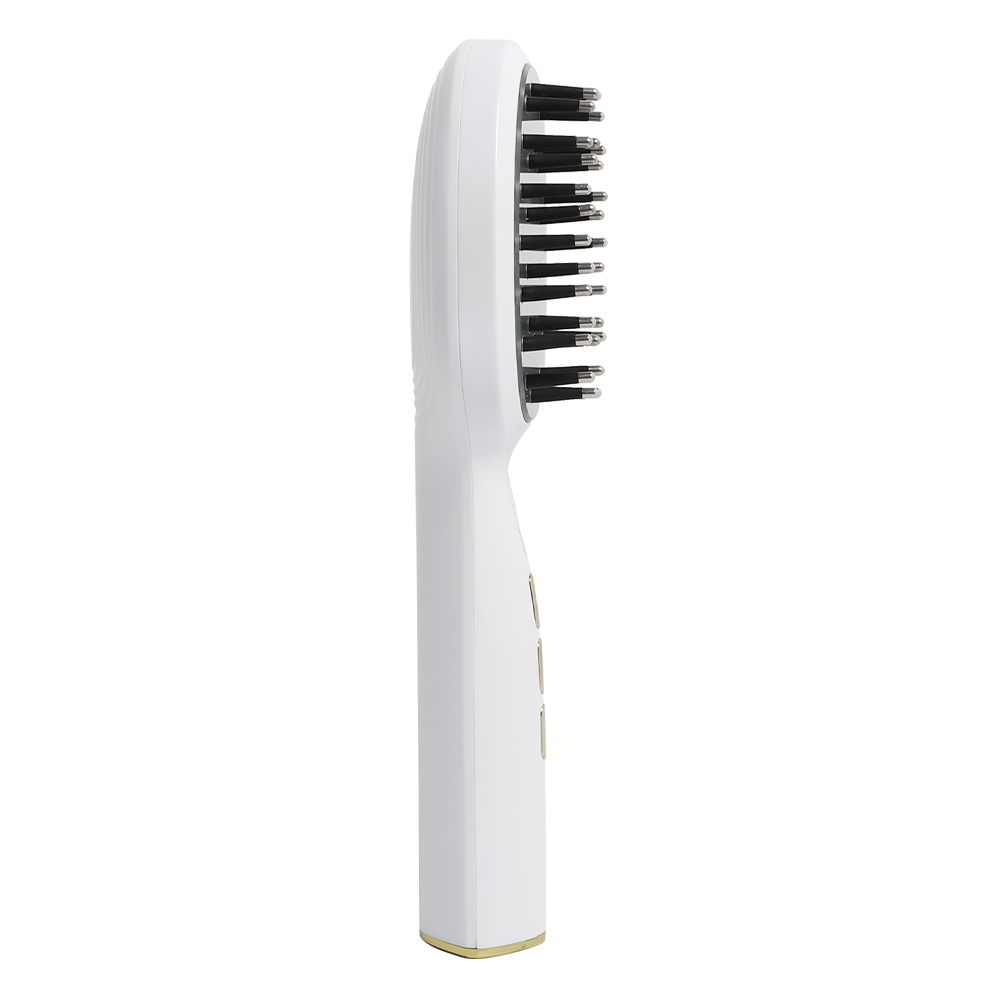
When people compare a LED hair growth cap device for androgenetic alopecia, the easiest mistake is to shop by a dramatic promise rather than by the details that determine whether a wearable is practical, traceable, and appropriate to discuss with a clinician. Androgenetic alopecia is a progressive pattern of hair thinning with multiple contributing factors. A light-based cap may be part of a broader routine, but it is not a substitute for a diagnosis or a personalized treatment plan.
For brand teams, retailers, and informed buyers, a useful review starts with the feature set. The five checks below make it easier to assess an LED hair growth cap device without treating marketing language as medical proof.
The first feature to inspect on an LED hair growth cap device is how the light sources are arranged across the scalp area. A cap should explain its intended treatment zone and show the placement of its emitters. A vague claim such as “full coverage” is less helpful than a layout that lets a buyer understand whether the crown, part line, temples, and back of the head are addressed.
Coverage is not the same as effectiveness. Hair density, hairstyle, cap fit, and the specific treatment protocol can all affect how a user experiences a wearable. Still, a transparent layout is a practical sign that the LED hair growth cap device has been designed for repeatable use rather than for a generic product listing.
“Red light” alone is not a complete specification. A credible LED hair growth cap device should provide usable technical information such as wavelength, number and type of light sources, session duration, and the instructions that accompany the device. Buyers should also distinguish LED terminology from laser terminology instead of assuming that the words describe identical technology.
That documentation matters because claims about androgenetic alopecia treatment need context. Ask whether the instructions define who should use the cap, how often it is used, and when a user should stop and seek professional advice. A well-documented LED hair growth cap device makes it easier for a medical reviewer, distributor, or private-label team to evaluate the product responsibly.
Consistency is a practical feature. If a cap is hot, heavy, unstable, or hard to position, it may be used less often than intended. Look at cap weight, inner materials, head-size adjustment, ventilation, and whether the controls can be operated without disrupting fit. These details do not prove a treatment outcome, but they can affect whether an LED hair growth cap device fits into a realistic routine.
For androgenetic alopecia, users often evaluate devices over an extended period. That makes daily-life considerations important: can the wearer sit comfortably, store the cap safely, and follow the supplied instructions without improvising? The most suitable LED hair growth cap device for a particular buyer is not necessarily the one with the longest feature list; it is the one whose usage design is clear and manageable.
Simple controls can be a safety and usability advantage. An LED hair growth cap device may include a timer, session indicator, automatic shutoff, battery display, or a controller that prevents accidental changes mid-session. These features help a user follow the manufacturer’s stated protocol instead of guessing at duration or frequency.
Assess the controls as part of the whole device, not as a shortcut to clinical conclusions. A timer does not make an LED hair growth cap device medically appropriate for every person. It does, however, improve the traceability of intended use—particularly useful for a brand building instructions, packaging, and customer-support materials across different markets.
For a consumer, a distributor, or an OEM/ODM buyer, the fifth feature is the documentation behind the LED hair growth cap device. Product instructions should state contraindications, care guidance, charging information, intended use, and a pathway for questions or adverse-event concerns. Do not accept a certification logo in a listing as proof by itself; request the applicable documentation and verify it for the destination market.
For a private-label project, ask the supplier how it manages component traceability, batch consistency, labeling, manuals, and market-specific compliance support. BEPERFECT’s home-beauty manufacturing background can be relevant to those sourcing conversations, but every finished LED hair growth cap device still needs product-specific review. Claims should be limited to the evidence and regulatory status actually available for that model.
An LED hair growth cap device should be evaluated as a wearable light-based tool, not as a cure for androgenetic alopecia. A dermatologist or other qualified clinician can help assess the cause of hair loss, discuss established options, and advise whether a device belongs in an individual plan. Buyers with scalp conditions, photosensitivity, medication concerns, pregnancy-related questions, or sudden hair loss should seek professional advice before use.
In short, compare the LED hair growth cap device feature by feature: coverage, published specifications, fit, controls, and documentation. That approach helps both buyers and brands make a clearer decision while keeping product communication accurate, cautious, and useful.

2026/10/30
Discover why in-house mold development helps an RF beauty device manufacturer improve product consistency, iteration speed, tooling control, and production readiness.

2026/10/30
Learn how to verify an RF beauty device manufacturer's R&D and prototyping capabilities using practical engineering workflows and audit checklists.

2026/10/30
Learn what shapes MOQ when choosing an RF beauty device manufacturer and how to plan a lower-risk first order with balanced platform and customization.

2026/10/30
Use this RF beauty device manufacturer evaluation checklist to compare safety evidence, OEM and ODM capability, quality control, and launch readiness.

2026/10/30
See how technology makes beauty at home more guided, consistent, and informed—plus a practical checklist for choosing devices wisely.

2026/10/30
Explore how AI and smart devices shape the future of beauty with responsive routines, clear guidance, trustworthy design, and user-controlled care.

Ideal for daily facial care routines, providing easy-to-use beauty solutions at home.

Perfect for spas and salons’ frequent treatments, enhancing client experiences and results.

Supports dermatologists with advanced devices for professional skin therapy sessions.

Delivers innovative solutions for full-body massage and relaxation with home devices.

Features anti-aging technologies to help reduce wrinkles and stimulate skin vitality.

Specialized devices for safe and effective hair removal suitable for home or clinic use.

Our customers love the Perfect Idea beauty devices. Quality, packaging, and results are all outstanding. We saw increased repeat sales after adding their facial cleansers to our lineup. Their support team is responsive and reliable.

Perfect Idea brings innovation and reliability to home beauty appliances. Our collaboration introduced their massage tools to Japanese women, boosting customer satisfaction and growing our brand trust across the region.

We partnered with Shenzhen Perfect Idea Tech for their beauty equipment. The shipping was fast and every product matched our expectations. Their home-use massagers are especially popular with local salons and home users.

The stylish packaging and attractive design make Perfect Idea stand out. French consumers appreciate the easy instructions and visible results. Communication was efficient and orders always arrived on time.

Perfect Idea home use personal care devices have become a favorite with our clients. The beauty device line offers quality at a reasonable price, and technical training for our staff made onboarding easy.

We selected Perfect Idea for our beauty product portfolio and have seen very positive feedback from our customers. Products are easy to market online and the customer support is reliable and helpful.
