 EN
Home Skincare
Ideal for daily facial care routines, providing easy-to-use beauty solutions at home.

2026/10/13
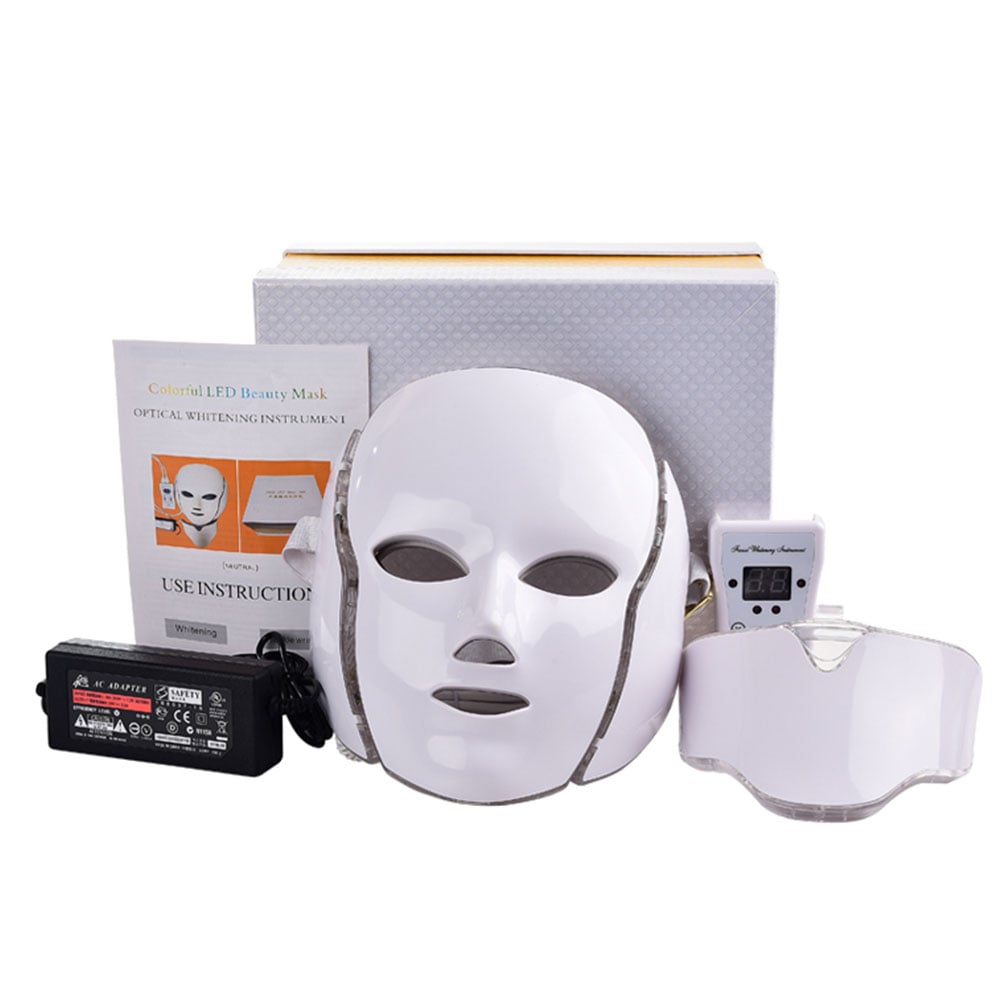
A face mask no longer has to mean a disposable sheet or a jar of clay. At-home skincare now includes devices that use light, heat, cooling, vibration, or controlled current to change how a treatment feels and where it fits in a routine. The useful question is not which face mask technology sounds most advanced. It is which mechanism matches a realistic goal, your tolerance for upkeep, and the instructions of the device you actually own.
As a home beauty-device technical advisor, I usually start with that distinction. A face mask can be relaxing and helpful as a targeted step, but it does not replace gentle cleansing, moisturizer, daily sun protection, or professional care when skin is persistently irritated. Technology can support consistency; it cannot make every concern suitable for every device.
An LED face mask places light-emitting diodes close to the skin in a wearable format. Depending on the product, the device may use red, blue, or combined light settings. The practical attraction is simple: it keeps the treatment hands-free and repeatable while you sit still for the manufacturer’s recommended session.
It is important not to confuse an LED face mask with ultraviolet exposure. LED light therapy devices are designed around LEDs rather than UV light, yet that does not make every setting or every user identical. Eye protection, session length, photosensitivity, medication warnings, and the supplied instructions all matter. A high-output claim is not automatically a better face mask choice; comfort, even coverage, fit, and a routine you can maintain are just as important.
Suitable for: someone who wants a structured, non-topical face mask routine and is willing to follow a regular schedule. Watch for: poor fit, skipped eye protection, or treating the device as a shortcut around barrier-friendly skincare.
Some face mask devices alternate gentle warming and cooling. Warmth is often used to create a spa-like preparation step, while cooling can feel calming after a long day or alongside a compatible hydrating product. Think of it less like a dramatic skin transformation and more like using temperature to shape the experience and comfort of a routine.
The trade-off is that temperature benefits depend heavily on the individual and the formula placed on the skin. Heat may not suit skin that already feels flushed or reactive, and extreme temperatures are not a sign of quality. If you use a topical face mask with active ingredients, first check whether the product directions allow pairing it with a device. More intensity or more minutes can mean more irritation, not more value.
Suitable for: people who value sensory comfort and a short ritual around hydration. Watch for: sensitivity, broken skin, and stacking heat with potentially irritating exfoliants.
Ultrasonic skincare tools use high-frequency vibration rather than a traditional wearable mask shape. They are often paired with conductive gels or water-based products, so the “face mask” part is really a treatment layer that supports glide. The key idea is controlled contact: the head moves across the skin while the user follows the product’s technique and timing guidance.
This format can appeal to users who prefer an active, hands-on treatment. It also asks more of them. Consistent movement, clean equipment, and the right product texture are essential. It is not a reason to press harder, linger over one area, or use a device over irritated skin. The most useful comparison point is not whether ultrasound sounds more technical than an LED face mask; it is whether you want a manual treatment step and can use it carefully.
Suitable for: an experienced at-home skincare user who prefers guided, hands-on application. Watch for: product incompatibility, excessive pressure, and ignoring contraindications in the manual.
Microcurrent face mask technology uses low-level electrical current delivered through contact points, pads, or a flexible mask design. It is commonly positioned as a contour-focused routine, although the experience varies with the device design, conductive medium, and how consistently it is used. The delivery path matters: dry skin or the wrong gel can make treatment less comfortable and less predictable.
Because this technology involves electrical current, selection should begin with the safety section, not the marketing headline. Users with implanted electronic devices, certain health conditions, or specific medical guidance should seek professional advice before use. A face mask with multiple modes may look versatile, but fewer well-explained settings can be easier to use correctly.
Suitable for: a user who wants a deliberate, instructions-led contouring ritual. Watch for: skipping conductivity requirements or overlooking the manufacturer’s contraindications.
Not every innovation requires electronics. Hydrogel, biocellulose, and well-designed sheet face mask formats improve how a serum stays in contact with the skin for a limited period. Some “smart” versions add a better fit, divided zones, temperature cues, or packaging that protects a formula until use. This category is often the simplest way to turn a familiar face mask into a more targeted treatment step.
The benefit comes from the formula, fit, and sensible wear time. Dermatology guidance consistently makes the same practical point: a topical face mask can supplement a routine, but overuse, redundant active ingredients, or leaving it on longer than directed can irritate skin. In other words, a more occlusive sheet is not permission to pile on acids, retinoids, or fragrance-heavy products.
Suitable for: someone who wants a low-learning-curve face mask for hydration or a calming routine. Watch for: ingredient overlap with the rest of your regimen and any burning, itching, or stinging.
| Technology | What it changes | Routine effort | First selection question |
|---|---|---|---|
| LED | Light exposure in a wearable format | Scheduled, hands-free sessions | Will I use the recommended schedule and safety features? |
| Thermal/cooling | Temperature and sensory comfort | Short, simple sessions | Is my skin comfortable with the temperature range? |
| Ultrasonic | Vibration-assisted, manual application | Hands-on technique | Can I follow the glide and product instructions consistently? |
| Microcurrent | Low-level current through contact points | Prep plus conductive medium | Do the safety directions fit my situation? |
| Hydrogel/sheet | Formula contact and occlusion | Low effort | Does the formula complement, rather than duplicate, my routine? |
A practical face mask comparison begins with a goal: hydration, a calming ritual, a light-based treatment routine, or a guided device step. Then check the instructions, your skin’s current condition, cleaning needs, and how often you will truly use it. That last point matters more than it seems. A complicated face mask that stays in a drawer is less useful than a modest technology used carefully and consistently.
The five technologies above do not compete on one universal scale. LED face masks offer a wearable light-based routine; temperature devices emphasize comfort; ultrasonic and microcurrent tools require more technique; hydrogel and sheet formats focus on topical contact. Choose a face mask technology that supports your existing routine, respects your skin’s limits, and is simple enough to use as directed. That is a more durable definition of “transforming” skincare than any single feature list.

2026/10/30
Discover why in-house mold development helps an RF beauty device manufacturer improve product consistency, iteration speed, tooling control, and production readiness.

2026/10/30
Learn how to verify an RF beauty device manufacturer's R&D and prototyping capabilities using practical engineering workflows and audit checklists.

2026/10/30
Learn what shapes MOQ when choosing an RF beauty device manufacturer and how to plan a lower-risk first order with balanced platform and customization.

2026/10/30
Use this RF beauty device manufacturer evaluation checklist to compare safety evidence, OEM and ODM capability, quality control, and launch readiness.

2026/10/30
See how technology makes beauty at home more guided, consistent, and informed—plus a practical checklist for choosing devices wisely.

2026/10/30
Explore how AI and smart devices shape the future of beauty with responsive routines, clear guidance, trustworthy design, and user-controlled care.

Ideal for daily facial care routines, providing easy-to-use beauty solutions at home.

Perfect for spas and salons’ frequent treatments, enhancing client experiences and results.

Supports dermatologists with advanced devices for professional skin therapy sessions.

Delivers innovative solutions for full-body massage and relaxation with home devices.

Features anti-aging technologies to help reduce wrinkles and stimulate skin vitality.

Specialized devices for safe and effective hair removal suitable for home or clinic use.

Our customers love the Perfect Idea beauty devices. Quality, packaging, and results are all outstanding. We saw increased repeat sales after adding their facial cleansers to our lineup. Their support team is responsive and reliable.

Perfect Idea brings innovation and reliability to home beauty appliances. Our collaboration introduced their massage tools to Japanese women, boosting customer satisfaction and growing our brand trust across the region.

We partnered with Shenzhen Perfect Idea Tech for their beauty equipment. The shipping was fast and every product matched our expectations. Their home-use massagers are especially popular with local salons and home users.

The stylish packaging and attractive design make Perfect Idea stand out. French consumers appreciate the easy instructions and visible results. Communication was efficient and orders always arrived on time.

Perfect Idea home use personal care devices have become a favorite with our clients. The beauty device line offers quality at a reasonable price, and technical training for our staff made onboarding easy.

We selected Perfect Idea for our beauty product portfolio and have seen very positive feedback from our customers. Products are easy to market online and the customer support is reliable and helpful.
