 EN
Home Skincare
Ideal for daily facial care routines, providing easy-to-use beauty solutions at home.

2026/10/24
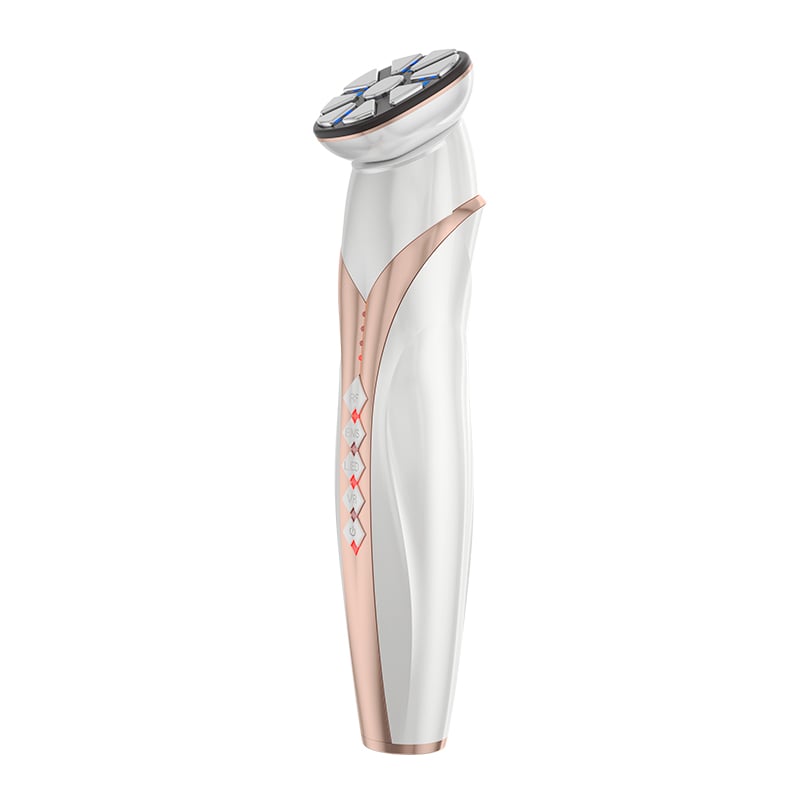
This year’s market is less about a parade of new launches and more about what makes beauty products credible, repeatable, and easier to use. Skincare buyers are asking sharper questions about relevance to their skin, the evidence behind a claim, the waste around a routine, and whether a device belongs in that routine at all. For brand teams, that changes the brief: the strongest beauty products solve a clear job rather than collect fashionable features.
As an observer of home beauty-device development, I would separate short-lived aesthetics from operating trends. A color story can travel quickly; a better way to match a routine to skin needs can reshape formulation, packaging, customer support, and product development. The five shifts below matter because they affect how skincare beauty products are designed and explained.
Personalization used to mean choosing a concern from a menu. The practical version now combines stated goals, routine habits, seasonal context, and, where appropriate, a skin-analysis tool. That does not give every brand a reason to promise a diagnostic result. It means beauty products should make the next decision simpler: which format fits, how often to use it, and what to pair or not pair with it.
For skincare brands, the opportunity is to build a clear recommendation path around a limited set of well-defined needs. Ingredient literacy is rising, but a long ingredient list is not a routine. A moisturizer, a targeted serum, or a light-based home device should be presented with conditions of use and realistic boundaries. If a user has an active skin concern or a compromised barrier, for example, a cautious routine and professional advice may be more appropriate than adding another active. That kind of guidance makes personalized beauty products feel useful rather than intrusive.
Potent ingredients have not disappeared, but the trend is toward products that help consumers use them more thoughtfully. Barrier-supportive routines, gentler cleansing choices, and hydration-focused formats are becoming part of the conversation around performance. In practice, the most suitable beauty products for this trend are not necessarily the ones with the loudest claim. They are the ones that explain how a formula fits into a routine and what a customer can reasonably expect.
This is also where product education matters. Many consumers still treat skincare as a sequence of isolated purchases. A better approach is to show how cleansing, hydration, targeted treatment, and occasional device use can coexist without implying that every person needs every step. The shift is from feature accumulation to routine fit. A product that is comfortable enough to be used consistently can create more value than one that looks impressive in a launch presentation but is quickly abandoned at home.
Trust is increasingly built before checkout. Shoppers encounter claims through product pages, short videos, retail listings, and AI-assisted discovery, so the wording must remain clear in each setting. For cosmetics sold in the EU, Commission Regulation (EU) No 655/2013 sets common criteria for claims, including truthfulness, evidential support, honesty, fairness, and informed decision-making. That is a useful discipline even when a brand is planning for more than one market.
For beauty products, proof-ready communication starts during development. Teams should know which statement is supported by testing, which statement is a sensory description, and which benefit needs more evidence before it reaches the packaging. Avoid turning a basic compliance step into a marketing superlative. Avoid presenting a cosmetic as if it diagnoses or treats a medical condition. Clear limits can seem less dramatic at first, but they protect long-term trust in beauty products.
A material label alone no longer captures sustainability. Buyers and retailers increasingly look at how much packaging is used, whether refills are practical, whether components can be separated, and whether the product survives normal shipping and storage. The relevant question for beauty products is not “Can we call this sustainable?” It is “What reduction or reuse choice can we explain accurately?”
Refill systems work most effectively when the user experience is genuinely easier or more economical over time. A refill pouch that creates confusion, leakage, or an incompatible dispenser is not a meaningful improvement. Brands should test the whole system: closure, cleaning instructions, replenishment path, shipping protection, and the claim language. This is one area where thoughtful industrial design can make beauty products more credible without adding unnecessary complexity.
Consumers increasingly see devices, topical care, and digital guidance as parts of one routine. LED masks, microcurrent tools, ultrasonic devices, and skin-analysis features can all be relevant, but they should not be treated as interchangeable. The right question is whether a device has a defined role, safe instructions, and a comfortable place in the user’s schedule. Home-use beauty products gain credibility when the workflow is simple enough to repeat.
For development and sourcing teams, this creates an opportunity for brands exploring OEM or ODM programs. A strong launch brief considers ergonomics, contact materials, charging or storage, multilingual instructions, market-specific compliance review, and the accompanying skincare routine. For a device supplier, adding every possible mode is not automatically an advantage. A focused product concept with a clear use case can be easier for customers to understand and for a brand to support.
The skincare industry is not moving toward one uniform category of beauty products. It is moving toward clearer fit: a personalized recommendation that respects context, a barrier-aware routine, a claim that can be supported, a package with a considered lifecycle, and a device that earns its place in daily care. Brands that translate those ideas into fewer, better-explained beauty products will be better positioned to build trust this year.
Use this short scorecard when comparing beauty products concepts. It keeps trend discussions connected to decisions that teams can document, test, and explain. It is not a claim template; each line is a prompt for reviewing beauty products in context.
| Trend signal | Product-team question | Practical checkpoint |
|---|---|---|
| Personalization | Do the beauty products make a next step clearer? | Check that beauty products guidance reflects routine context. |
| Barrier-aware care | Can the beauty products fit a measured routine? | Explain how beauty products are introduced and when caution is sensible. |
| Evidence | Which beauty products statements have support? | Keep beauty products claims aligned with available evidence. |
| Packaging | Are refillable beauty products easy to use? | Test whether beauty products packaging can be handled, stored, and replenished clearly. |
| Devices | Do device-led beauty products have one clear role? | Give beauty products users safe, repeatable instructions. |
For each launch, review beauty products across formula or hardware, instructions, packaging, and evidence together. Teams that document beauty products decisions early can revise beauty products messages without losing the underlying product logic. In day-to-day work, simpler beauty products choices often make customer support easier; clearer beauty products boundaries can also make routine advice more credible. The aim is not to make every range look alike, but to make beauty products easier to understand and use.

2026/10/30
Discover why in-house mold development helps an RF beauty device manufacturer improve product consistency, iteration speed, tooling control, and production readiness.

2026/10/30
Learn how to verify an RF beauty device manufacturer's R&D and prototyping capabilities using practical engineering workflows and audit checklists.

2026/10/30
Learn what shapes MOQ when choosing an RF beauty device manufacturer and how to plan a lower-risk first order with balanced platform and customization.

2026/10/30
Use this RF beauty device manufacturer evaluation checklist to compare safety evidence, OEM and ODM capability, quality control, and launch readiness.

2026/10/30
See how technology makes beauty at home more guided, consistent, and informed—plus a practical checklist for choosing devices wisely.

2026/10/30
Explore how AI and smart devices shape the future of beauty with responsive routines, clear guidance, trustworthy design, and user-controlled care.

Ideal for daily facial care routines, providing easy-to-use beauty solutions at home.

Perfect for spas and salons’ frequent treatments, enhancing client experiences and results.

Supports dermatologists with advanced devices for professional skin therapy sessions.

Delivers innovative solutions for full-body massage and relaxation with home devices.

Features anti-aging technologies to help reduce wrinkles and stimulate skin vitality.

Specialized devices for safe and effective hair removal suitable for home or clinic use.

Our customers love the Perfect Idea beauty devices. Quality, packaging, and results are all outstanding. We saw increased repeat sales after adding their facial cleansers to our lineup. Their support team is responsive and reliable.

Perfect Idea brings innovation and reliability to home beauty appliances. Our collaboration introduced their massage tools to Japanese women, boosting customer satisfaction and growing our brand trust across the region.

We partnered with Shenzhen Perfect Idea Tech for their beauty equipment. The shipping was fast and every product matched our expectations. Their home-use massagers are especially popular with local salons and home users.

The stylish packaging and attractive design make Perfect Idea stand out. French consumers appreciate the easy instructions and visible results. Communication was efficient and orders always arrived on time.

Perfect Idea home use personal care devices have become a favorite with our clients. The beauty device line offers quality at a reasonable price, and technical training for our staff made onboarding easy.

We selected Perfect Idea for our beauty product portfolio and have seen very positive feedback from our customers. Products are easy to market online and the customer support is reliable and helpful.
