 EN
Home Skincare
Ideal for daily facial care routines, providing easy-to-use beauty solutions at home.

2026/09/21
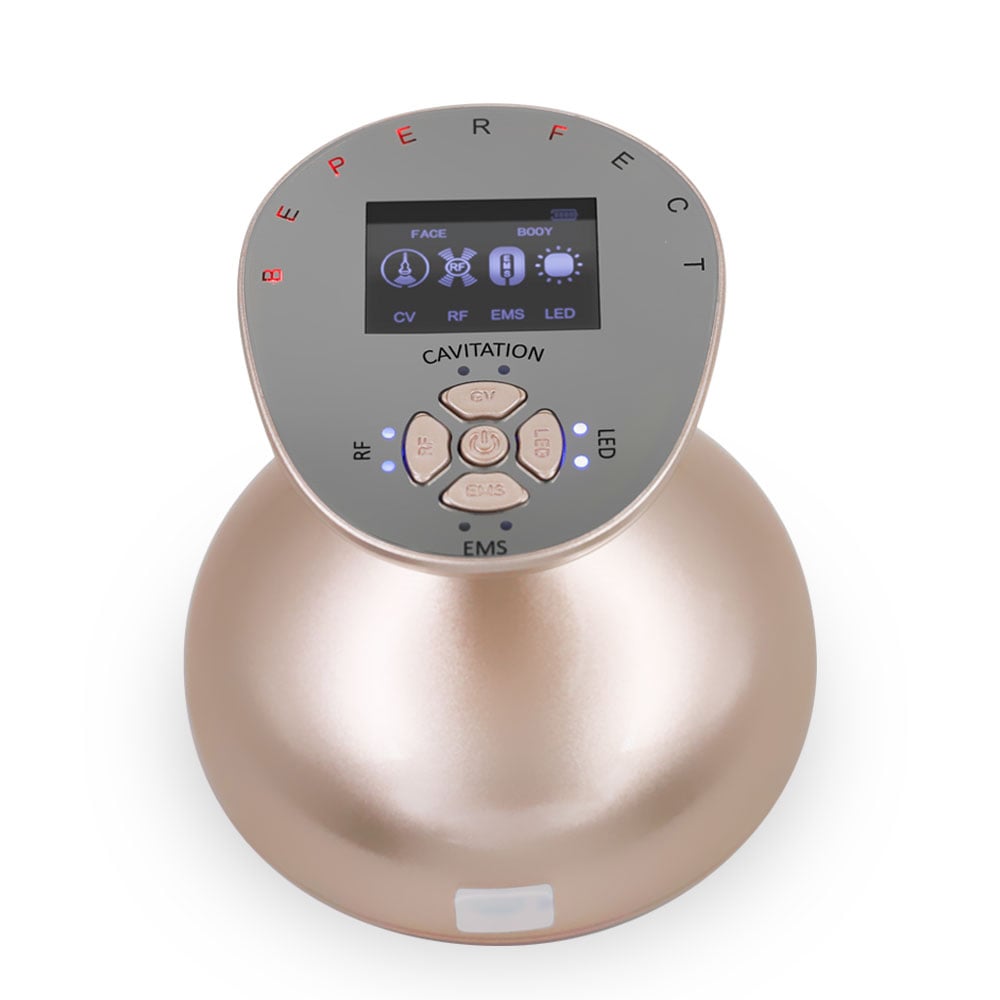
Buying beauty equipment for a professional brand is not the same as filling a salon cart. The buyer has to balance product-market fit, safety evidence, repeatable manufacturing, packaging, claims, and the practical question of whether a supplier can still support the program after the first purchase order. A low unit price can look attractive until samples vary, documentation arrives late, or a launch claim proves too ambitious for the target market.
This guide is built for brand owners, distributors, and procurement teams sourcing home-use beauty equipment for international markets. It focuses on a disciplined process: define the brief, test supplier evidence, control samples, and make production readiness visible before a large commitment.
Before contacting suppliers, turn the idea into a one-page sourcing brief. State the user, use setting, target price band, hero benefit, target markets, sales channel, expected annual volume, packaging language needs, and desired launch date. Include what the product must not claim. This changes supplier conversations from “What do you have?” to “Can you show evidence that this configuration fits this program?”
For home beauty equipment, separate the technology decision from the marketing decision. LED, radio-frequency, ultrasonic, microcurrent, and temperature-based approaches serve different routines and require different user instructions, components, and validation plans. More features do not automatically create a better SKU. In practice, a focused device with a clear routine, stable performance, and understandable instructions is often easier to launch and support than a feature-heavy concept.
Use a shortlist that matches the intended routine rather than a generic device ranking. For example, a brand developing an LED-focused line should compare coverage, wearability, controls, charging approach, thermal management, and the evidence behind the final consumer claims. A microcurrent or RF concept needs an equally specific checklist around contact method, comfort, operating safeguards, consumables, and instructions.
Professional beauty equipment buyers should also look at portfolio logic. A supplier with experience across home beauty devices, home massage products, and personal-care appliances may simplify vendor management for a multi-category launch, but that is only useful if each category has its own engineering and quality controls. Ask where the team draws the line between an adjacent product family and a genuinely transferable capability.
A polished sample is a starting point, not proof of scalable capability. Ask the supplier to explain its development flow from concept review through tooling, pilot build, inspection, and shipment. The answer should identify owners, inputs, approvals, and how design changes are recorded. If the workflow is vague, the same vagueness often appears later in revisions and production communication.
From an international buyer’s perspective, the right comparison is not factory size versus factory size. It is the supplier’s ability to produce the agreed version repeatedly and explain what changed when something does not match.
Compliance cannot be bolted on after packaging artwork is approved. The applicable evidence depends on the product, market, intended use, channel, and claims. Official U.S. FDA guidance notes that medical-device determination depends on intended use and indications for use; FDA also notes that some aesthetic devices may be regulated depending on intended use and whether they affect body structure or function. That is why claim review needs to sit beside product development, not behind it.
For EU-bound consumer products, official trade guidance on the General Product Safety Regulation describes a need for technical documentation supporting safety. Buyers should ask what documentation is relevant to their target market, who owns each document, which configuration it covers, and when it will be updated. Do not treat a logo, a test report cover page, or an unverified certificate as a complete compliance strategy.
A workable evidence pack normally maps the product configuration to its labeling, instructions, risk information, test scope, and claim language. Where a supplier cites a certification or test, ask for the complete, current material and verify that the model, revision, market, and intended use match your program. If your launch claim changes, revisit the assessment rather than assuming the old file applies.
Many sourcing projects lose time because the team treats “sample approved” as a single event. Break it into gates. First, evaluate the concept sample for ergonomics, user flow, visual direction, and core function. Next, review a pre-production sample for final materials, packaging, labeling, instructions, and the agreed configuration. Then define the production approval criteria before the first build starts.
| Gate | Buyer decision | Evidence to retain |
|---|---|---|
| Concept | Is the product direction commercially credible? | Brief, feedback log, open-risk list |
| Engineering sample | Does the configuration meet the agreed functional requirements? | Specification, test observations, revision record |
| Pre-production | Are product, pack, labeling, and instructions launch-ready? | Signed golden sample and artwork approval |
| First production | Did the build match the approved version? | Inspection results, batch and shipment records |
Agree in writing on what happens when a result falls outside specification. A good supplier does not promise that no issue will occur; it provides a predictable route for containment, root-cause review, corrective action, and approval to resume.
For beauty equipment, the quoted unit price is only one part of the decision. Include tooling, sampling iterations, testing, packaging development, spare parts, inspection, rework exposure, minimum order requirements, payment terms, freight readiness, and after-sales support. Calculate the cost of a delayed launch as well: an inexpensive product that needs repeated artwork or component changes can be the more expensive choice.
Ask each finalist to quote the same bill of requirements. Then score it across commercial fit, technical fit, evidence quality, communication, production controls, and serviceability. A transparent scorecard makes trade-offs visible and gives procurement, product, compliance, and marketing a common record.
The right beauty equipment supplier is not automatically the one with the widest catalogue or lowest first quote. It is the supplier whose product scope fits your brand, whose documentation can be checked, whose communication makes risks visible early, and whose production process can reproduce the approved version. Treat the first order as the output of a controlled sourcing system, not a leap of faith. That approach gives your team a stronger foundation for a safe, credible, and scalable beauty-device program.

2026/10/30
Discover why in-house mold development helps an RF beauty device manufacturer improve product consistency, iteration speed, tooling control, and production readiness.

2026/10/30
Learn how to verify an RF beauty device manufacturer's R&D and prototyping capabilities using practical engineering workflows and audit checklists.

2026/10/30
Learn what shapes MOQ when choosing an RF beauty device manufacturer and how to plan a lower-risk first order with balanced platform and customization.

2026/10/30
Use this RF beauty device manufacturer evaluation checklist to compare safety evidence, OEM and ODM capability, quality control, and launch readiness.

2026/10/30
See how technology makes beauty at home more guided, consistent, and informed—plus a practical checklist for choosing devices wisely.

2026/10/30
Explore how AI and smart devices shape the future of beauty with responsive routines, clear guidance, trustworthy design, and user-controlled care.

Ideal for daily facial care routines, providing easy-to-use beauty solutions at home.

Perfect for spas and salons’ frequent treatments, enhancing client experiences and results.

Supports dermatologists with advanced devices for professional skin therapy sessions.

Delivers innovative solutions for full-body massage and relaxation with home devices.

Features anti-aging technologies to help reduce wrinkles and stimulate skin vitality.

Specialized devices for safe and effective hair removal suitable for home or clinic use.

Our customers love the Perfect Idea beauty devices. Quality, packaging, and results are all outstanding. We saw increased repeat sales after adding their facial cleansers to our lineup. Their support team is responsive and reliable.

Perfect Idea brings innovation and reliability to home beauty appliances. Our collaboration introduced their massage tools to Japanese women, boosting customer satisfaction and growing our brand trust across the region.

We partnered with Shenzhen Perfect Idea Tech for their beauty equipment. The shipping was fast and every product matched our expectations. Their home-use massagers are especially popular with local salons and home users.

The stylish packaging and attractive design make Perfect Idea stand out. French consumers appreciate the easy instructions and visible results. Communication was efficient and orders always arrived on time.

Perfect Idea home use personal care devices have become a favorite with our clients. The beauty device line offers quality at a reasonable price, and technical training for our staff made onboarding easy.

We selected Perfect Idea for our beauty product portfolio and have seen very positive feedback from our customers. Products are easy to market online and the customer support is reliable and helpful.
