 EN
Home Skincare
Ideal for daily facial care routines, providing easy-to-use beauty solutions at home.

2026/10/11
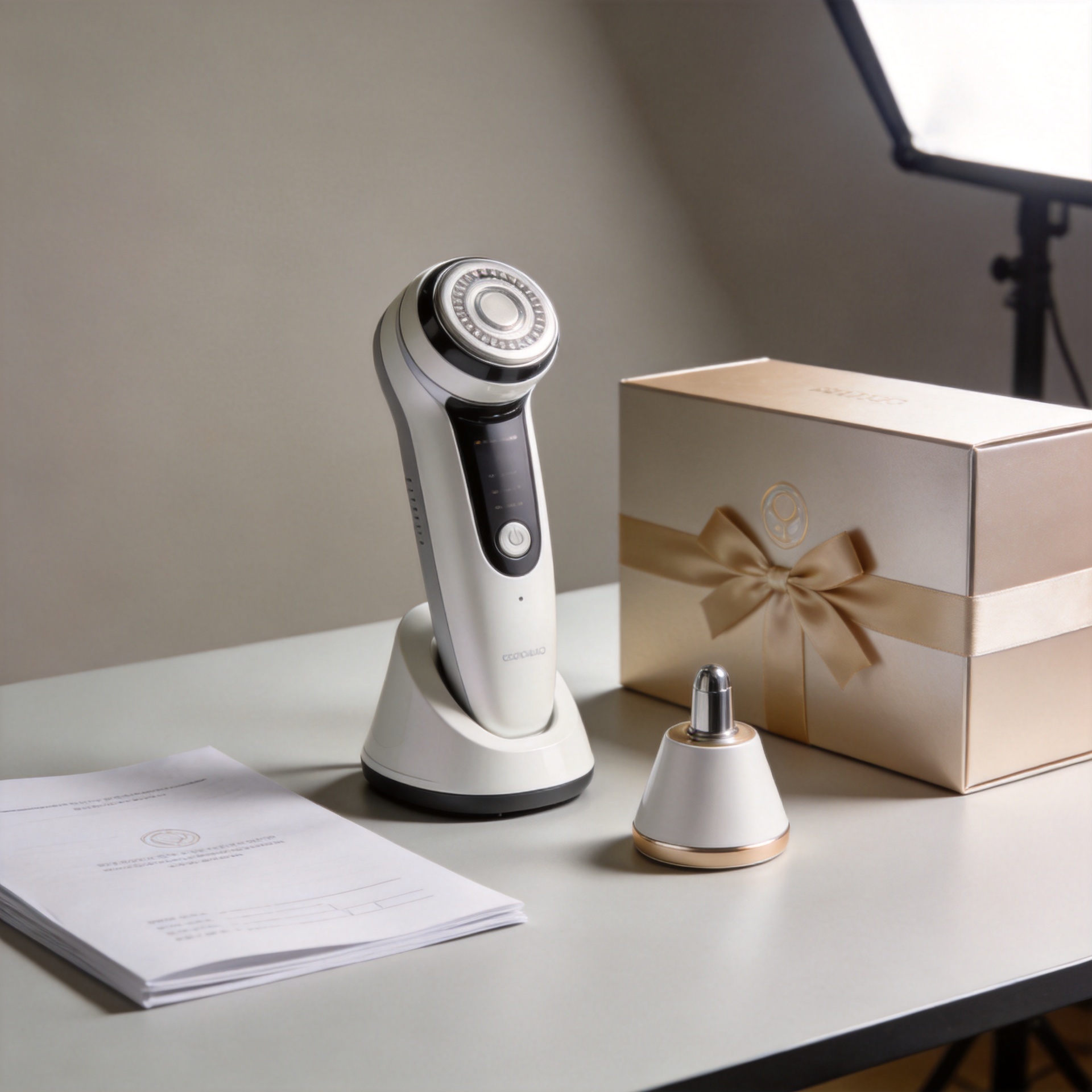
For a distributor, home use beauty equipment is not one product category. It is a portfolio decision that connects technology, claims, packaging, service, and local market expectations. A device can look compelling in a sample review yet create expensive problems when its instructions are unclear, its returns process is undefined, or its claims do not match the destination market.
From an international brand-procurement perspective, the strongest home use beauty equipment program is not built around the lowest unit price. It is built around repeatable quality, a believable consumer routine, and evidence a channel partner can explain. The guide below gives distributors a practical way to compare suppliers before committing to an assortment.
Many teams begin by asking which functions are trending. A more useful question is: what job will each item perform in the range? Home use beauty equipment can support cleansing, light-based routines, microcurrent-inspired facial care, massage, or appearance-focused tightening routines, but every additional technology raises the burden on education and after-sales support.
Build a simple range architecture: an accessible entry item, a focused hero device, and a carefully selected step-up option. This makes home use beauty equipment easier for sales teams to position and prevents a catalogue from becoming a collection of overlapping claims. Feature depth matters only when the customer can understand why it belongs in a routine.
A distributor should translate technical choices into a realistic at-home experience. For LED-based products, assess how users select modes, wear or hold the device, clean it, and understand the intended routine. For RF, EMS, or microcurrent-style categories, check whether the instructions specify compatible skincare, contact requirements, session limits, contraindication language, and what to do if a user feels discomfort.
It is tempting to rank home use beauty equipment by the longest specification sheet. In practice, parameters alone rarely predict satisfaction. A device that is intuitive, comfortable, and consistently supported may be a better commercial fit than a multifunction model that buyers use once and abandon. Ask for the actual user journey: unboxing, charging, preparation, treatment, cleaning, storage, and support.
Claims must be reviewed before marketing assets are localized. In the United States, the intended use of an aesthetic product can affect how it is regulated, particularly when language implies an effect on the body's structure or function. In European markets, applicable conformity and documentation duties depend on the exact product and intended use. Neither point is a shortcut to classification; both are reasons to engage qualified regulatory advisers for the markets you serve.
For every home use beauty equipment SKU, request a market-by-market document pack rather than relying on a logo, a verbal promise, or a generic certificate. The file should make it easier to verify product identity, labeling, instructions, testing documentation, traceability, and the supplier contact responsible for technical questions. If a supplier cannot explain which documents apply to a specific configuration, treat that as a due-diligence issue.
A polished sample is useful, but it is not proof of production consistency. Experienced buyers often learn this after a first order: the sample passed a hands-on review, while the mass-production version had a different finish, accessory set, firmware behavior, or packaging detail. For home use beauty equipment, document the approved sample, bill of materials, key appearance standards, accessory list, packaging artwork, and inspection checkpoints.
Ask how the factory controls incoming components, assembly, functional testing, battery or charging checks where relevant, and final inspection. Then ask what happens when the same defect appears across a batch. The goal is not to demand an unrealistic zero-risk promise. The goal is to learn whether the supplier has a defined corrective-action process and can provide usable information to a distributor.
Distributors do not sell devices in a vacuum. The commercial package for home use beauty equipment should include clear product training, image assets that match the approved configuration, a localized FAQ, spare-part or replacement logic where appropriate, and an escalation path for customer complaints. Packaging should make the category, expected use, and essential warnings easy to find without overpromising outcomes.
Before placing a broader order, run a small launch-readiness review with sales, customer service, compliance, and operations. What question will a retailer ask first? What can a support agent say without drifting beyond approved claims? How will returns be coded so recurring problems can be identified? This cross-functional step is often more revealing than another round of feature comparisons.
A scorecard keeps home use beauty equipment decisions comparable across suppliers. Weight the categories to reflect your business rather than using an identical template for every market.
| Area | What to assess |
|---|---|
| Consumer fit | Routine clarity, comfort, usability, and realistic price position |
| Quality control | Approved sample controls, inspection records, and corrective-action process |
| Compliance readiness | Product-specific documentation, labeling review, and claims governance |
| Commercial support | Training, content approval, service process, and response ownership |
| Scalability | Lead times, configuration control, packaging localization, and communication cadence |
Score the evidence, not the confidence of a sales presentation. A supplier may be a good partner for one home use beauty equipment category and not yet ready for a more complex one. That distinction helps distributors scale deliberately.
A first order should validate the complete market system: product setup, customer comprehension, sell-through feedback, service tickets, and replenishment communication. Track recurring questions and returns by SKU, not just total sales. Those signals show whether home use beauty equipment is meeting its promise as a usable consumer product, not merely attracting attention at launch.
A sound buying decision is therefore a disciplined sequence: define the portfolio role, compare the user routine, verify the document trail, control the sample-to-production handoff, and test the support model. With that framework, distributors can choose home use beauty equipment that is easier to explain, safer to position, and more sustainable to grow.

2026/10/30
Discover why in-house mold development helps an RF beauty device manufacturer improve product consistency, iteration speed, tooling control, and production readiness.

2026/10/30
Learn how to verify an RF beauty device manufacturer's R&D and prototyping capabilities using practical engineering workflows and audit checklists.

2026/10/30
Learn what shapes MOQ when choosing an RF beauty device manufacturer and how to plan a lower-risk first order with balanced platform and customization.

2026/10/30
Use this RF beauty device manufacturer evaluation checklist to compare safety evidence, OEM and ODM capability, quality control, and launch readiness.

2026/10/30
See how technology makes beauty at home more guided, consistent, and informed—plus a practical checklist for choosing devices wisely.

2026/10/30
Explore how AI and smart devices shape the future of beauty with responsive routines, clear guidance, trustworthy design, and user-controlled care.

Ideal for daily facial care routines, providing easy-to-use beauty solutions at home.

Perfect for spas and salons’ frequent treatments, enhancing client experiences and results.

Supports dermatologists with advanced devices for professional skin therapy sessions.

Delivers innovative solutions for full-body massage and relaxation with home devices.

Features anti-aging technologies to help reduce wrinkles and stimulate skin vitality.

Specialized devices for safe and effective hair removal suitable for home or clinic use.

Our customers love the Perfect Idea beauty devices. Quality, packaging, and results are all outstanding. We saw increased repeat sales after adding their facial cleansers to our lineup. Their support team is responsive and reliable.

Perfect Idea brings innovation and reliability to home beauty appliances. Our collaboration introduced their massage tools to Japanese women, boosting customer satisfaction and growing our brand trust across the region.

We partnered with Shenzhen Perfect Idea Tech for their beauty equipment. The shipping was fast and every product matched our expectations. Their home-use massagers are especially popular with local salons and home users.

The stylish packaging and attractive design make Perfect Idea stand out. French consumers appreciate the easy instructions and visible results. Communication was efficient and orders always arrived on time.

Perfect Idea home use personal care devices have become a favorite with our clients. The beauty device line offers quality at a reasonable price, and technical training for our staff made onboarding easy.

We selected Perfect Idea for our beauty product portfolio and have seen very positive feedback from our customers. Products are easy to market online and the customer support is reliable and helpful.
