 EN
Home Skincare
Ideal for daily facial care routines, providing easy-to-use beauty solutions at home.

2026/10/21
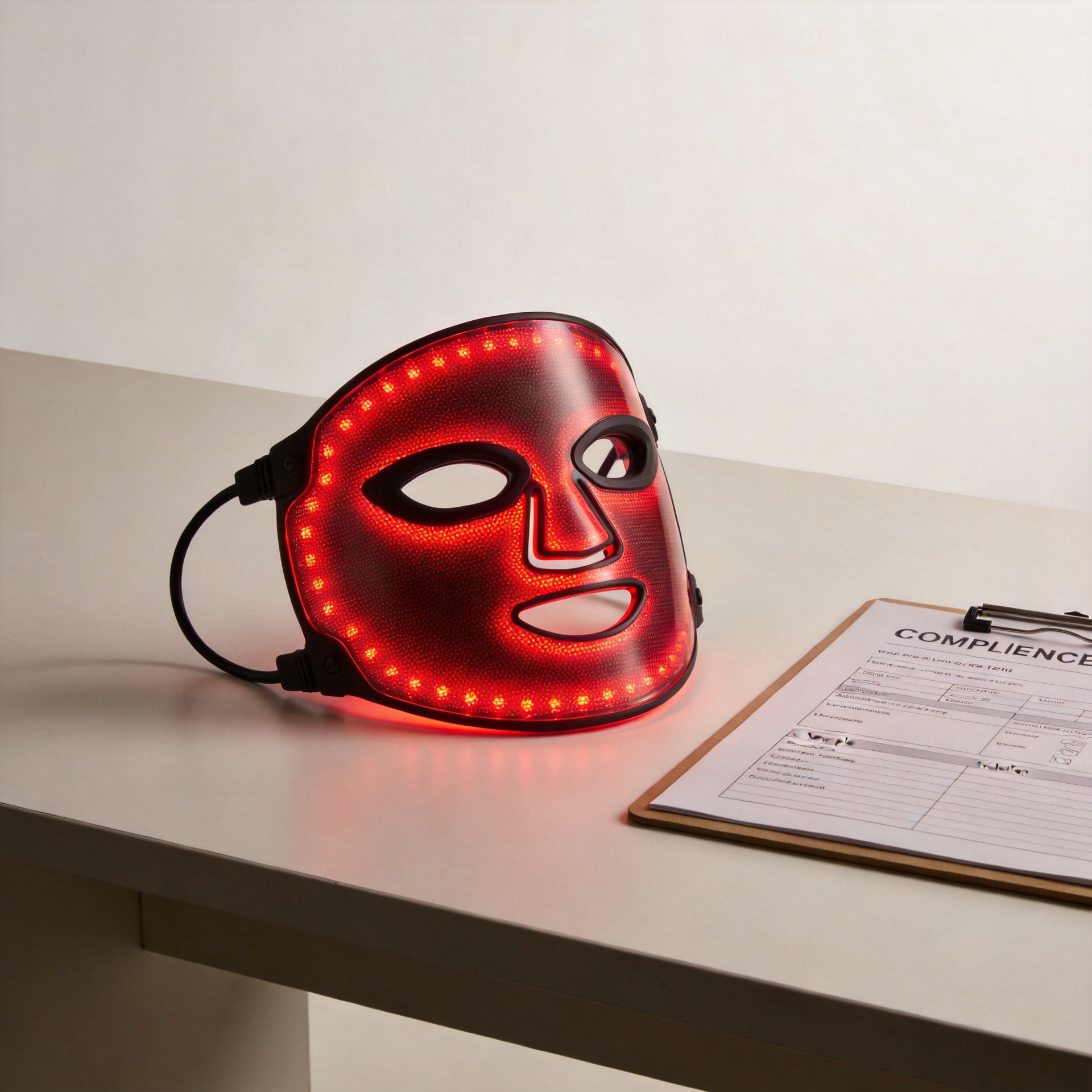
For a distributor, a red light therapy mask is not simply a bright-looking beauty accessory. It is a product, a claims package, a compliance workload, and an after-sales obligation that must all travel together. Consumer reviews tend to compare comfort, colors, and promised results. A distributor needs a different lens: can the supplier support the exact model, the target market, the retail story, and the batch quality you will be accountable for?
From an OEM/ODM brand-development perspective, the most reliable red light therapy mask decision is rarely the lowest quote or the longest feature list. It is the option whose technical file, sample behavior, packaging, and production controls can be checked before a purchase order is released. The guide below turns that principle into a practical buying process.
Before comparing a red light therapy mask supplier, define the product’s intended retail position. Is the range meant for a premium skincare audience seeking a simple home routine, a value-led mass channel, a professional-beauty retailer, or a private-label launch? That choice affects materials, fit, charging design, user instructions, packaging language, price architecture, and the claims that can responsibly accompany the product.
More modes do not automatically make a stronger offer. If shoppers cannot understand the controls, or instructions become difficult to localize, a longer feature list can make the product harder to sell. A better brief identifies the target customer, the routine the mask needs to fit, the sales channels, and the markets that will receive it. Then ask suppliers to explain how the proposed red light therapy mask serves that brief rather than asking them to recite a generic specification sheet.
Do not accept a general statement that a factory “has CE” or that an LED mask is “FDA approved.” Regulatory status, testing, and permitted marketing claims vary by market, intended use, and model. For the exact red light therapy mask under review, request a document register that identifies the model number, configuration, accessories, test laboratory, report date, and the markets to which each document applies.
That distinction protects both the distributor and the supplier. Compliance evidence is useful only when it maps to the item you will ship and to the words your channel partners will use.
A useful sample review goes beyond checking that the LEDs turn on. Wear the red light therapy mask for the planned session length, inspect the fit around different face shapes, check strap adjustment, assess heat and noise, review how the controller responds, and read the instructions as a first-time customer would. Document findings in a simple scorecard so competing samples are judged consistently.
| Review area | What to verify | Why distributors should care |
|---|---|---|
| User experience | Fit, weight distribution, controls, charging, cleaning guidance, and clarity of timer cues. | Confusing routines and poor comfort can drive returns even when the product looks strong in photos. |
| Build consistency | Seams, shell alignment, buttons, cable connection, straps, and packaging condition across more than one sample. | A single polished sample may not represent routine production quality. |
| Retail readiness | Carton durability, localized instructions, warning placement, SKU labels, inserts, and barcode workflow. | These details affect fulfillment, shelf execution, and customer-support load. |
| Evidence traceability | Model numbers on reports, declarations, manuals, and product labels. | Traceability makes internal approval and downstream retailer review more manageable. |
A common sourcing lesson is that a polished sample does not, by itself, prove routine production quality. Ask how the factory controls incoming components, in-process assembly, functional testing, final inspection, and lot traceability. Then agree on what records will be available if a retailer or customer raises an issue after launch.
When choosing among red light therapy mask suppliers, build a weighted comparison rather than letting unit cost decide the outcome. A low initial price can be outweighed by missing files, inconsistent packaging, unclear warranty handling, or a production change that arrives without notification. The right weighting will vary by channel, but a distributor usually needs to compare four areas together.
For distributors moving into private label, OEM capability is more than putting a logo on a box. Treat approved artwork, manuals, and packaging as controlled production inputs. If the planned launch includes more than one market, confirm language versions and country-specific markings early rather than treating them as a final-week artwork task.
Before a first production order, bring procurement, quality, compliance, marketing, and customer service into one review. A red light therapy mask program is most vulnerable when each team assumes another team has checked a key issue. The following questions surface decisions that should be explicit:
Consumers will still ask what a red light therapy mask does, how often it should be used, and whether it is appropriate for them. A good distributor program gives retailers and customers clear instructions without crossing into unsupported outcomes. Use the supplier’s verified documentation, the approved intended-use language, and local review to shape product pages, inserts, training, and customer-service scripts.
Clear practical education often serves the channel better than dramatic promises. Explain how to set expectations, follow the manual, keep the device clean, and stop use or seek appropriate professional advice when instructions or individual circumstances call for it. For markets and channels with tighter requirements, have qualified regulatory and legal reviewers approve claims before launch.
The strongest red light therapy mask sourcing decision is a controlled system: an appropriate retail position, a model-specific evidence file, a representative sample, documented quality gates, approved private-label assets, and a clear after-sales plan. If a supplier can support those elements, the conversation can move from an attractive prototype to a scalable distribution program. If the documents, sample, and production controls do not line up, pause the purchase order and resolve the gap first.
That approach does not promise that one mask will be right for every market. It gives distributors a repeatable way to choose a red light therapy mask that is easier to explain, support, and scale responsibly.

2026/10/30
Discover why in-house mold development helps an RF beauty device manufacturer improve product consistency, iteration speed, tooling control, and production readiness.

2026/10/30
Learn how to verify an RF beauty device manufacturer's R&D and prototyping capabilities using practical engineering workflows and audit checklists.

2026/10/30
Learn what shapes MOQ when choosing an RF beauty device manufacturer and how to plan a lower-risk first order with balanced platform and customization.

2026/10/30
Use this RF beauty device manufacturer evaluation checklist to compare safety evidence, OEM and ODM capability, quality control, and launch readiness.

2026/10/30
See how technology makes beauty at home more guided, consistent, and informed—plus a practical checklist for choosing devices wisely.

2026/10/30
Explore how AI and smart devices shape the future of beauty with responsive routines, clear guidance, trustworthy design, and user-controlled care.

Ideal for daily facial care routines, providing easy-to-use beauty solutions at home.

Perfect for spas and salons’ frequent treatments, enhancing client experiences and results.

Supports dermatologists with advanced devices for professional skin therapy sessions.

Delivers innovative solutions for full-body massage and relaxation with home devices.

Features anti-aging technologies to help reduce wrinkles and stimulate skin vitality.

Specialized devices for safe and effective hair removal suitable for home or clinic use.

Our customers love the Perfect Idea beauty devices. Quality, packaging, and results are all outstanding. We saw increased repeat sales after adding their facial cleansers to our lineup. Their support team is responsive and reliable.

Perfect Idea brings innovation and reliability to home beauty appliances. Our collaboration introduced their massage tools to Japanese women, boosting customer satisfaction and growing our brand trust across the region.

We partnered with Shenzhen Perfect Idea Tech for their beauty equipment. The shipping was fast and every product matched our expectations. Their home-use massagers are especially popular with local salons and home users.

The stylish packaging and attractive design make Perfect Idea stand out. French consumers appreciate the easy instructions and visible results. Communication was efficient and orders always arrived on time.

Perfect Idea home use personal care devices have become a favorite with our clients. The beauty device line offers quality at a reasonable price, and technical training for our staff made onboarding easy.

We selected Perfect Idea for our beauty product portfolio and have seen very positive feedback from our customers. Products are easy to market online and the customer support is reliable and helpful.
