 EN
Home Skincare
Ideal for daily facial care routines, providing easy-to-use beauty solutions at home.

2026/10/01
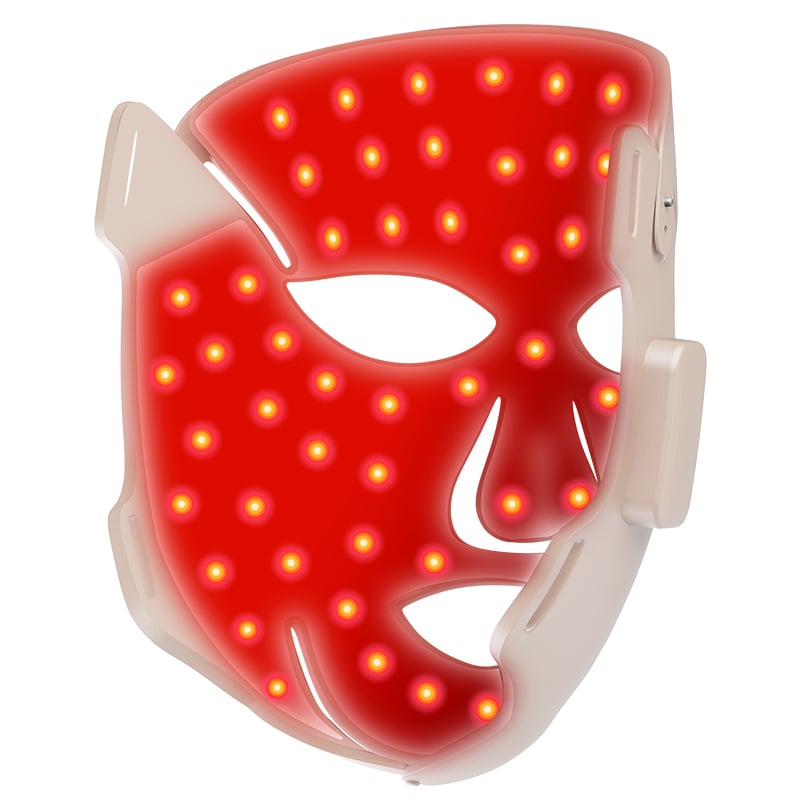
For a retailer, sourcing a led light therapy mask is less about finding the longest feature list and more about proving that the product can be sold, supported, and replenished with confidence. Consumer-facing listings often lead with colors, LED counts, or visible skin concerns. A practical buying program asks different questions: Is the device specification traceable? Are the intended-use statements controlled? Will the next production run match the approved sample?
From an international brand buyer’s perspective, price is only one part of the decision. A dependable LED mask program has a clear target customer, documented safety and quality checks, packaging suitable for the destination market, and a supplier that can maintain the approved build at scale.
Before comparing factories, write a one-page retail brief for the led light therapy mask category. Define the channel, target price band, expected reorder cadence, and whether the assortment is positioned around home skincare, acne-focused routines, or general beauty-device gifting. This brief prevents a common sourcing mistake: approving an attractive sample that does not fit the final customer, margin, or support model.
A spec sheet is useful only when each line can be tested or documented. For a led facial mask, ask the supplier to define the light program, wavelengths offered, irradiance measurement method, treatment timer, eye-protection approach, battery and charging design, and materials touching the face. Do not assume that a high LED count establishes performance, comfort, or consistency. It is a description that needs context.
Build a comparison table that places the sample result beside the supplier declaration. Check whether controls are easy to understand, whether the mask stays stable across face shapes, and whether heat, noise, or cable placement changes the user experience. A clinical strength led mask claim should not be accepted as a category label; request the exact evidence that supports the wording and have the applicable market review it before packaging or advertising is printed.
| Evaluation area | What to request | Retail decision |
|---|---|---|
| Optical program | Documented wavelength and output test method | Confirm the program matches the approved claims |
| Wearability | Fit samples and adjustment instructions | Reduce comfort-related returns |
| Electrical design | Charging, battery, and protection documentation | Assess safety and serviceability |
| Production control | Incoming, in-process, and final inspection plan | Protect sample-to-batch consistency |
Market access is not a box to tick after production. Ask which product classification and documentation apply in every intended sales market, who owns each document, its scope, and the model number it covers. Public regulatory records may include light-therapy devices, but a generic reference does not on its own prove that a particular led light therapy mask has the right status for your product and intended use.
Use a document-control checklist: supplier legal entity, factory address, model and variant mapping, test-report scope, labeling artwork, user instructions, traceability code, and revision date. Have a qualified compliance adviser confirm the requirements for your markets. This avoids a familiar failure mode in cross-border retail: the sample looks ready, but the label, instructions, or claim language stops the launch.
Retailers should treat the first sample as an entry point, not final proof. During supplier qualification, ask how LEDs, drivers, batteries, straps, and plastics are sourced; how substitutions are approved; and how the factory verifies assembly and function. Request an inspection plan with measurable acceptance criteria, plus a process for handling defects and corrective actions.
One useful test is to review a pilot batch against the golden sample. Compare fit, surface finish, charging behavior, timer operation, packaging contents, and documentation. This is particularly important for an adjustable led mask, where small changes to strap hardware or shell flexibility can affect usability and return rates. The goal is not to demand perfection; it is to make variation visible before it reaches stores.
The strongest retail launch connects product evidence with customer communication. Draft packaging, instructions, online copy, and training notes from the same approved claim matrix. Avoid promises that go beyond the device evidence or local requirements. Explain normal use, contraindication review, cleaning, charging, and when a customer should seek professional advice.
Plan the after-sales path before placing the first PO: define warranty period, replacement-part availability, response times, fault codes, and how returns will be analyzed. Reviews of led mask benefits may attract shoppers, but a retailer earns repeat sales by making setup and support straightforward when a customer has questions.
The right led light therapy mask for a retailer is the one a supplier can document, reproduce, and support—not simply the one with the most ambitious claims. Use the sourcing process to connect product specification, compliance review, production controls, packaging, and after-sales into one decision. That discipline gives your team a clearer basis for choosing a supplier and a more resilient product program once the first orders ship.

2026/10/30
Discover why in-house mold development helps an RF beauty device manufacturer improve product consistency, iteration speed, tooling control, and production readiness.

2026/10/30
Learn how to verify an RF beauty device manufacturer's R&D and prototyping capabilities using practical engineering workflows and audit checklists.

2026/10/30
Learn what shapes MOQ when choosing an RF beauty device manufacturer and how to plan a lower-risk first order with balanced platform and customization.

2026/10/30
Use this RF beauty device manufacturer evaluation checklist to compare safety evidence, OEM and ODM capability, quality control, and launch readiness.

2026/10/30
See how technology makes beauty at home more guided, consistent, and informed—plus a practical checklist for choosing devices wisely.

2026/10/30
Explore how AI and smart devices shape the future of beauty with responsive routines, clear guidance, trustworthy design, and user-controlled care.

Ideal for daily facial care routines, providing easy-to-use beauty solutions at home.

Perfect for spas and salons’ frequent treatments, enhancing client experiences and results.

Supports dermatologists with advanced devices for professional skin therapy sessions.

Delivers innovative solutions for full-body massage and relaxation with home devices.

Features anti-aging technologies to help reduce wrinkles and stimulate skin vitality.

Specialized devices for safe and effective hair removal suitable for home or clinic use.

Our customers love the Perfect Idea beauty devices. Quality, packaging, and results are all outstanding. We saw increased repeat sales after adding their facial cleansers to our lineup. Their support team is responsive and reliable.

Perfect Idea brings innovation and reliability to home beauty appliances. Our collaboration introduced their massage tools to Japanese women, boosting customer satisfaction and growing our brand trust across the region.

We partnered with Shenzhen Perfect Idea Tech for their beauty equipment. The shipping was fast and every product matched our expectations. Their home-use massagers are especially popular with local salons and home users.

The stylish packaging and attractive design make Perfect Idea stand out. French consumers appreciate the easy instructions and visible results. Communication was efficient and orders always arrived on time.

Perfect Idea home use personal care devices have become a favorite with our clients. The beauty device line offers quality at a reasonable price, and technical training for our staff made onboarding easy.

We selected Perfect Idea for our beauty product portfolio and have seen very positive feedback from our customers. Products are easy to market online and the customer support is reliable and helpful.
