 EN
Home Skincare
Ideal for daily facial care routines, providing easy-to-use beauty solutions at home.

2026/10/20
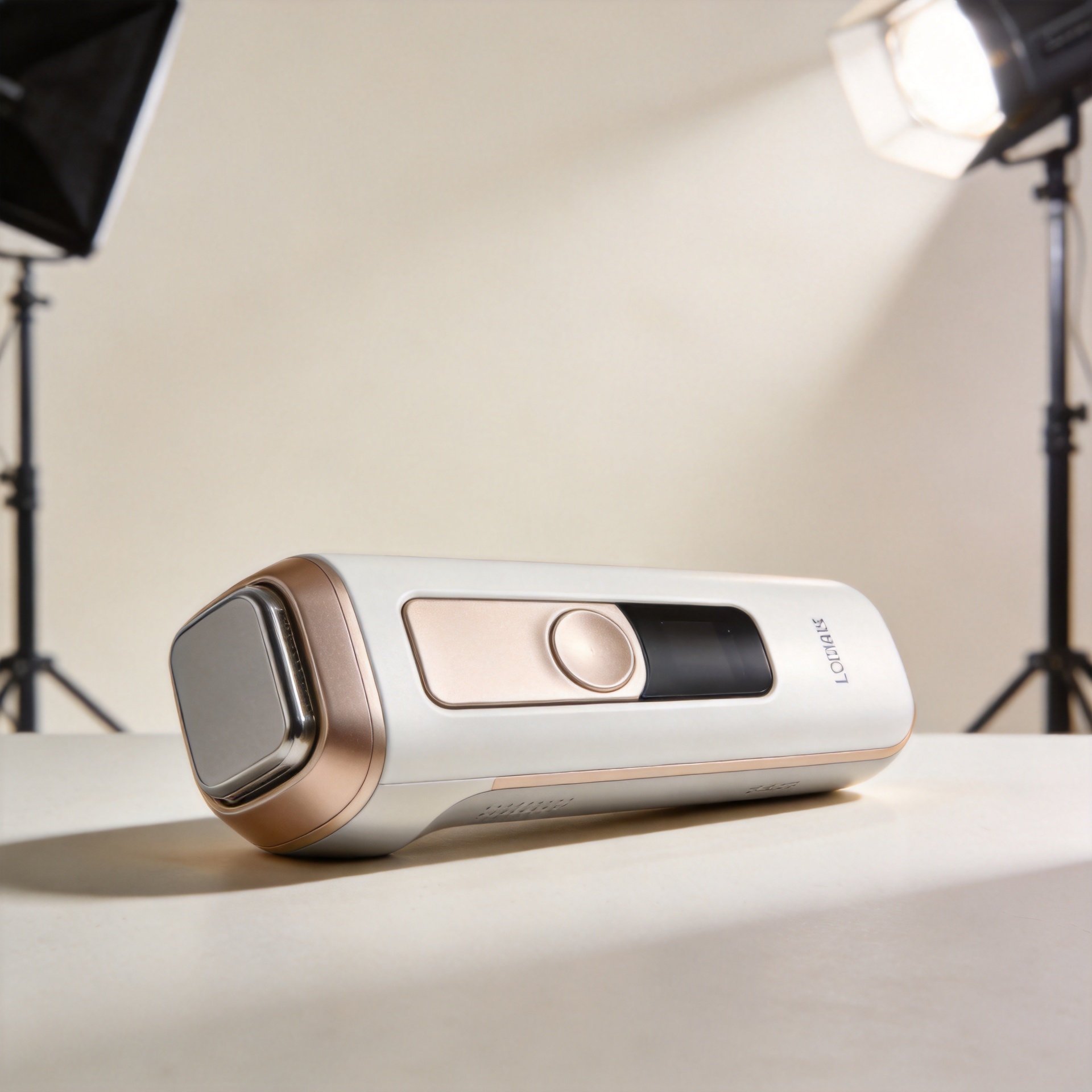
Choosing a skin care device is not the same as choosing another accessory for a beauty range. For a brand, the decision connects consumer routines, product claims, safety documentation, packaging, service, and the practical realities of repeat production. A device can look convincing on a specification sheet yet still be a poor skin care launch if it is hard to explain, awkward to use, or difficult to support after sale.
From an OEM/ODM brand-development perspective, the most useful question is not “Which technology is most appropriate?” It is “Which skin care device can our target customer understand, use consistently, and trust within the markets we plan to serve?” This guide provides a disciplined way to answer that question without treating features or certificates as marketing shortcuts.
Broad skin care searches show that consumers expect routines tailored to concerns such as cleansing, hydration, breakouts, texture, or visible signs of aging. A beauty brand should translate that broad interest into one clear device role. Decide whether the device is intended to support a routine, deliver a controlled at-home treatment experience, or create a hero category around a specific technology. Trying to solve every concern in one unit can make the story, user interface, and validation plan unnecessarily complex.
Write a one-sentence brief before reviewing samples: target user, priority concern, desired routine moment, intended market, and the boundary of the claim. For example, a light-based skin care device may be positioned around a simple, repeatable home ritual rather than a promise to reproduce professional treatment results. That boundary protects both product planning and consumer expectations.
There is no universal skin care technology for every brand. Light-based formats, microcurrent, radio-frequency, ultrasonic, thermal or cooling functions, and cleansing-oriented tools each create different design, content, accessory, and compliance questions. Start by comparing what the technology asks of the end user: contact method, session length, consumables, intensity controls, contraindication messaging, cleaning, and storage.
| Decision lens | Questions for the brand team | What to validate in samples |
|---|---|---|
| Routine fit | Where does this sit in a skin care routine, and how often can a customer realistically use it? | Setup time, steps, comfort, cleaning effort, and instruction clarity. |
| Claim fit | What can be communicated accurately for the intended market? | Label language, user manual, warnings, and evidence package. |
| Design fit | Does the form factor support the brand's price point and identity? | Hand feel, controls, materials, charging, packaging, and visual consistency. |
| Commercial fit | Can the offer be supplied and serviced reliably? | Component traceability, spare parts, defect handling, and batch consistency. |
More modes do not automatically create a better skin care proposition. A feature that requires users to change attachments, learn several protocols, or buy unfamiliar consumables can lower routine adherence. If your priority is a simple daily ritual, operational clarity may matter more than a long feature list. If differentiation is the priority, choose one or two visible, teachable advantages and make sure the rest of the product system supports them.
Compliance should not be a late-stage document chase. Start with the target country, selling channel, technology, power configuration, and proposed claims. Ask a qualified compliance partner which regulations and standards apply to the exact product configuration; the answer varies by market and intended use. For context, IEC 60335-2-115:2021 addresses safety for electric appliances for skin beauty care in household, commercial, and similar environments, while light-source beauty appliances may require consideration of IEC 60335-2-113. These references are a starting point for due diligence, not a substitute for testing or legal review.
Ask a prospective supplier for a document map rather than a logo list. It should identify the model covered, report owner, test scope, issue date, lab, material changes that could affect validity, and any market-specific gaps. A factory may be able to support CE, FCC, RoHS, or other documentation categories, but a beauty brand must verify that the relevant records apply to its exact skin care device, destination, labeling, and claims. Avoid making medical or performance claims that the evidence and market pathway do not support.
Samples should test more than whether the device powers on. Run an internal evaluation with product, quality, marketing, and customer-service stakeholders. In a real B2B purchase, those teams often weigh different risks: product teams focus on differentiation, quality teams on repeatability, and commercial teams on whether the value proposition can be explained without overpromising.
One common procurement mistake is approving a polished sample without planning how to confirm batch consistency. Add critical-to-quality checkpoints to the purchase specification: cosmetic finishing, functional tests, battery and charging checks where relevant, accessory completeness, labeling, packaging, and defect acceptance criteria. A sample approval is the beginning of a control plan, not the end of product evaluation.
For a private-label or ODM skin care program, the supplier relationship shapes the customer experience after launch. Review how product changes are documented, how incoming materials and finished goods are inspected, and how the factory handles a recurring issue. Discuss lead-time assumptions, replacement-part availability, manual localization, packaging revisions, and the escalation route for field complaints before placing the first production order.
An OEM/ODM partner can add value when it can coordinate functional design, exterior customization, packaging, and documentation in one development flow. Still, a brand should not assume that broad manufacturing capability proves suitability for every project. Request the information needed for this device and this market, review it with appropriate specialists, and record accepted deviations. That discipline is usually more valuable than an impressive but generic factory presentation.
Price comparisons become more meaningful after the non-negotiables are visible. Score each shortlisted skin care device and supplier against the same criteria: user value, claim and compliance readiness, sample performance, design differentiation, manufacturability, quality controls, service readiness, and total launch effort. Weight the scorecard according to your strategy. A premium design-led brand may weight materials and presentation more heavily; a fast-moving routine brand may prioritize simplicity and operational repeatability.
Include a red-flag column. Missing model-specific documentation, vague change-control procedures, unclear labeling ownership, or a sample that requires too much explanation are not minor details to resolve later. They are signals that the launch plan needs more work. Conversely, a technically modest skin care device with a clear routine, robust instructions, reliable quality controls, and a defensible claim boundary can be the stronger commercial choice.
The right skin care device is the one that aligns technology, user routine, brand positioning, market access, and supply-chain control. Treat selection as a product-system decision: the device, manual, packaging, documentation, quality plan, and post-sale support must work together. With that approach, beauty brands can create a more credible skin care offer and reduce avoidable surprises between sample approval and market launch.

2026/10/30
Discover why in-house mold development helps an RF beauty device manufacturer improve product consistency, iteration speed, tooling control, and production readiness.

2026/10/30
Learn how to verify an RF beauty device manufacturer's R&D and prototyping capabilities using practical engineering workflows and audit checklists.

2026/10/30
Learn what shapes MOQ when choosing an RF beauty device manufacturer and how to plan a lower-risk first order with balanced platform and customization.

2026/10/30
Use this RF beauty device manufacturer evaluation checklist to compare safety evidence, OEM and ODM capability, quality control, and launch readiness.

2026/10/30
See how technology makes beauty at home more guided, consistent, and informed—plus a practical checklist for choosing devices wisely.

2026/10/30
Explore how AI and smart devices shape the future of beauty with responsive routines, clear guidance, trustworthy design, and user-controlled care.

Ideal for daily facial care routines, providing easy-to-use beauty solutions at home.

Perfect for spas and salons’ frequent treatments, enhancing client experiences and results.

Supports dermatologists with advanced devices for professional skin therapy sessions.

Delivers innovative solutions for full-body massage and relaxation with home devices.

Features anti-aging technologies to help reduce wrinkles and stimulate skin vitality.

Specialized devices for safe and effective hair removal suitable for home or clinic use.

Our customers love the Perfect Idea beauty devices. Quality, packaging, and results are all outstanding. We saw increased repeat sales after adding their facial cleansers to our lineup. Their support team is responsive and reliable.

Perfect Idea brings innovation and reliability to home beauty appliances. Our collaboration introduced their massage tools to Japanese women, boosting customer satisfaction and growing our brand trust across the region.

We partnered with Shenzhen Perfect Idea Tech for their beauty equipment. The shipping was fast and every product matched our expectations. Their home-use massagers are especially popular with local salons and home users.

The stylish packaging and attractive design make Perfect Idea stand out. French consumers appreciate the easy instructions and visible results. Communication was efficient and orders always arrived on time.

Perfect Idea home use personal care devices have become a favorite with our clients. The beauty device line offers quality at a reasonable price, and technical training for our staff made onboarding easy.

We selected Perfect Idea for our beauty product portfolio and have seen very positive feedback from our customers. Products are easy to market online and the customer support is reliable and helpful.
