 EN
Home Skincare
Ideal for daily facial care routines, providing easy-to-use beauty solutions at home.

2026/10/03
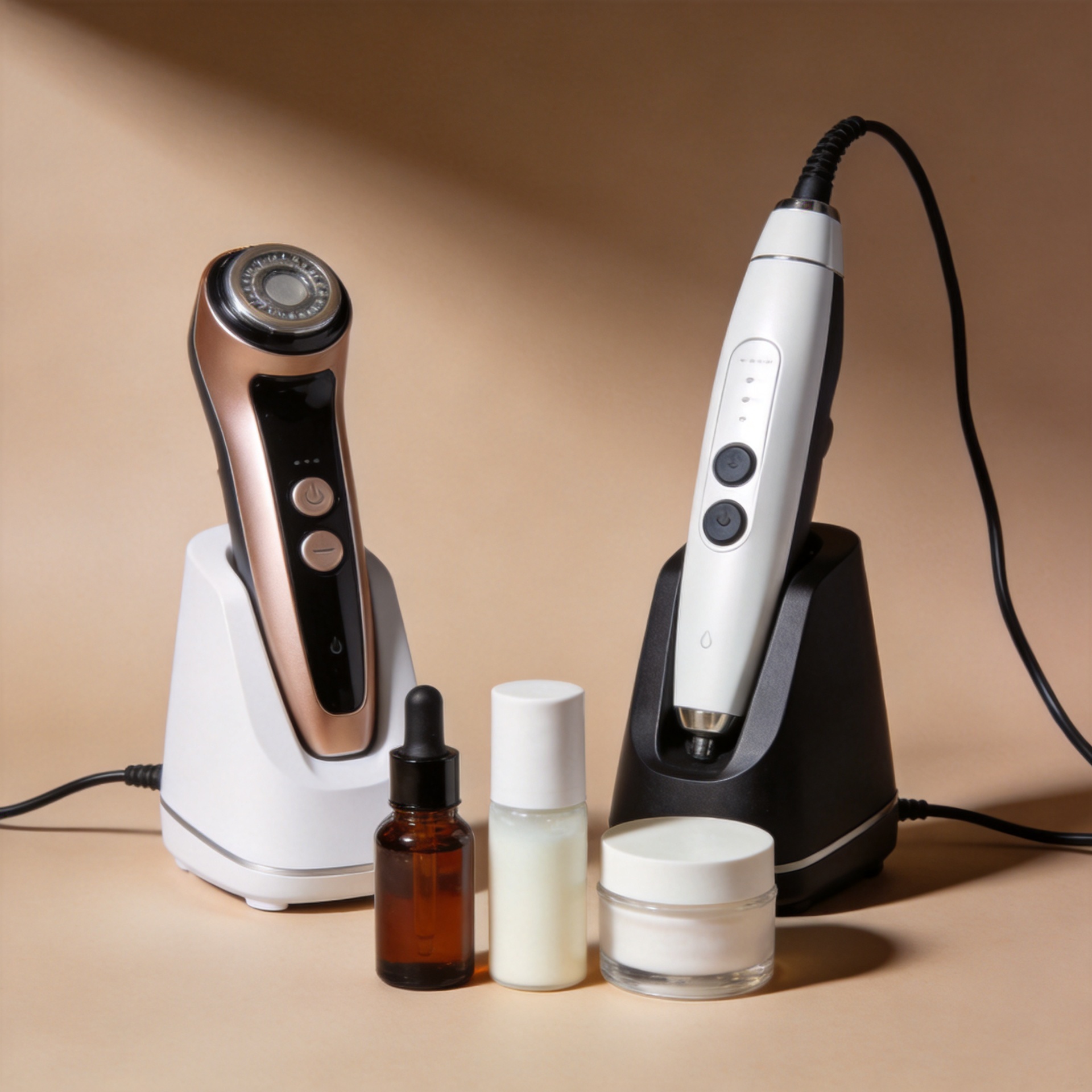
“Professional” and “home-use” are often treated as a simple power comparison. In practice, the more useful question is whether a piece of beauty equipment fits the setting, operator, skin concern, and service plan. A salon device is part of a controlled treatment workflow. A home device is part of a repeatable personal-care routine. In both cases, beauty equipment works most effectively when its design matches the people and process around it. That distinction shapes the design, safeguards, training needs, and expectations around both.
As a technical adviser who helps buyers compare home beauty devices, I start with use conditions rather than a headline feature. A sensible choice is not automatically the device with the most modes. It is the one whose intended use can be followed safely and consistently by the person using it.
Salon-grade beauty equipment is generally selected for trained operation, scheduled services, cleaning between clients, and a broader service menu. Home-use devices are designed for an individual to operate without a practitioner present, usually in shorter sessions and with more built-in limits. Neither category is inherently “better.” They solve different workflow problems.
| Decision area | Salon-grade equipment | Home-use device |
|---|---|---|
| Operator | Typically a trained professional following a service protocol | Individual user following the manufacturer’s instructions |
| Session setting | Appointment-based, supervised, and prepared for multiple clients | Personal routine, usually shorter and self-directed |
| Controls | May offer more settings for trained workflow adjustment | Often emphasizes guided controls, timers, and simplified operation |
| Care requirements | Frequent sanitation, inspection, and service planning | Routine cleaning, charging, storage, and user checks |
| Buying question | Can the device support a reliable service process? | Can the user operate it comfortably and consistently at home? |
Marketing language can make categories sound interchangeable, but intended use is the practical starting point. A device sold for home care should have instructions that make sense without professional supervision. A salon device should be evaluated with the treatment room, staff training, client screening, and cleaning protocol in mind. If a product is regulated in a market, its labeling and authorized intended use are especially important; a “professional” claim is not a substitute for checking the documentation.
For a buyer comparing beauty equipment across markets, this means asking for the operating instructions, contraindications, maintenance guidance, and applicable compliance documents before comparing a specification sheet. The same technology name can appear on products intended for very different users.
Professional beauty equipment systems may provide a wider set of adjustments because a trained operator can assess the client, choose a protocol, observe comfort, and change course when appropriate. The value is not the number of buttons; it is the operator’s ability to use each option within a documented process.
Home-use design often goes in the opposite direction. An at home beauty device may use fewer choices, session timers, ergonomic controls, and clear indicator lights so that a routine is easier to repeat. That simplification is purposeful. It can reduce setup friction and help users avoid treating a personal-care tool like a salon service machine.
For example, an at home microcurrent facial device should be considered through its own instructions, skin-contact requirements, and recommended schedule. It should not be judged by whether it reproduces every step of a professional appointment.
A salon appointment gives the operator a chance to ask about sensitivities, observe the skin, check technique, and pause a service if something does not look or feel right. That does not remove all risk, but it changes how the service is managed. A home routine depends more heavily on the user reading instructions, maintaining the device, and knowing when to stop.
These habits are relevant to all beauty equipment, but they are particularly important at home because there is no practitioner in the room to correct technique in real time.
A professional beauty equipment purchase is not just a device purchase. The salon also needs a cleaning routine, staff onboarding, treatment records where appropriate, consumable planning, room layout, and a path for maintenance or repairs. Consistency matters because different staff members may use the same equipment with different clients throughout the day.
That is why brand buyers and salon operators should look beyond a feature list. Ask how a supplier handles user documentation, batch consistency, replacement parts, packaging, and after-sales communication. For a multi-category brand, a supplier that can support structured OEM or ODM development may help align the interface, instructions, and product presentation across a range, but each model still needs its own intended-use review.
At home, convenience is part of beauty equipment performance. A device that is comfortable to hold, quick to clean, easy to charge, and clear about session timing is more likely to become a consistent habit. An at home facial machine should fit into a realistic routine rather than demand a complicated sequence that users will abandon after a week.
When comparing options, consider the practical questions: How often will it be used? What preparation is required? Is the cleaning process simple? Does the user understand the instructions? Is the claimed benefit framed realistically? A smaller, well-designed device may be a more sensible choice for regular personal care than a more elaborate system that does not fit the user’s schedule.
The key difference between salon-grade and home-use beauty equipment is not a single technical number. Choosing beauty equipment means matching the device to the setting, operator, and ongoing routine. It is the system around the device: who uses it, where it is used, what safeguards are available, and how reliably the routine can be repeated. Salon equipment should support trained, hygienic, client-facing workflows. Home-use devices should make careful personal care understandable and manageable.
For buyers building a home beauty range, start with the end user’s routine and the product’s documented intended use. That approach leads to clearer product positioning, more useful instructions, and a better basis for comparing designs across a growing category.

2026/10/30
Discover why in-house mold development helps an RF beauty device manufacturer improve product consistency, iteration speed, tooling control, and production readiness.

2026/10/30
Learn how to verify an RF beauty device manufacturer's R&D and prototyping capabilities using practical engineering workflows and audit checklists.

2026/10/30
Learn what shapes MOQ when choosing an RF beauty device manufacturer and how to plan a lower-risk first order with balanced platform and customization.

2026/10/30
Use this RF beauty device manufacturer evaluation checklist to compare safety evidence, OEM and ODM capability, quality control, and launch readiness.

2026/10/30
See how technology makes beauty at home more guided, consistent, and informed—plus a practical checklist for choosing devices wisely.

2026/10/30
Explore how AI and smart devices shape the future of beauty with responsive routines, clear guidance, trustworthy design, and user-controlled care.

Ideal for daily facial care routines, providing easy-to-use beauty solutions at home.

Perfect for spas and salons’ frequent treatments, enhancing client experiences and results.

Supports dermatologists with advanced devices for professional skin therapy sessions.

Delivers innovative solutions for full-body massage and relaxation with home devices.

Features anti-aging technologies to help reduce wrinkles and stimulate skin vitality.

Specialized devices for safe and effective hair removal suitable for home or clinic use.

Our customers love the Perfect Idea beauty devices. Quality, packaging, and results are all outstanding. We saw increased repeat sales after adding their facial cleansers to our lineup. Their support team is responsive and reliable.

Perfect Idea brings innovation and reliability to home beauty appliances. Our collaboration introduced their massage tools to Japanese women, boosting customer satisfaction and growing our brand trust across the region.

We partnered with Shenzhen Perfect Idea Tech for their beauty equipment. The shipping was fast and every product matched our expectations. Their home-use massagers are especially popular with local salons and home users.

The stylish packaging and attractive design make Perfect Idea stand out. French consumers appreciate the easy instructions and visible results. Communication was efficient and orders always arrived on time.

Perfect Idea home use personal care devices have become a favorite with our clients. The beauty device line offers quality at a reasonable price, and technical training for our staff made onboarding easy.

We selected Perfect Idea for our beauty product portfolio and have seen very positive feedback from our customers. Products are easy to market online and the customer support is reliable and helpful.
