 EN
Home Skincare
Ideal for daily facial care routines, providing easy-to-use beauty solutions at home.

2026/10/15
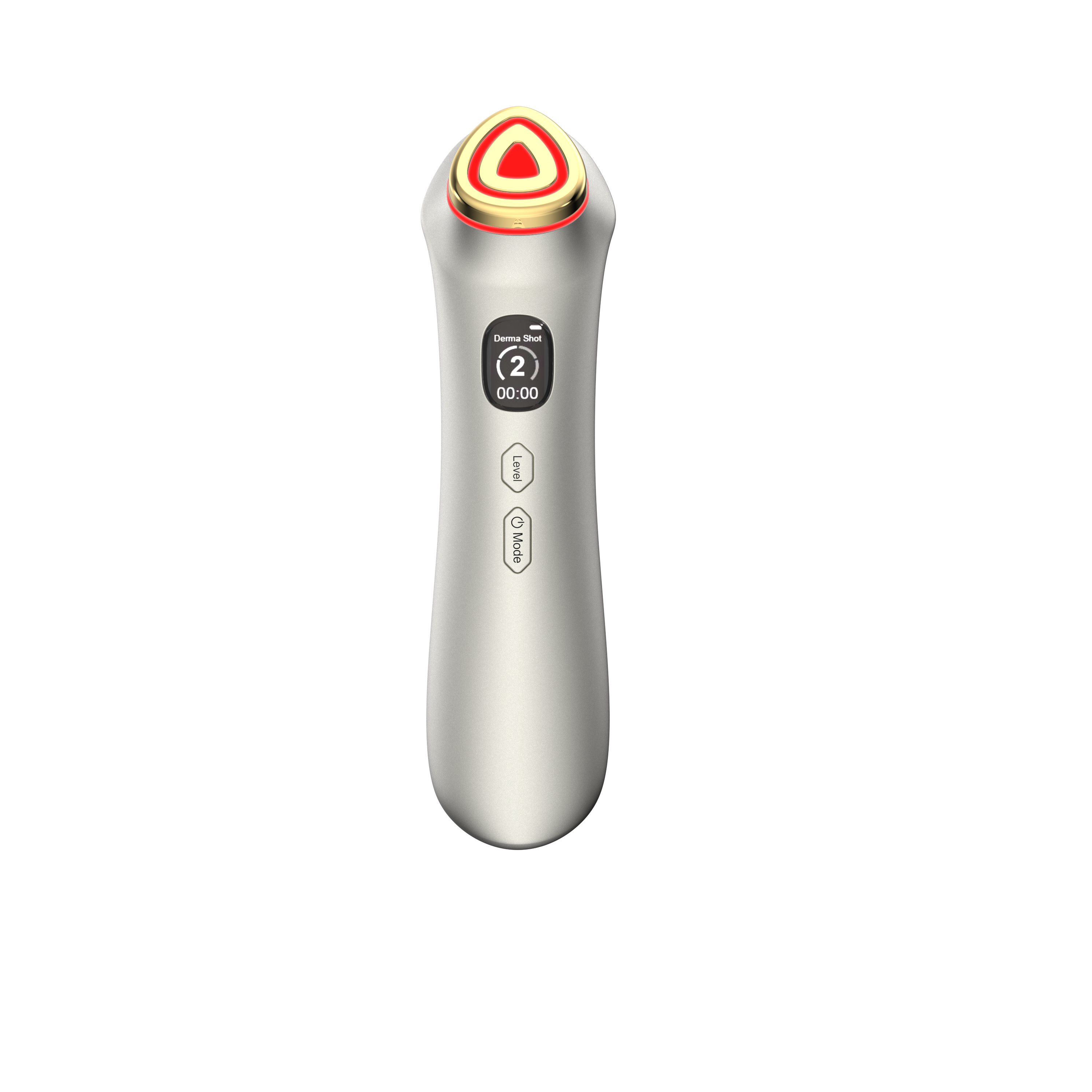
For an international beauty brand, the better partner is not automatically the company with the lowest quoted unit price. An RF beauty device manufacturer and an assembler can both deliver a finished product, but they do not necessarily control the same parts of its quality. The practical question is who owns the specifications, process controls, test methods, records, and corrective actions once the product is in market.
From a buyer’s perspective, a true RF beauty device manufacturer usually offers stronger quality-control potential because it can connect design choices to component approval, production settings, and final release testing. That advantage matters only if the factory can show the evidence. A capable assembler may still be a sensible option for a mature, tightly specified design, but the buyer needs a more rigorous verification plan.
A manufacturer is usually involved in engineering, supplier qualification, process definition, production, and inspection. It may make key subassemblies in-house or control them through approved suppliers. An assembler commonly receives finished or semi-finished parts, builds them to a bill of materials, and performs the agreed checks. In reality, the labels overlap, so buyers should evaluate responsibility rather than marketing language.
| Control area | Manufacturer model | Assembler model | Buyer question |
|---|---|---|---|
| Design changes | Can link changes to engineering validation and production instructions. | May need upstream approval before it can act. | Who approves and records a component substitution? |
| Incoming parts | Can define acceptance criteria and manage approved suppliers. | May inspect deliveries but have limited influence on source quality. | Which parts are inspected, sampled, or accepted by certificate? |
| Process settings | Can own work instructions, fixtures, and process validation. | Often follows a supplied assembly method. | Who controls torque, adhesive cure, welding, and electrical-test settings? |
| Nonconformities | Can trace faults back to design, components, or production. | May only contain the issue at assembly stage. | Who leads root-cause analysis and corrective action? |
RF products combine electronics, thermal behavior, skin-contact materials, housings, power management, and user instructions. A device can look consistent at final cosmetic inspection while still vary in electrical behavior, temperature control, contact quality, or battery performance. That is why a quality conversation should go beyond “100% tested.” Ask what is tested, against which acceptance limits, with what calibrated equipment, and how the result is tied to a production lot.
For household or commercial skin beauty care appliances, IEC 60335-2-115:2021 is a useful standards-screening reference because it addresses electrical appliances for skin beauty care. It does not mean every RF product follows the same regulatory route; intended use, claims, and target market matter. The important sourcing lesson is to align the product specification, safety evaluation, test plan, and destination-market requirements before mass production.
An RF beauty device manufacturer can review a proposed housing, electrode, cable, battery, or control-board change before it reaches the line. That allows pilot builds and verification to happen before a change becomes a field failure. With an assembler, the brand may need to coordinate separately with the design owner and component suppliers, making change control slower and less visible.
Ask for a simple traceability map: purchase lot, incoming-inspection record, production date, line or workstation, key test record, and final-release decision. A manufacturer with an established batch-quality system can often show how those records connect. If a complaint appears later, this link is more useful than a generic inspection report.
When yields drop or a functional test fails, the strongest supplier can isolate the cause, contain affected lots, correct the process, and document the outcome. Manufacturers can still have defects; the key advantage is that clear ownership and evidence make them easier to investigate and reduce recurrence.
An assembler can be appropriate when your product design is stable, your brand owns the complete technical package, and approved component sources are locked down. It can also work when the assembler has specialized fixtures, disciplined operators, validated final testing, and clear authority to reject nonconforming material. The trade-off is that the brand must actively manage interfaces that a manufacturer would otherwise own.
Choose this model only when your contract defines material substitutions, engineering-change approval, sample retention, test-data delivery, rework limits, and responsibility for customer complaints. Without those controls, cost savings can become expensive after launch.
Certificates can be useful signals, but they are not a substitute for product-specific evidence. ISO 13485:2016 provides a quality-management framework for organizations involved in medical devices; it may be relevant where classification and claims make it applicable, but it is not automatically required for every consumer beauty device. Likewise, a report or mark should be checked for the exact model, configuration, intended use, laboratory, date, and market scope. Ask to see the controlled documents behind the claim.
For a new private-label RF program, a manufacturer is generally the safer starting point when it can demonstrate engineering involvement, controlled suppliers, documented tests, and accountable corrective action. That combination gives the brand fewer handoffs to govern. For a mature design, a high-discipline assembler can deliver good results if the brand owns the technical file and enforces detailed quality agreements.
The soundest sourcing decision is therefore evidence-based, not label-based. Compare candidates using the same audit checklist, request records from a representative lot, and make quality ownership explicit in the agreement. A supplier that welcomes those questions is more likely to help protect product consistency, consumer confidence, and your brand’s long-term cost of quality.

2026/10/30
Discover why in-house mold development helps an RF beauty device manufacturer improve product consistency, iteration speed, tooling control, and production readiness.

2026/10/30
Learn how to verify an RF beauty device manufacturer's R&D and prototyping capabilities using practical engineering workflows and audit checklists.

2026/10/30
Learn what shapes MOQ when choosing an RF beauty device manufacturer and how to plan a lower-risk first order with balanced platform and customization.

2026/10/30
Use this RF beauty device manufacturer evaluation checklist to compare safety evidence, OEM and ODM capability, quality control, and launch readiness.

2026/10/30
See how technology makes beauty at home more guided, consistent, and informed—plus a practical checklist for choosing devices wisely.

2026/10/30
Explore how AI and smart devices shape the future of beauty with responsive routines, clear guidance, trustworthy design, and user-controlled care.

Ideal for daily facial care routines, providing easy-to-use beauty solutions at home.

Perfect for spas and salons’ frequent treatments, enhancing client experiences and results.

Supports dermatologists with advanced devices for professional skin therapy sessions.

Delivers innovative solutions for full-body massage and relaxation with home devices.

Features anti-aging technologies to help reduce wrinkles and stimulate skin vitality.

Specialized devices for safe and effective hair removal suitable for home or clinic use.

Our customers love the Perfect Idea beauty devices. Quality, packaging, and results are all outstanding. We saw increased repeat sales after adding their facial cleansers to our lineup. Their support team is responsive and reliable.

Perfect Idea brings innovation and reliability to home beauty appliances. Our collaboration introduced their massage tools to Japanese women, boosting customer satisfaction and growing our brand trust across the region.

We partnered with Shenzhen Perfect Idea Tech for their beauty equipment. The shipping was fast and every product matched our expectations. Their home-use massagers are especially popular with local salons and home users.

The stylish packaging and attractive design make Perfect Idea stand out. French consumers appreciate the easy instructions and visible results. Communication was efficient and orders always arrived on time.

Perfect Idea home use personal care devices have become a favorite with our clients. The beauty device line offers quality at a reasonable price, and technical training for our staff made onboarding easy.

We selected Perfect Idea for our beauty product portfolio and have seen very positive feedback from our customers. Products are easy to market online and the customer support is reliable and helpful.
