 EN
Home Skincare
Ideal for daily facial care routines, providing easy-to-use beauty solutions at home.

2026/10/12
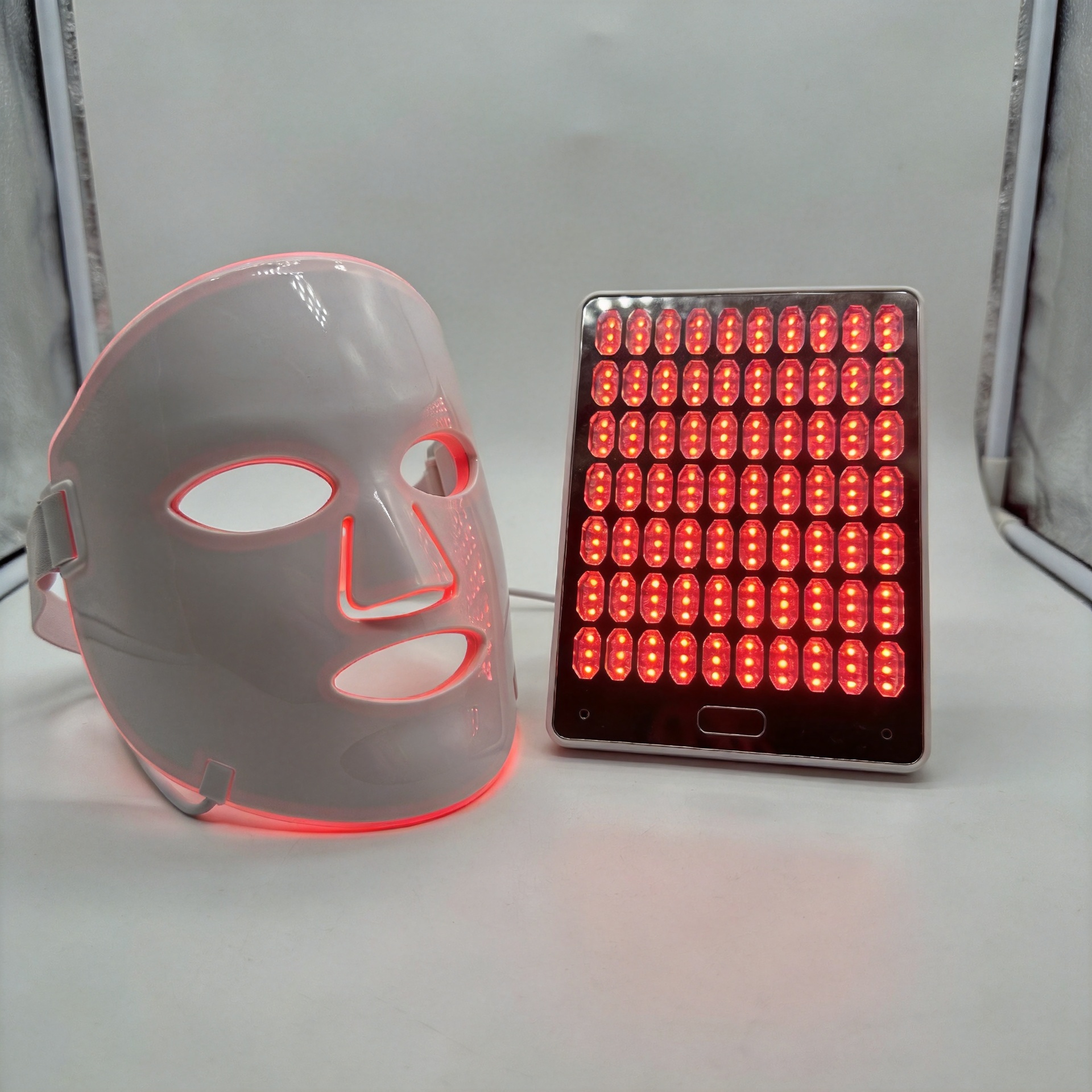
When portability is the deciding factor, a red light therapy mask usually has the easier daily-use story. It is made for the face, straps on, and can be stored in a drawer. A panel can cover more areas and may be easier to position around the body, but even a compact panel generally asks for more setup. The better choice depends on what “portable” means in your routine: carrying it, setting it up, using it hands-free, or moving it between rooms.
As a home-beauty-device advisor, I recommend separating convenience from coverage before comparing specifications. A red light therapy mask can be the more portable facial format without being the right format for every treatment goal. This guide uses a practical, neutral comparison rather than treating either design as automatically superior.
Portability is not simply the number on a scale. For light-based devices, it has four parts: how much gear you carry, how long setup takes, whether you need a clear treatment station, and how easily you can pack the device away afterward. A red light therapy mask often wins on the first, second, and fourth points because the treatment area and device position are already matched.
Panels vary widely. A small tabletop panel can travel reasonably well, while a large panel with a stand is better thought of as movable within a home or clinic. It may need a stable surface, access to power, and enough room for the user to sit or stand at the intended distance. So, the question is not “mask or panel?” in the abstract; it is “what will you realistically take out and use consistently?”
A red light therapy mask is purpose-built for facial routines. Once fitted, it frees the user from holding a device in place. That is helpful when a short treatment needs to fit between cleansing, getting dressed, or a quiet moment at home. Many wearable designs are also easier to store because their shape, controller, and charging accessories can stay together in a small pouch or drawer.
The real advantage is low friction. With a red light therapy mask, there is usually less decision-making about angle and placement for the face. You do still need to follow the manufacturer’s instructions, keep the mask clean, and check whether a cord or battery pack affects how freely you can move. A wearable design is not automatically travel-ready: rigid shells, delicate straps, and dedicated eye inserts can make a particular model less convenient to pack.
There is also a comfort tradeoff. A mask rests on the face, so fit, pressure points, and perceived weight matter as much as its stated weight. If a device feels awkward, the portability benefit can disappear in real life. For a brand evaluating a red light therapy mask, secure but comfortable straps, clear charging guidance, and a compact storage solution are often more useful than a vague “portable” claim.
A panel is more flexible in where light is directed. Users may position it for the face, neck, chest, hands, or other areas, depending on the product instructions. That broader use can make a compact panel attractive for households that do not want a face-only device. However, the freedom comes with setup: positioning the panel, preparing a chair or stand, and maintaining a suitable treatment distance.
For that reason, a panel is often more accurately described as relocatable rather than wearable. A small unit can move from a bedroom to an office or accompany a trip if its power requirements and packing protection are manageable. A large unit is more likely to live in one spot. It may be a stronger choice when coverage flexibility matters more than a grab-and-go routine.
| Decision factor | facial LED mask | Panel |
|---|---|---|
| Facial setup | Usually quick; device is shaped for the face | Requires positioning and distance management |
| Hands-free use | Typically hands-free once fitted | Usually requires a stand, surface, or deliberate placement |
| Storage footprint | Often drawer- or pouch-friendly | Ranges from compact tabletop to dedicated floor space |
| Travel practicality | Potentially good, depending on shell, controller, and power design | Best with smaller models; stands and power accessories add bulk |
| Area flexibility | Focused mainly on the face and sometimes neck | More adaptable to different body areas |
This comparison points to a simple conclusion: for a face-focused user who values a repeatable routine, a wearable facial device generally offers better portability. For a user prioritizing multi-area flexibility, a small panel may be the more versatile compromise even though it is less effortless to deploy.
Before choosing a mask format, look at the complete travel and use system: charging method, battery or cable arrangement, controller size, storage case, cleaning requirements, and the instructions for use. If a model includes more than red or near-infrared light, pay particular attention to the supplied eye-protection guidance. Avoid staring directly into LEDs, and use the device only as instructed. People with eye conditions, photosensitivity, or medication-related light sensitivity should seek appropriate professional advice before use.
For panels, check whether the claimed portability includes the stand and power supply. A device may be compact on its own but cumbersome as a complete kit. It is also sensible to plan where it will be used; a panel that remains in its box is less convenient than a wearable mask that is easy to reach after a skincare routine.
Choose a facial mask format if your main priority is facial use, hands-free sessions, compact storage, and a routine you can repeat with minimal setup. It is especially practical for users who want a dedicated device rather than a shared household station.
Choose a panel if you value flexible placement across more areas and are willing to set up a stable treatment space. A smaller panel may suit frequent movers better than a large floor-standing model, but confirm the complete packed size before treating it as a travel device.
In short, the wearable facial option is usually the portability winner for facial care, while a panel wins for coverage flexibility. The practical decision is the format that fits your space, handling preferences, and safety instructions well enough to become part of a consistent routine.

2026/10/30
Discover why in-house mold development helps an RF beauty device manufacturer improve product consistency, iteration speed, tooling control, and production readiness.

2026/10/30
Learn how to verify an RF beauty device manufacturer's R&D and prototyping capabilities using practical engineering workflows and audit checklists.

2026/10/30
Learn what shapes MOQ when choosing an RF beauty device manufacturer and how to plan a lower-risk first order with balanced platform and customization.

2026/10/30
Use this RF beauty device manufacturer evaluation checklist to compare safety evidence, OEM and ODM capability, quality control, and launch readiness.

2026/10/30
See how technology makes beauty at home more guided, consistent, and informed—plus a practical checklist for choosing devices wisely.

2026/10/30
Explore how AI and smart devices shape the future of beauty with responsive routines, clear guidance, trustworthy design, and user-controlled care.

Ideal for daily facial care routines, providing easy-to-use beauty solutions at home.

Perfect for spas and salons’ frequent treatments, enhancing client experiences and results.

Supports dermatologists with advanced devices for professional skin therapy sessions.

Delivers innovative solutions for full-body massage and relaxation with home devices.

Features anti-aging technologies to help reduce wrinkles and stimulate skin vitality.

Specialized devices for safe and effective hair removal suitable for home or clinic use.

Our customers love the Perfect Idea beauty devices. Quality, packaging, and results are all outstanding. We saw increased repeat sales after adding their facial cleansers to our lineup. Their support team is responsive and reliable.

Perfect Idea brings innovation and reliability to home beauty appliances. Our collaboration introduced their massage tools to Japanese women, boosting customer satisfaction and growing our brand trust across the region.

We partnered with Shenzhen Perfect Idea Tech for their beauty equipment. The shipping was fast and every product matched our expectations. Their home-use massagers are especially popular with local salons and home users.

The stylish packaging and attractive design make Perfect Idea stand out. French consumers appreciate the easy instructions and visible results. Communication was efficient and orders always arrived on time.

Perfect Idea home use personal care devices have become a favorite with our clients. The beauty device line offers quality at a reasonable price, and technical training for our staff made onboarding easy.

We selected Perfect Idea for our beauty product portfolio and have seen very positive feedback from our customers. Products are easy to market online and the customer support is reliable and helpful.
