 EN
Home Skincare
Ideal for daily facial care routines, providing easy-to-use beauty solutions at home.

2026/09/20
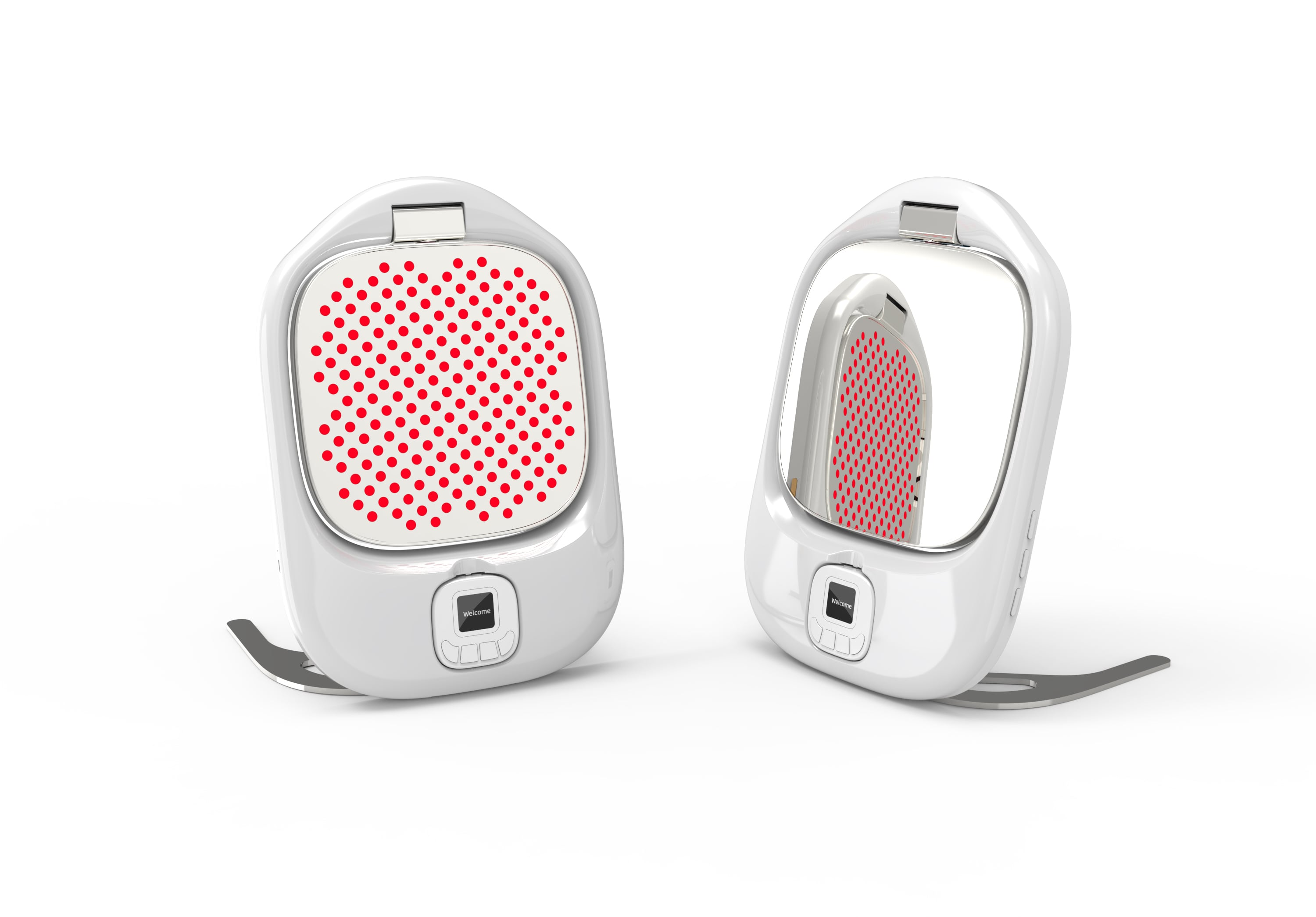
Facial coverage is often the deciding issue when buyers compare a led light therapy mask with a panel. As a home-beauty-device technical adviser, I start with the treatment area rather than a headline LED count. A led light therapy mask sits close to the face and follows its contours; a panel creates a broader field that you position at a chosen distance. Neither format wins in every routine. The useful question is which one makes it easier to expose the areas you actually plan to treat, session after session.
A led light therapy mask is designed around the forehead, cheeks, nose, chin, and often part of the jawline. Because the device is worn, its geometry can make facial placement repeatable: you do not need to keep turning your head or estimate the distance from a light source. A flexible soft silicone led mask may conform more closely to different face shapes, while a rigid model may hold a more fixed LED-to-skin position. Fit still matters. Eye openings, strap tension, nose clearance, and the gap at the temples can all change what feels covered in real use.
A panel has a different strength. When you stand or sit in front of it, the illuminated field can extend beyond the central face to the jaw, neck, upper chest, or hands. That breadth is valuable when facial care is only one part of a routine. The trade-off is setup: panel angle, posture, distance, and session position all affect which facial zones receive the most direct light. For face-only consistency, a led light therapy mask is usually simpler to position. For a flexible treatment area, a panel gives more room to adapt.
It is tempting to treat more LEDs as proof of broader coverage. That shortcut can mislead. What matters is where the LEDs sit, how evenly they are spaced, how the device follows facial curves, and how the user positions the device. A 3d contour led mask is worth evaluating by its contour design rather than its name alone: ask whether the forehead, cheekbones, sides of the nose, and chin receive reasonably even placement.
With a panel, a large light surface does not automatically mean equal facial coverage at every angle. The center of the field and its edges may feel different in practice, especially if the face is turned away or placed too close to one side. A high irradiance led mask claim also does not answer the coverage question by itself. Output, distance, and treatment geometry are separate considerations. Compare the manufacturer’s instructions, recommended position, and intended treatment area before drawing conclusions.
A panel can cover the face effectively when it is used at the recommended distance and aimed squarely at the treatment area. Its flexibility is also its challenge. A user who changes chair height, turns to answer a call, or shifts the panel between sessions may create less repeatable facial exposure. For people who want to include the neck or décolletage, that flexibility can be worthwhile. For someone who wants a compact facial routine before bed, a led light therapy mask removes several setup variables.
Panels can also be a better fit for shared households or multi-area use. One device may serve different routines without requiring a face-specific shell. That does not make it a universal replacement for a led light therapy mask; it makes it a different format with a wider treatment field and more user-controlled positioning.
Choose a led light therapy mask when your priority is repeatable, hands-free coverage of the central face and you value a short, contained routine. Choose a panel when you want the option to include the jaw, neck, chest, or other areas and are comfortable managing distance and angle. If facial coverage is your sole criterion, the close-fitting design of a led light therapy mask often makes daily placement easier to reproduce. If adaptable area coverage is the priority, a panel may be the more useful format.
For buyers and product teams, the fairest comparison is not mask versus panel in the abstract. It is face shape, target zones, device geometry, instructions, comfort, and the routine a person will realistically maintain. That approach keeps the decision focused on coverage rather than marketing shorthand.
A led light therapy mask is generally designed for the main facial zones, but coverage can vary with face shape, mask geometry, and fit. Review the device’s placement guidance for the temples, jawline, and eye area.
A panel can be easier to position for the face and neck together because it is not limited to a face-shaped shell. Follow the manufacturer’s directions for distance, angle, and session use.
Choose based on fit, comfort, and the ability to maintain consistent facial alignment. A soft silicone led mask and a hard-shell design can both be appropriate when their instructions and intended coverage suit the user.

2026/10/30
Discover why in-house mold development helps an RF beauty device manufacturer improve product consistency, iteration speed, tooling control, and production readiness.

2026/10/30
Learn how to verify an RF beauty device manufacturer's R&D and prototyping capabilities using practical engineering workflows and audit checklists.

2026/10/30
Learn what shapes MOQ when choosing an RF beauty device manufacturer and how to plan a lower-risk first order with balanced platform and customization.

2026/10/30
Use this RF beauty device manufacturer evaluation checklist to compare safety evidence, OEM and ODM capability, quality control, and launch readiness.

2026/10/30
See how technology makes beauty at home more guided, consistent, and informed—plus a practical checklist for choosing devices wisely.

2026/10/30
Explore how AI and smart devices shape the future of beauty with responsive routines, clear guidance, trustworthy design, and user-controlled care.

Ideal for daily facial care routines, providing easy-to-use beauty solutions at home.

Perfect for spas and salons’ frequent treatments, enhancing client experiences and results.

Supports dermatologists with advanced devices for professional skin therapy sessions.

Delivers innovative solutions for full-body massage and relaxation with home devices.

Features anti-aging technologies to help reduce wrinkles and stimulate skin vitality.

Specialized devices for safe and effective hair removal suitable for home or clinic use.

Our customers love the Perfect Idea beauty devices. Quality, packaging, and results are all outstanding. We saw increased repeat sales after adding their facial cleansers to our lineup. Their support team is responsive and reliable.

Perfect Idea brings innovation and reliability to home beauty appliances. Our collaboration introduced their massage tools to Japanese women, boosting customer satisfaction and growing our brand trust across the region.

We partnered with Shenzhen Perfect Idea Tech for their beauty equipment. The shipping was fast and every product matched our expectations. Their home-use massagers are especially popular with local salons and home users.

The stylish packaging and attractive design make Perfect Idea stand out. French consumers appreciate the easy instructions and visible results. Communication was efficient and orders always arrived on time.

Perfect Idea home use personal care devices have become a favorite with our clients. The beauty device line offers quality at a reasonable price, and technical training for our staff made onboarding easy.

We selected Perfect Idea for our beauty product portfolio and have seen very positive feedback from our customers. Products are easy to market online and the customer support is reliable and helpful.
