 EN
Home Skincare
Ideal for daily facial care routines, providing easy-to-use beauty solutions at home.

2026/09/21
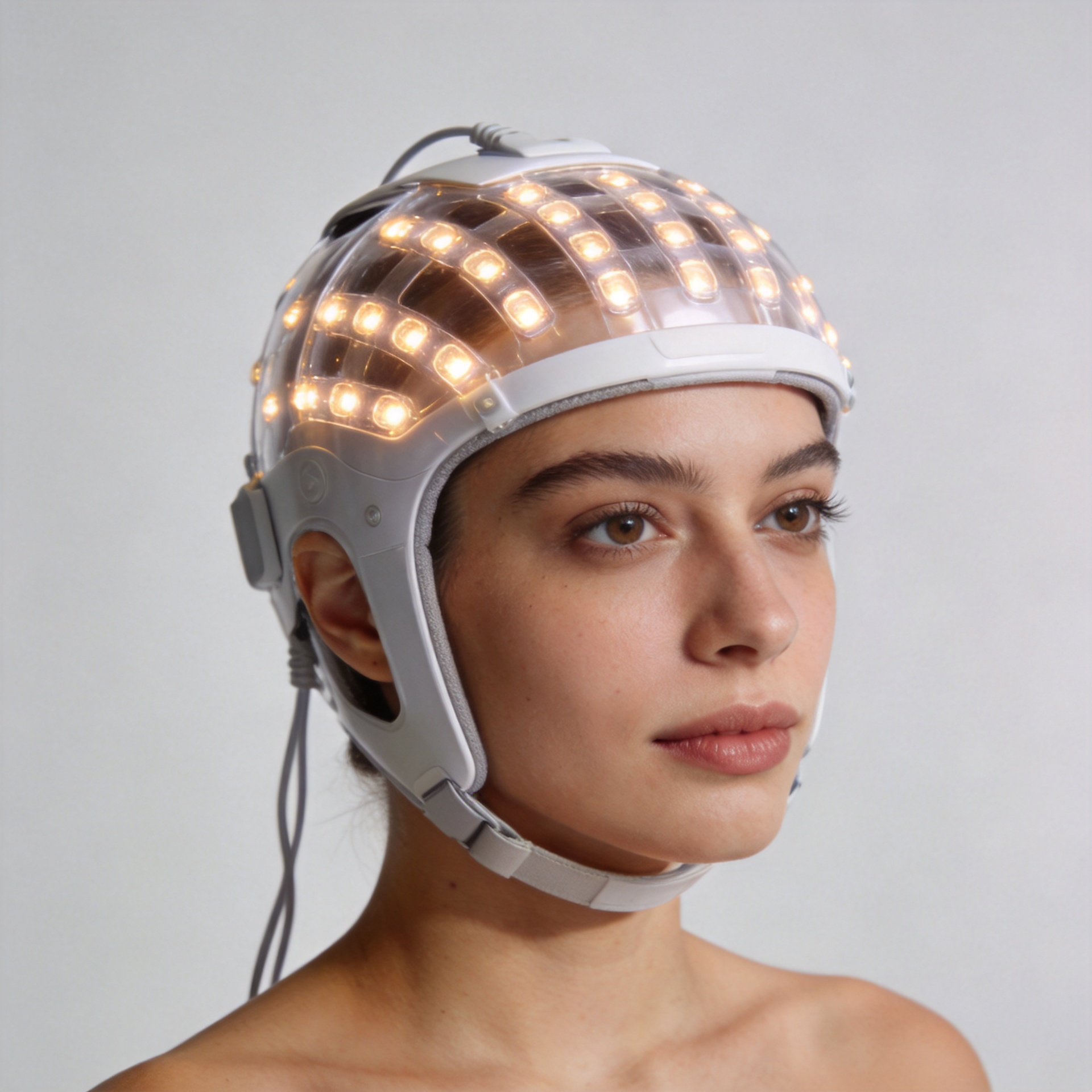
For people weighing an LED hair growth cap device against topical minoxidil, the honest answer is not a universal winner. Both approaches are used in conversations about pattern hair loss, but they work differently, demand different habits, and have different evidence boundaries. A useful comparison starts with diagnosis: sudden shedding, patchy loss, scalp pain, scaling, or rapid change deserves medical assessment before a device or over-the-counter routine becomes the main plan.
As a home-beauty-device technical adviser, I would compare an LED hair growth cap device by reproducible treatment factors rather than by a dramatic before-and-after claim. The relevant questions are whether the person has androgenetic alopecia, whether they can follow the routine consistently, and whether a clinician has flagged a reason to avoid or adjust treatment. This article is educational, not a diagnosis or a substitute for individual medical advice.
Topical minoxidil has the clearer position as an established topical option for pattern hair loss. The American Academy of Dermatology notes that it may help reduce hair loss and support regrowth for some people, but it takes time and benefits can fade after treatment stops. An LED hair growth cap device, typically discussed under low-level light therapy or photobiomodulation, may be a reasonable non-drug option for an eligible person who prefers a wearable routine or cannot tolerate topical application.
For many suitable users, the most practical conclusion is not “cap versus minoxidil” but “which routine can be used correctly and consistently?” Evidence from a randomized study in male androgenetic alopecia reported comparable six-month outcomes for a specified light-therapy protocol and topical 5% minoxidil. That does not prove that every LED hair growth cap device matches every minoxidil formula; it shows why device design, schedule, diagnosis, and adherence matter.
| Decision factor | LED hair growth cap device | Topical minoxidil |
|---|---|---|
| Basic approach | Delivers a scheduled light treatment to the scalp. | Applies a topical medicine directly to the scalp. |
| Routine | Usually a defined session schedule; follow the model instructions. | Applied as directed, commonly once or twice daily depending on product and clinician advice. |
| Evidence question | Assess the actual device protocol, coverage, and population studied. | Established use in pattern hair loss, while individual response varies. |
| Practical friction | Charging, fit, session time, and willingness to wear a cap. | Scalp feel, drying time, possible irritation, and daily application. |
| Practical next step | Confirm the device is appropriate for the intended market and intended user. | Check suitability, directions, and any adverse effects with a clinician or pharmacist. |
Calling a product an LED hair growth cap device does not identify a single treatment dose. Light sources, wavelength specifications, scalp coverage, session length, and study protocols can differ. For buyers developing a wearable hair category, this is the first quality-control lesson: do not transfer evidence from one protocol to an unrelated device simply because both are caps.
Minoxidil is often the more straightforward starting point when a dermatologist has identified early pattern hair loss and the person is comfortable with a topical routine. It is widely available in some markets, has a substantial clinical history, and its instructions are familiar to many clinicians. The trade-off is commitment: results are not immediate, and stopping treatment can mean losing the maintenance benefit.
A person who is likely to apply treatment carefully every day may find minoxidil easier to integrate than an LED hair growth cap device. Conversely, someone who knows they dislike scalp liquids, has trouble with residue in styled hair, or has experienced topical irritation may view the wearable format differently. That preference alone does not establish effectiveness, but it can decide whether an otherwise sensible plan is actually followed.
An LED hair growth cap device can make sense as an option to discuss when the user wants a non-drug modality, can commit to its specified schedule, and has realistic expectations. Wearable treatment removes the need to spread liquid over the scalp, which some users find easier around work, sports, or hair styling. It does not remove the need for patience: visible changes in hair density or shedding patterns are typically assessed over months, not a few sessions.
Before choosing an LED hair growth cap device, ask practical questions. Is the cap comfortable enough to use repeatedly? Does the supplier document the intended use, treatment schedule, safety information, and market-specific compliance pathway? Is there a clear process for users who notice scalp irritation, unexpected shedding, or no progress? A credible device program should not promise a full head of regrowth or claim that light works for every cause of hair loss.
The useful research signal is nuanced. A PubMed-indexed randomized trial compared a specified low-level light therapy schedule with topical 5% minoxidil in male androgenetic alopecia and described the results as comparable after six months. A later meta-analysis of randomized trials reported that combining low-level laser therapy with topical minoxidil was associated with greater gains in hair density than topical minoxidil alone. Those findings support a discussion of combination care with a clinician; they do not validate an untested LED hair growth cap device or guarantee an individual result.
This distinction matters for content and product teams. Light therapy is an umbrella category, while an LED hair growth cap device is a particular implementation. Claims should remain tied to substantiated intended use, not borrowed from a competitor’s study, an unrelated laser system, or a retailer snippet. For consumer-facing copy, “may support a consistent hair-care plan for appropriate users” is more responsible than “clinically proven for everyone.”
Neither option should delay diagnosis when hair loss is unexplained. Pattern hair loss is only one cause. A dermatologist can help distinguish it from conditions such as inflammatory scalp disease, nutritional issues, medication-related shedding, or autoimmune hair loss. Anyone who is pregnant, breastfeeding, managing a medical condition, taking medicines, or has a history of scalp sensitivity should ask a qualified clinician about topical minoxidil and an LED hair growth cap device before starting.
Use the product instructions exactly as supplied. Do not increase light sessions or topical quantity in an attempt to accelerate progress. If topical minoxidil causes persistent irritation or other concerning effects, stop and seek professional guidance. If an LED hair growth cap device causes discomfort, heat, skin changes, or headache, pause use and follow the manufacturer’s safety process or consult a clinician.
For brands sourcing an LED hair growth cap device, the same framework translates into a product brief: verify device documentation, user instructions, fit and comfort testing, complaint handling, and the evidence behind each claim before launch. The cap should be positioned as one part of a responsible hair-wellness category, not as a replacement for diagnosis or medical treatment.
Topical minoxidil often has the stronger claim to be a conventional first-line topical option for suitable pattern hair-loss users. An LED hair growth cap device can be a practical alternative or a clinician-discussed complement when the user prefers light-based treatment and can maintain the routine. The better outcome usually comes from matching a verified approach to the cause of hair loss, the person’s tolerance, and the routine they can genuinely sustain.
If you are comparing an LED hair growth cap device for a product range, evaluate the actual device and its substantiation—not just the category name. If you are comparing treatments for yourself, start with a diagnosis and a conversation with a qualified clinician.

2026/10/30
Discover why in-house mold development helps an RF beauty device manufacturer improve product consistency, iteration speed, tooling control, and production readiness.

2026/10/30
Learn how to verify an RF beauty device manufacturer's R&D and prototyping capabilities using practical engineering workflows and audit checklists.

2026/10/30
Learn what shapes MOQ when choosing an RF beauty device manufacturer and how to plan a lower-risk first order with balanced platform and customization.

2026/10/30
Use this RF beauty device manufacturer evaluation checklist to compare safety evidence, OEM and ODM capability, quality control, and launch readiness.

2026/10/30
See how technology makes beauty at home more guided, consistent, and informed—plus a practical checklist for choosing devices wisely.

2026/10/30
Explore how AI and smart devices shape the future of beauty with responsive routines, clear guidance, trustworthy design, and user-controlled care.

Ideal for daily facial care routines, providing easy-to-use beauty solutions at home.

Perfect for spas and salons’ frequent treatments, enhancing client experiences and results.

Supports dermatologists with advanced devices for professional skin therapy sessions.

Delivers innovative solutions for full-body massage and relaxation with home devices.

Features anti-aging technologies to help reduce wrinkles and stimulate skin vitality.

Specialized devices for safe and effective hair removal suitable for home or clinic use.

Our customers love the Perfect Idea beauty devices. Quality, packaging, and results are all outstanding. We saw increased repeat sales after adding their facial cleansers to our lineup. Their support team is responsive and reliable.

Perfect Idea brings innovation and reliability to home beauty appliances. Our collaboration introduced their massage tools to Japanese women, boosting customer satisfaction and growing our brand trust across the region.

We partnered with Shenzhen Perfect Idea Tech for their beauty equipment. The shipping was fast and every product matched our expectations. Their home-use massagers are especially popular with local salons and home users.

The stylish packaging and attractive design make Perfect Idea stand out. French consumers appreciate the easy instructions and visible results. Communication was efficient and orders always arrived on time.

Perfect Idea home use personal care devices have become a favorite with our clients. The beauty device line offers quality at a reasonable price, and technical training for our staff made onboarding easy.

We selected Perfect Idea for our beauty product portfolio and have seen very positive feedback from our customers. Products are easy to market online and the customer support is reliable and helpful.
