 EN
Home Skincare
Ideal for daily facial care routines, providing easy-to-use beauty solutions at home.

2026/10/10
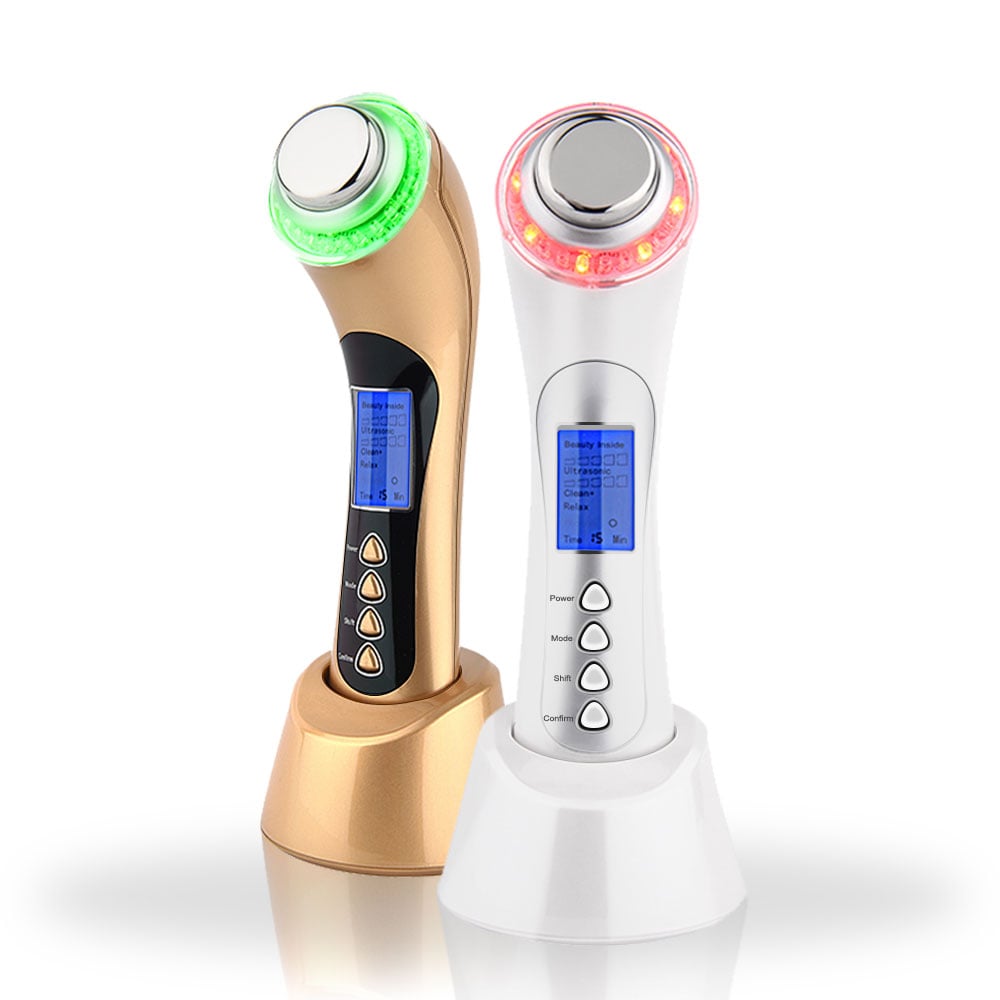
Choosing between an LED face device and a microcurrent tool gets easier when you stop asking which one is “better.” They work through different inputs, fit different routines, and ask different things of your skin and your schedule. An LED face routine uses specific wavelengths of light; a microcurrent routine uses a low-level electrical current delivered through conductive contact. Neither makes every other skincare step unnecessary.
As a home-beauty-device adviser, I start with the outcome a person can realistically maintain. Some people want a calm-looking, consistent light-based routine. Others want a short, hands-on session that emphasizes the look of facial tone or contour. The right choice is usually the one whose use instructions, safety conditions, and frequency you can follow consistently.
An LED face device exposes the skin to selected light wavelengths without pressing or gliding electrical probes over the face. At-home designs may use red, blue, or near-infrared light, depending on the product’s intended use. Light therapy is non-invasive, but that does not mean every device has the same specifications, fit, or instructions. Check the manual carefully, especially its eye-safety guidance and recommended session length.
Microcurrent devices work differently. They use a conductive gel and contact points that move across the skin. The aim is typically a temporary, well-groomed look associated with facial muscle stimulation and a lifted-looking contour after a session. That hands-on process can feel more immediate to some users, but it also makes technique important: placement, glide, pressure, and the product’s prescribed routine all affect the experience.
It is tempting to compare LED and microcurrent as if they were two settings on the same device. They are not. An LED face mask is usually a hands-free treatment window; microcurrent is an active, contact-based routine. That distinction is more useful than marketing language when you are deciding what will actually fit your life.
An LED face option can make sense if your main goal is to build a regular skincare ritual around light exposure and you prefer minimal handling during a session. A mask-style format may suit someone who can relax for a set time, while a handheld format may suit someone who prefers targeted use. The format matters because comfort is what determines whether a device remains in the routine after the first few weeks.
People often look to LED routines for concerns such as the appearance of uneven-looking skin, blemish-prone periods, or early visible signs of aging. Keep expectations measured. A home LED face device is not a diagnosis, prescription, or substitute for dermatology care. Results vary with the concern, the device, the routine, and the rest of a person’s skincare habits.
If you choose an LED face device, evaluate practical details first: whether the device fits comfortably, whether its light modes are clearly explained, whether it includes appropriate eye protection or is designed for safe use around the eyes, and whether the routine is manageable. A reputable product should describe its intended use plainly rather than promising to transform skin overnight.
Microcurrent may be the more appealing direction when you enjoy a manual routine and your main interest is the temporary look of facial definition after use. The process is typically more interactive than an LED face session: you apply conductive medium, follow the brand’s placement instructions, and move the device methodically. For some people, that active ritual is satisfying. For others, it is exactly the extra step that makes the device stay in a drawer.
That does not make microcurrent inherently more advanced. It simply addresses a different preference. Do not expect it to replace the skin-focused rationale of an LED face routine, and do not choose it only because a before-and-after image looks dramatic. Lighting, angle, hydration, and timing can all change how a face appears.
| Decision point | LED face | Microcurrent |
|---|---|---|
| Primary experience | Light-based, usually hands-free | Contact-based, guided movement |
| Routine style | Set aside a consistent treatment window | Apply conductive medium and actively glide the tool |
| Routine fit | Someone prioritizing a simple light-focused ritual | Someone prioritizing a hands-on contour-focused ritual |
| What to verify | Intended use, fit, light modes, eye guidance | Contraindications, conductive medium, placement instructions |
| Expectation to avoid | Guaranteed correction of a skin condition | Permanent reshaping from a single session |
Read the device-specific instructions before trying an LED face routine or microcurrent. For light devices, do not direct light at the eyes unless the product is designed and instructed for that use; use any supplied protection as directed. If you are using photosensitizing medication, have a light-sensitive condition, or have a persistent skin concern, ask a qualified healthcare professional before starting.
For microcurrent, review contraindications rather than assuming all at-home devices are suitable. Device manuals commonly call for additional caution around implanted electronic devices, pregnancy, seizure history, and particular health conditions. Avoid use over compromised or irritated skin unless the manufacturer and your clinician say otherwise. When in doubt, pause and obtain professional advice.
The most useful choice is not the device with the longest feature list. It is the LED face or microcurrent routine you understand, use responsibly, and can maintain without exaggerated expectations. If your concern is medical, severe, or changing, start with a qualified dermatologist instead of a device comparison.

2026/10/30
Discover why in-house mold development helps an RF beauty device manufacturer improve product consistency, iteration speed, tooling control, and production readiness.

2026/10/30
Learn how to verify an RF beauty device manufacturer's R&D and prototyping capabilities using practical engineering workflows and audit checklists.

2026/10/30
Learn what shapes MOQ when choosing an RF beauty device manufacturer and how to plan a lower-risk first order with balanced platform and customization.

2026/10/30
Use this RF beauty device manufacturer evaluation checklist to compare safety evidence, OEM and ODM capability, quality control, and launch readiness.

2026/10/30
See how technology makes beauty at home more guided, consistent, and informed—plus a practical checklist for choosing devices wisely.

2026/10/30
Explore how AI and smart devices shape the future of beauty with responsive routines, clear guidance, trustworthy design, and user-controlled care.

Ideal for daily facial care routines, providing easy-to-use beauty solutions at home.

Perfect for spas and salons’ frequent treatments, enhancing client experiences and results.

Supports dermatologists with advanced devices for professional skin therapy sessions.

Delivers innovative solutions for full-body massage and relaxation with home devices.

Features anti-aging technologies to help reduce wrinkles and stimulate skin vitality.

Specialized devices for safe and effective hair removal suitable for home or clinic use.

Our customers love the Perfect Idea beauty devices. Quality, packaging, and results are all outstanding. We saw increased repeat sales after adding their facial cleansers to our lineup. Their support team is responsive and reliable.

Perfect Idea brings innovation and reliability to home beauty appliances. Our collaboration introduced their massage tools to Japanese women, boosting customer satisfaction and growing our brand trust across the region.

We partnered with Shenzhen Perfect Idea Tech for their beauty equipment. The shipping was fast and every product matched our expectations. Their home-use massagers are especially popular with local salons and home users.

The stylish packaging and attractive design make Perfect Idea stand out. French consumers appreciate the easy instructions and visible results. Communication was efficient and orders always arrived on time.

Perfect Idea home use personal care devices have become a favorite with our clients. The beauty device line offers quality at a reasonable price, and technical training for our staff made onboarding easy.

We selected Perfect Idea for our beauty product portfolio and have seen very positive feedback from our customers. Products are easy to market online and the customer support is reliable and helpful.
