 EN
Home Skincare
Ideal for daily facial care routines, providing easy-to-use beauty solutions at home.

2026/09/16
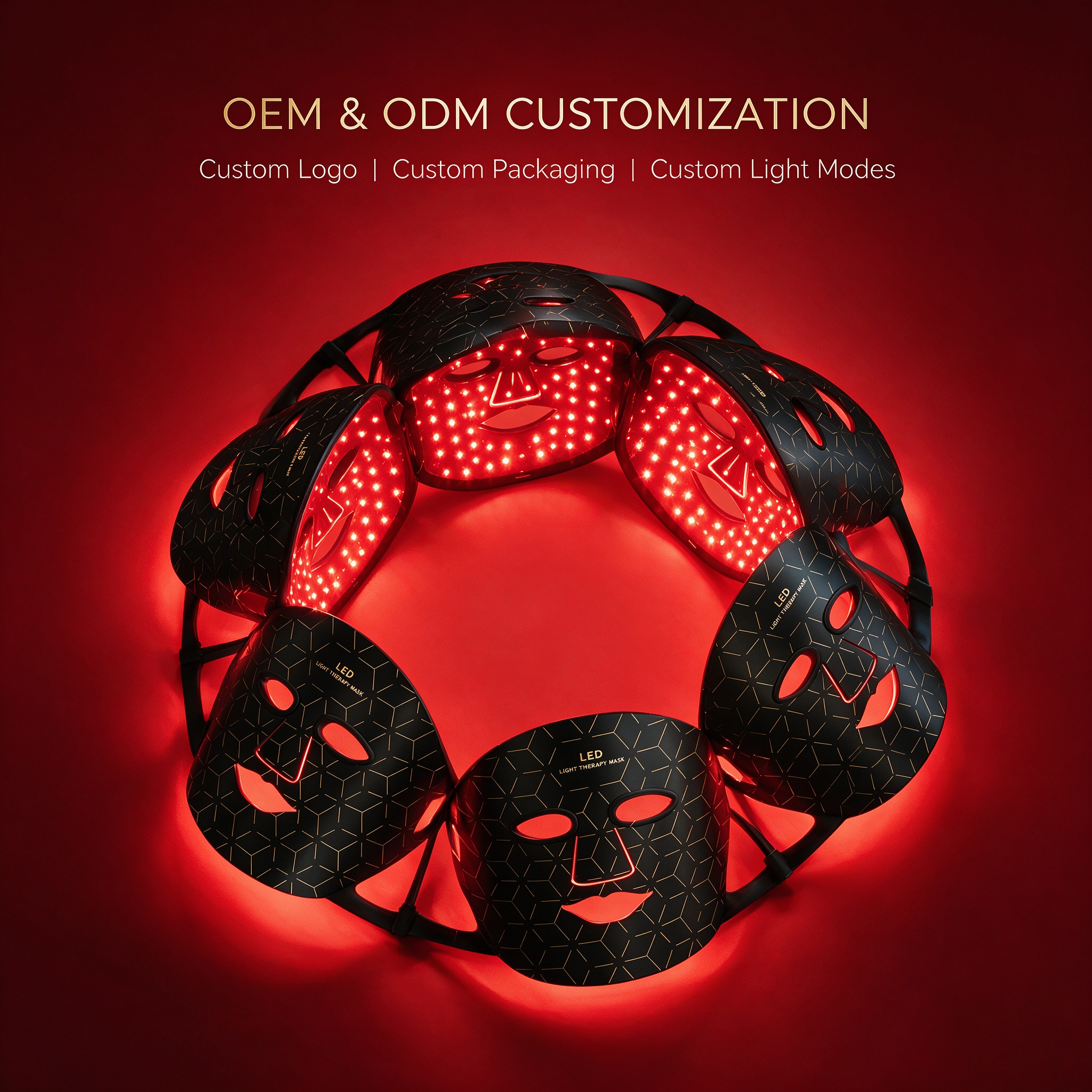
Spend any time researching at-home light therapy and you will notice the market has split into two distinct camps: the dedicated led eye mask shaped for the periorbital zone, and the full-face LED mask that covers everything from forehead to chin in one session. As a beauty device technical advisor, I get this comparison question from brand buyers and individual users on a regular basis. The answer depends on what you are trying to fix and how you use your routine. Understanding the functional differences between these two formats helps you commit to the right choice.
The skin around the eyes differs meaningfully from the rest of the face. At around 0.5 mm, it is noticeably thinner than the 2 mm average on the cheeks, and it has fewer oil glands maintaining moisture. Fine lines, dark circles, and puffiness around the eyes tend to appear earlier and are more stubborn than comparable concerns elsewhere on the face. Thinner skin means light can penetrate more readily, but it also means the quality of LED-to-skin contact has an outsized effect on treatment results compared to other facial zones.
A dedicated led eye mask is an ergonomic device contoured to sit against the eyes, nose bridge, and upper cheekbones. The LED array positions emitters close to the undereye and eyelid skin. Devices in this category regularly achieve irradiance values of around 60 mW/cm² or more in that compact zone, supporting effective sessions as short as a few minutes. Wavelength selection tends to center on red and near-infrared light in the 630–850 nm range, which reaches far enough to stimulate collagen production and address the microcirculation issues behind dark circles.
The compact form factor also makes these masks practical for travel and daily routines. Their purpose-built design makes a dedicated unit a true eye led treatment device rather than a general skin tool. Precision is their defining strength.
A full-face LED mask is designed to treat the entire face in a single session, targeting acne, hyperpigmentation, fine lines across the forehead, and overall tone. Quality full-face devices incorporate multiple wavelengths: blue light around 415 nm for acne-causing bacteria, red light around 630–633 nm for collagen support, and near-infrared at 830 nm for deeper tissue. Models with 132 or more LEDs across the full panel provide broad coverage, and a well-made led light therapy device in this category does reach the eye area as part of its overall field.
The operative word is "overall." Full-face masks are not built around the periorbital zone. The LED density per square centimeter in the eye region is typically lower than in a dedicated eye mask, and the contour fit around the undereye hollows is rarely tight.
Concentration is where the dedicated led eye mask has a clear structural advantage. Building the device around a small surface area means the same number of LEDs delivers a higher irradiance per square centimeter than when spread across the entire face. Crow's feet, dark circles, and undereye puffiness all benefit from that concentrated energy delivery.
Full-face masks carry a broader wavelength range because they need to serve different zones with different concerns. Dedicated eye masks usually focus on the wavelengths most applicable to periorbital aging. Neither is inherently better; it depends on your goals. If you also want to address acne or uneven skin tone elsewhere on the face, a full-face fda cleared led mask with multi-wavelength output may give you more value per session.
Air gaps reduce energy transfer in LED therapy. A dedicated eye mask follows the contour of the orbital bone, keeping LEDs closer to the skin throughout the session. Full-face masks vary considerably in how well they conform around the eye hollows, and flat-panel designs often leave noticeable gaps in that area.
Versatility goes to the full-face device. A single 10–20 minute session can address cheek acne, forehead fine lines, and moderate eye aging simultaneously. The dedicated LED eye mask handles the eye zone in a separate step, which adds time to your routine but allows precise control over exposure duration and wavelength for that sensitive area.
For B2B buyers building a product line, the LED eye mask versus full-face mask conversation often comes down to buyer profile and channel. Eye-specific devices appeal to a focused segment: people who already use a full-face device and want to add targeted eye care. Full-face masks have broader appeal and are easier to position as a complete system. Both categories are growing; at retail, the premium end of the dedicated eye mask segment runs roughly $400 to $950, which reflects genuine consumer willingness to invest in specialized tools.
From an OEM and ODM development perspective, eye masks demand tighter mechanical tolerances and more precise LED placement to hit the irradiance levels the product claims. Certifications carry weight here. A fda cleared led mask designation matters to North American consumers, and buyers supplying EU or Japanese markets should verify the applicable conformity requirements before scaling volumes.
For targeted eye treatment specifically — delivering maximum light energy to the undereye, crow's feet, and eyelid zones — the dedicated led eye mask is the more purpose-built option. The engineering prioritizes that zone, and fine line reduction and dark circle results tend to be more pronounced than the incidental eye-area coverage of a full-face device. Where comprehensive facial rejuvenation is the goal and eye care is one part of a broader plan, a full-face led light therapy device offers efficiency that an eye-only mask cannot replicate. Many serious users end up using both, but if the choice comes down to one device and targeted eye treatment is the primary concern, the dedicated format is the stronger answer.

2026/10/30
Discover why in-house mold development helps an RF beauty device manufacturer improve product consistency, iteration speed, tooling control, and production readiness.

2026/10/30
Learn how to verify an RF beauty device manufacturer's R&D and prototyping capabilities using practical engineering workflows and audit checklists.

2026/10/30
Learn what shapes MOQ when choosing an RF beauty device manufacturer and how to plan a lower-risk first order with balanced platform and customization.

2026/10/30
Use this RF beauty device manufacturer evaluation checklist to compare safety evidence, OEM and ODM capability, quality control, and launch readiness.

2026/10/30
See how technology makes beauty at home more guided, consistent, and informed—plus a practical checklist for choosing devices wisely.

2026/10/30
Explore how AI and smart devices shape the future of beauty with responsive routines, clear guidance, trustworthy design, and user-controlled care.

Ideal for daily facial care routines, providing easy-to-use beauty solutions at home.

Perfect for spas and salons’ frequent treatments, enhancing client experiences and results.

Supports dermatologists with advanced devices for professional skin therapy sessions.

Delivers innovative solutions for full-body massage and relaxation with home devices.

Features anti-aging technologies to help reduce wrinkles and stimulate skin vitality.

Specialized devices for safe and effective hair removal suitable for home or clinic use.

Our customers love the Perfect Idea beauty devices. Quality, packaging, and results are all outstanding. We saw increased repeat sales after adding their facial cleansers to our lineup. Their support team is responsive and reliable.

Perfect Idea brings innovation and reliability to home beauty appliances. Our collaboration introduced their massage tools to Japanese women, boosting customer satisfaction and growing our brand trust across the region.

We partnered with Shenzhen Perfect Idea Tech for their beauty equipment. The shipping was fast and every product matched our expectations. Their home-use massagers are especially popular with local salons and home users.

The stylish packaging and attractive design make Perfect Idea stand out. French consumers appreciate the easy instructions and visible results. Communication was efficient and orders always arrived on time.

Perfect Idea home use personal care devices have become a favorite with our clients. The beauty device line offers quality at a reasonable price, and technical training for our staff made onboarding easy.

We selected Perfect Idea for our beauty product portfolio and have seen very positive feedback from our customers. Products are easy to market online and the customer support is reliable and helpful.
