 EN
Home Skincare
Ideal for daily facial care routines, providing easy-to-use beauty solutions at home.

2026/10/25
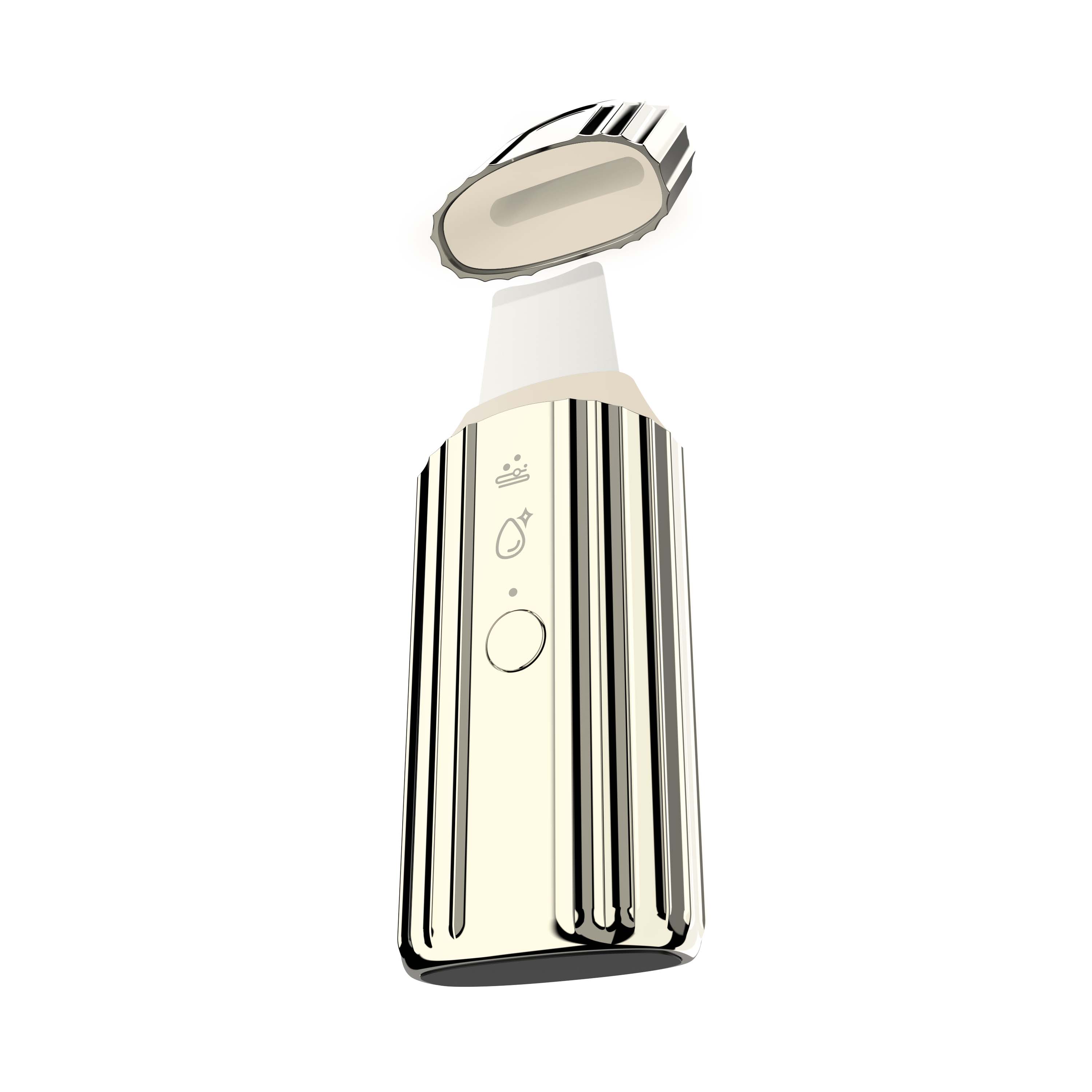
For an international brand buyer, choosing a Beauty equipment producer is not mainly a question of whether a factory can show attractive samples. The more consequential question is whether it can make your approved product repeatedly, at the volume you need, and on the schedule your launch plan requires. Capacity claims and lead-time promises are easy to make in a quotation; they become useful only when a buyer can connect them to people, equipment, materials, quality controls, and a realistic production plan.
This guide gives you a practical way to verify a Beauty equipment producer before placing a production order. It is designed for buyers sourcing home-use beauty devices, personal-care electronics, or related accessories. The exact evidence will vary by product complexity and destination market, but the verification logic stays the same: ask for records that let you trace a promise back to the process that must deliver it.
A factory may cite a monthly output number, but that number alone does not tell you what it can reserve for your program. A more useful conversation with a Beauty equipment producer distinguishes installed capacity from the capacity still available after existing commitments, maintenance, new-product trials, and quality holds.
Ask the producer to explain the production route for your product: incoming-material inspection, assembly, programming or firmware loading where applicable, functional testing, aging or burn-in if used, final inspection, packing, and shipment preparation. Then ask which workstations or machines constrain throughput. In a beauty-device project, the bottleneck might be a specialized test fixture, a heat-sealing station, a skilled assembly cell, or a purchased electronic component—not necessarily the final assembly line.
Do not accept a single headline figure as proof. Request a capacity view for the proposed window that shows scheduled orders, planned shifts, the relevant line, and the basis for the stated output.
Capacity verification becomes stronger when several independent signals agree. During a factory visit—or a structured remote audit—ask for the following evidence:
A remote review can still be useful if it combines live video, a walk-through of the relevant line, document sharing, and follow-up questions. If the order is important or the product is new, a third-party audit or an in-person visit usually gives a clearer picture. The goal is not to catch a supplier out; it is to determine whether the proposed schedule has enough operational support.
“Lead time” can mean different things to different teams. For purchasing, it may mean the period from purchase-order confirmation to goods-ready date. For a factory, it may include material procurement, production, inspection, packing, and handover. For your logistics team, it may also include freight transit and customs clearance. Clarify the boundary before comparing suppliers.
Request a milestone plan from the Beauty equipment producer with separate dates or durations for sample approval, tooling or engineering changes, material preparation, pilot build, mass production, final inspection, packing, and goods-ready handover. This makes it easier to locate the real uncertainty. For example, a line may have room next month while a custom component has a longer supplier lead time. Treating both as “production lead time” hides the decision you need to make.
| Milestone | What to verify | Buyer question |
|---|---|---|
| Order confirmation | Locked specification, forecast, and deposit assumptions | What changes would restart the schedule? |
| Material preparation | Supplier confirmations and safety-stock position | Which components have the longest or least certain lead time? |
| Pilot or first article | Test plan, defect feedback, and approval gate | What must pass before mass production begins? |
| Mass production | Assigned line, shift plan, expected yield, and contingency | What capacity is reserved for our order? |
| Final release | Inspection sampling, records, and packaging readiness | Who signs off the goods-ready date and on what evidence? |
Rather than asking for an unconditional schedule commitment, give the Beauty equipment producer a defined scenario: an approved specification, target quantity, desired goods-ready date, packaging requirement, and destination-market constraints. Ask for a proposed schedule, the assumptions behind it, and the top three risks to that schedule. A credible response usually contains conditions. For example, it may depend on artwork approval by a certain date, timely delivery of a named component, or a fixed change-control point.
Conditional language is not a weakness. In fact, it is usually more useful than an unconditional promise because it identifies the actions both sides need to manage. If a producer cannot say what would delay the plan, it may not have examined the plan closely enough. Conversely, a long list of caveats without ownership or mitigation measures can indicate that the factory has not secured the resources it describes.
Fast output is not meaningful if it creates unstable quality or poor traceability. For beauty devices sold in markets with heightened safety or regulatory expectations, ask the producer which quality-system controls apply to your specific product and market. Depending on the product classification and destination, you may need evidence around document control, incoming inspection, production records, testing, traceability, corrective actions, and process validation. Certification status should be checked directly and matched to the actual legal entity and scope; do not assume that a certificate held by an affiliate covers the quoted factory or product.
For critical processes that cannot be fully confirmed by later inspection, ask how the producer establishes consistent results and how it records that evidence. You are not asking the supplier to disclose every proprietary detail. You are checking that the Beauty equipment producer has a repeatable method for controlling the steps that affect safety, functionality, and schedule reliability.
A pilot order or pre-production run is a strong way to convert a capacity claim into observable performance. Agree in advance on the milestones you will review: material arrival, first-off approval, daily or periodic output updates, defect categories, corrective-action timing, final inspection, and goods-ready notice. Keep the first order sized to expose the process without making a missed date catastrophic for your launch.
Pay attention to how the factory communicates deviations. A capable Beauty equipment producer does not merely report that a date moved; it explains the cause, impact, containment action, revised plan, and decision needed from the buyer. That operating discipline matters as much as a polished factory presentation.
The strongest sourcing relationship is not built on a one-time factory tour. Before award, document the baseline capacity and milestone plan. After award, review actual performance against that baseline at agreed intervals. If your forecast changes, share it early enough for the producer to plan labor, materials, and line allocation. This is especially important for consumer beauty equipment, where product iterations and packaging changes can place pressure on otherwise stable operations.
In short, select a Beauty equipment producer based on evidence rather than assurance. Ask to see how the factory converts a forecast into a resourced plan, how it measures the plan in operation, and how it responds when the plan changes. A supplier that can explain those links clearly gives you a better basis for judging both manufacturing capacity and lead-time reliability.

2026/10/30
Discover why in-house mold development helps an RF beauty device manufacturer improve product consistency, iteration speed, tooling control, and production readiness.

2026/10/30
Learn how to verify an RF beauty device manufacturer's R&D and prototyping capabilities using practical engineering workflows and audit checklists.

2026/10/30
Learn what shapes MOQ when choosing an RF beauty device manufacturer and how to plan a lower-risk first order with balanced platform and customization.

2026/10/30
Use this RF beauty device manufacturer evaluation checklist to compare safety evidence, OEM and ODM capability, quality control, and launch readiness.

2026/10/30
See how technology makes beauty at home more guided, consistent, and informed—plus a practical checklist for choosing devices wisely.

2026/10/30
Explore how AI and smart devices shape the future of beauty with responsive routines, clear guidance, trustworthy design, and user-controlled care.

Ideal for daily facial care routines, providing easy-to-use beauty solutions at home.

Perfect for spas and salons’ frequent treatments, enhancing client experiences and results.

Supports dermatologists with advanced devices for professional skin therapy sessions.

Delivers innovative solutions for full-body massage and relaxation with home devices.

Features anti-aging technologies to help reduce wrinkles and stimulate skin vitality.

Specialized devices for safe and effective hair removal suitable for home or clinic use.

Our customers love the Perfect Idea beauty devices. Quality, packaging, and results are all outstanding. We saw increased repeat sales after adding their facial cleansers to our lineup. Their support team is responsive and reliable.

Perfect Idea brings innovation and reliability to home beauty appliances. Our collaboration introduced their massage tools to Japanese women, boosting customer satisfaction and growing our brand trust across the region.

We partnered with Shenzhen Perfect Idea Tech for their beauty equipment. The shipping was fast and every product matched our expectations. Their home-use massagers are especially popular with local salons and home users.

The stylish packaging and attractive design make Perfect Idea stand out. French consumers appreciate the easy instructions and visible results. Communication was efficient and orders always arrived on time.

Perfect Idea home use personal care devices have become a favorite with our clients. The beauty device line offers quality at a reasonable price, and technical training for our staff made onboarding easy.

We selected Perfect Idea for our beauty product portfolio and have seen very positive feedback from our customers. Products are easy to market online and the customer support is reliable and helpful.
