 EN
Home Skincare
Ideal for daily facial care routines, providing easy-to-use beauty solutions at home.

2026/09/19
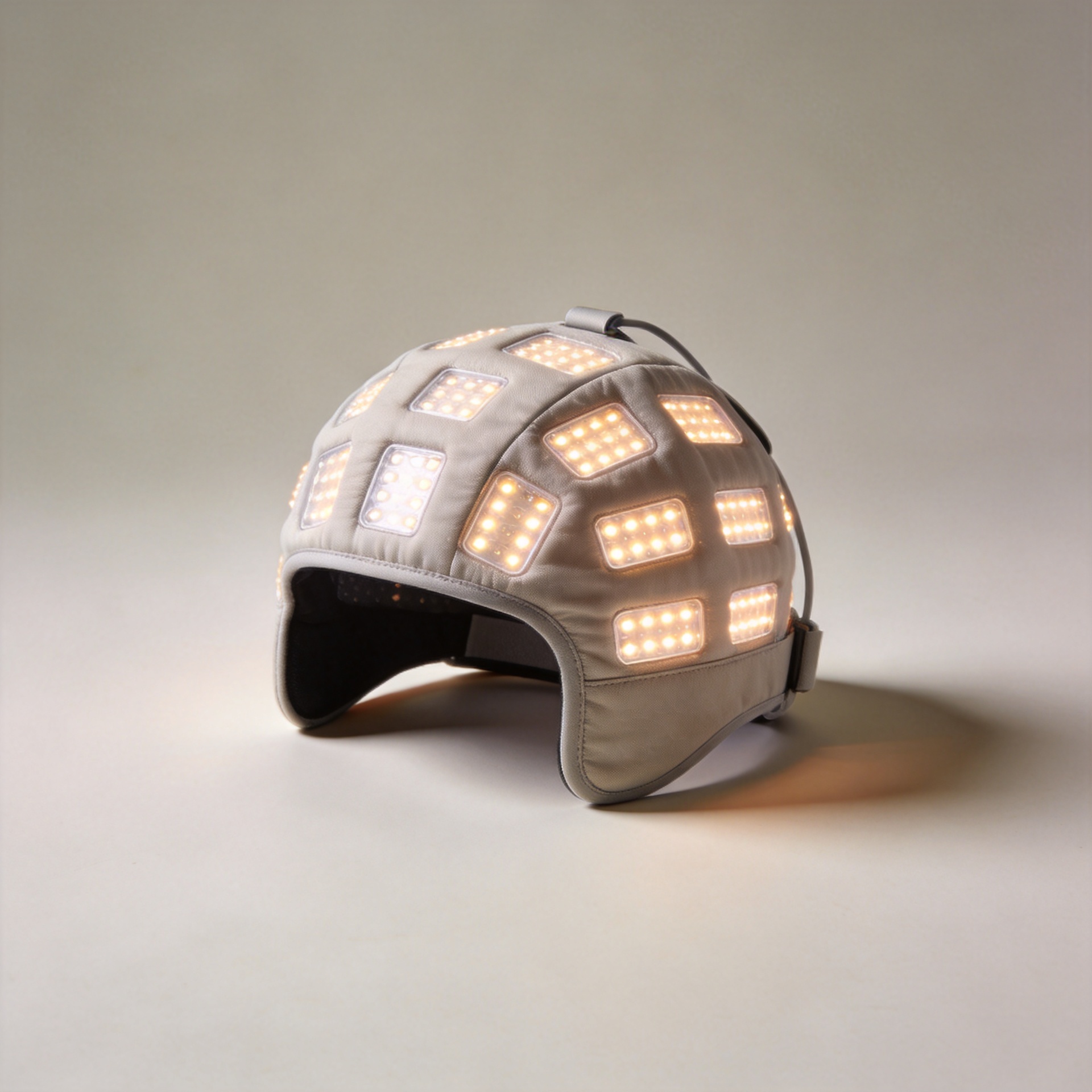
An LED hair growth cap device is easiest to use well when you treat it as a consistent, measured part of a hair-loss plan—not as a quick fix. Low-level light therapy is being studied most often for androgenetic (pattern) hair loss. Some controlled studies and reviews report improved hair-density outcomes versus sham treatment, but outcomes vary by device, diagnosis, baseline hair density, and adherence. If shedding is sudden, patchy, painful, or accompanied by scalp changes, start with a clinician rather than a cap.
From a long-term home-device perspective, comfort and routine matter more than chasing an impressive-looking specification sheet. A cap that sits securely, fits into your schedule, and is used according to its instructions is more useful than a complicated routine you abandon after two weeks.
Before the first session, identify what you are trying to address. Pattern thinning tends to develop gradually at the part line, crown, temples, or hairline. Light-based caps may be discussed as a non-drug or complementary option for this pattern. They are not a way to self-diagnose iron deficiency, thyroid disease, postpartum shedding, inflammatory scalp conditions, or scarring hair loss.
This distinction matters. An LED hair growth cap device is a delivery format; its real-world benefit depends on the light technology, the protocol, and whether its use fits your diagnosis.
Use the manual as the authority for timing. Published low-level light therapy studies have used different wavelengths, devices, and schedules, so a generic internet rule is not a substitute for the protocol supplied with your cap. Many home regimens are measured in several sessions per week over months, not in longer and longer sessions. More exposure is not automatically better.
Keep your LED hair growth cap device where you can reach it at the same time each scheduled day. Before using the LED hair growth cap device, check the timer, fit, and charging status. During use, let the LED hair growth cap device complete its prescribed cycle without adding extra time. After use, record the session. This small sequence helps make an LED hair growth cap device routine consistent enough to assess.
When comparing photos, use the same dry-hair part and lighting. The goal is not to prove a change after one LED hair growth cap device session; it is to create a reliable record for a later review. If the LED hair growth cap device feels uncomfortable or a scalp symptom persists, pause and speak with a qualified clinician.
Think in review windows, not daily mirror checks. Research in this category commonly evaluates results after roughly 16 to 26 weeks, and individual devices may specify a different timeline. Take standardized photographs before you begin: the same part, lighting, distance, dry-hair condition, and camera angle. Repeat them every four to eight weeks. This is more useful than trying to judge density from a different bathroom mirror each morning.
Track three things: completed sessions, visible shedding changes, and scalp comfort. If you notice persistent irritation, headache, tenderness, or an unusual scalp reaction, stop using the device and seek medical guidance. Temporary changes in shedding can have many causes, so do not assume a cap is the explanation without professional advice.
A cap does not replace diagnosis, nutrition, gentle grooming, or clinician-directed treatment. If you already use a topical or oral therapy, ask the clinician who manages it how to coordinate the routine. Do not apply a product immediately before a session unless both the product guidance and the cap instructions say that combination is appropriate. The aim is a predictable plan, not a crowded one.
Supportive habits are deliberately unglamorous: avoid traction styles, minimize heat and chemical damage when hair is fragile, and seek assessment for ongoing diffuse shedding. For many people, the most valuable upgrade is moving from “I use it when I remember” to a documented routine that can be reviewed with a professional.
It should mean a well-informed outcome for your own diagnosis and baseline—not a promised number of new hairs. The evidence for low-level light therapy in pattern hair loss is encouraging, yet studies are heterogeneous and do not prove that every LED hair growth cap device will produce the same response. Density, shaft thickness, photographs, and patient satisfaction are all different measures.
Give the routine the time stated by the manufacturer, compare like-for-like photos, and reassess with a clinician if thinning progresses. That approach protects you from two common mistakes: quitting after a few weeks because a change is not obvious, or continuing indefinitely despite no meaningful progress.
Only if the device instructions specifically call for daily use. Protocols differ, and extending the session or frequency on your own is not a proven way to improve results.
Evaluate over months, using standardized photos and your device’s recommended review window. Hair growth cycles are slow, so a meaningful assessment is rarely possible after a few sessions.
No. It may be considered for pattern hair loss, but sudden, patchy, scarring, painful, or medically unexplained loss needs clinical evaluation first.

2026/10/30
Discover why in-house mold development helps an RF beauty device manufacturer improve product consistency, iteration speed, tooling control, and production readiness.

2026/10/30
Learn how to verify an RF beauty device manufacturer's R&D and prototyping capabilities using practical engineering workflows and audit checklists.

2026/10/30
Learn what shapes MOQ when choosing an RF beauty device manufacturer and how to plan a lower-risk first order with balanced platform and customization.

2026/10/30
Use this RF beauty device manufacturer evaluation checklist to compare safety evidence, OEM and ODM capability, quality control, and launch readiness.

2026/10/30
See how technology makes beauty at home more guided, consistent, and informed—plus a practical checklist for choosing devices wisely.

2026/10/30
Explore how AI and smart devices shape the future of beauty with responsive routines, clear guidance, trustworthy design, and user-controlled care.

Ideal for daily facial care routines, providing easy-to-use beauty solutions at home.

Perfect for spas and salons’ frequent treatments, enhancing client experiences and results.

Supports dermatologists with advanced devices for professional skin therapy sessions.

Delivers innovative solutions for full-body massage and relaxation with home devices.

Features anti-aging technologies to help reduce wrinkles and stimulate skin vitality.

Specialized devices for safe and effective hair removal suitable for home or clinic use.

Our customers love the Perfect Idea beauty devices. Quality, packaging, and results are all outstanding. We saw increased repeat sales after adding their facial cleansers to our lineup. Their support team is responsive and reliable.

Perfect Idea brings innovation and reliability to home beauty appliances. Our collaboration introduced their massage tools to Japanese women, boosting customer satisfaction and growing our brand trust across the region.

We partnered with Shenzhen Perfect Idea Tech for their beauty equipment. The shipping was fast and every product matched our expectations. Their home-use massagers are especially popular with local salons and home users.

The stylish packaging and attractive design make Perfect Idea stand out. French consumers appreciate the easy instructions and visible results. Communication was efficient and orders always arrived on time.

Perfect Idea home use personal care devices have become a favorite with our clients. The beauty device line offers quality at a reasonable price, and technical training for our staff made onboarding easy.

We selected Perfect Idea for our beauty product portfolio and have seen very positive feedback from our customers. Products are easy to market online and the customer support is reliable and helpful.
