 EN
Home Skincare
Ideal for daily facial care routines, providing easy-to-use beauty solutions at home.

2026/10/21
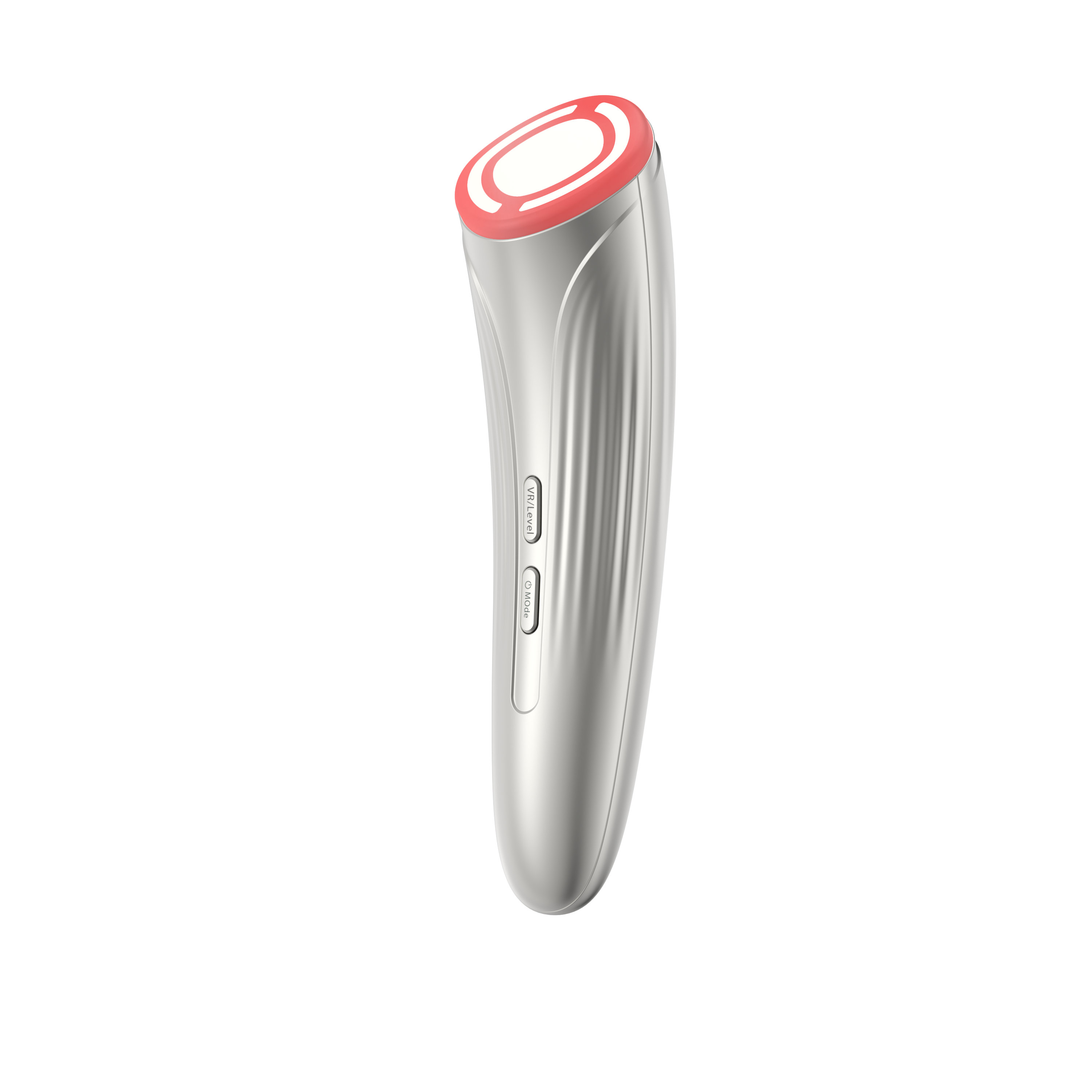
Choosing an RF beauty device manufacturer is not mainly a question of finding the lowest quotation. It is a decision about whether a supplier can turn a product concept into a repeatable, compliant, market-ready private-label program. For a new brand, a weak choice can surface late: the pilot sample feels promising, but the production unit heats differently, the instructions do not match the target market, or the claims need to be rewritten just before launch.
As an OEM/ODM brand-development manager, I would start with the commercial brief and work backward to the evidence required from the a qualified supplier. That approach keeps the conversation focused on user safety, product consistency, market positioning, and the practical work of putting your own name on the device.
Before comparing factories, define the product you intend to sell. Specify the target market, customer profile, price band, distribution channel, expected order volume, brand design direction, and the claims your marketing team hopes to make. A clear brief helps an factory distinguish a straightforward logo-and-packaging project from a program that needs housing changes, controls, accessory design, firmware work, or localized instructions.
This matters because “private label” can describe very different scopes. One factory may mean printing a logo on an existing model. Another may offer a true ODM path, including industrial design and packaging development. Neither approach is automatically better. If speed is your priority, an established platform with controlled branding may be appropriate. If product differentiation is central to your launch, ask the factory which elements can actually be customized, what validation each change requires, and how it affects minimum order quantity and timing.
RF devices use radio-frequency energy to create controlled heating in the intended treatment area. The product story may sound simple, but the production challenge is not. A capable supplier should be able to explain, in project-appropriate detail, how it controls energy delivery, contact conditions, temperature sensing, protective shutdown behavior, power supply quality, and the repeatability of the user interface.
Do not accept a feature list as proof. Ask to see the device specification, operating instructions, test plan, sample inspection record, and a clear explanation of what happens when the device detects abnormal temperature or contact conditions. If the product combines RF with LED, EMS, cooling, or other functions, request that each mode be documented separately. More functions can support a differentiated proposition, but they also make validation, labeling, and user guidance more demanding.
A useful question is: “What evidence would you give our quality team to show that the approved sample and the mass-produced unit are equivalent?” The answer reveals more than a polished brochure. It should lead to defined materials, incoming checks, functional tests, inspection criteria, and a process for handling changes to components or software.
Many sourcing projects stumble because the sample stage is treated as a sales demonstration rather than a quality gate. Build a written sample-approval checklist with the factory team. Include fit and finish, charging behavior, button response, display or indicator logic, operating temperature, packaging, labeling, accessories, instructions, and the exact brand artwork.
Then record the approved configuration. Note the model identifier, revision level, color standard, material specification, bill of materials where appropriate, and firmware version. This is especially important for a home RF device, where a small change in an adapter, sensor, electrode, or control setting can affect the product experience. The sample should not merely look ready; it should be traceable to the version you expect to receive.
For early-stage brands, it is tempting to approve quickly to protect the launch date. In practice, a few extra days spent defining acceptance criteria often prevents a much more expensive dispute after a shipment arrives.
When assessing an supplier, look past photos of a production line. Ask how the supplier controls incoming materials, assembly steps, in-process checks, finished-product testing, and nonconforming units. Request examples of the inspection points relevant to your model rather than a generic promise of “100% quality control.”
You also need a change-control conversation. What happens if a critical component becomes unavailable? Who approves an alternative? Will the factory notify you before using it? A dependable manufacturer treats the approved specification as a controlled baseline and documents departures from it. This protects both the brand and the factory because the expectations are visible before production begins.
Consider commissioning a pre-shipment inspection against your agreed checklist. The inspection is most valuable when it tests the points that matter to your brand: appearance, accessories, labeling, basic function, packaging accuracy, and quantity. It is not a substitute for a supplier quality system, but it adds an independent checkpoint before goods leave the factory.
Compliance is not a certificate you add at the end. The requirements depend on intended use, target market, product design, labeling, and the claims the brand makes. A responsible supplier can provide relevant documentation and explain which tests or certifications relate to the product, but the brand should confirm its final market obligations with qualified regulatory and legal advisers.
For example, CE marking is tied to the applicable EU framework and the manufacturer’s responsibilities. In the United States, the distinction between a general-wellness positioning and a medical claim can change the regulatory analysis. That is why you should review claims, instructions, packaging, and online product pages together rather than allowing sales copy to outrun the evidence.
Ask the supplier for current document names, issuing bodies, applicable model coverage, validity dates, and whether the submitted configuration matches your private-label version. If a supplier says a certificate covers “all models,” ask for the specific basis. A careful answer is a good sign; an overly broad assurance is a reason to investigate further.
Private label is operational as well as technical. Evaluate artwork review, logo placement, packaging dielines, barcode fields, instruction localization, warranty documentation, spare parts, and after-sales escalation. An manufacturer that handles these details systematically can reduce friction between your product, marketing, and operations teams.
Ask for a project timeline that names approval gates: quotation, sample, artwork, packaging proof, production order, inspection, and shipment. Clarify ownership of molds, artwork files, and product-development outputs. Also confirm how the factory protects confidential design information and how it manages defect claims after delivery.
Instead of choosing by quotation alone, score each supplier against the same criteria. A practical scorecard can weight technical evidence, sample quality, production controls, compliance documentation, customization scope, communication speed, commercial terms, and post-sale support. Add written notes beside each score. That record makes internal approval easier and gives your team a factual basis for negotiation.
If two candidates are close, choose the one that makes verification easier. The strongest supplier is usually not the supplier that promises everything. It is the supplier that defines what it can deliver, shows the controls behind that promise, and works with your team to close gaps before mass production.
Selecting an RF beauty device manufacturer is ultimately a risk-management exercise. Treat the factory as a development and quality partner, request evidence at every gate, and keep the private-label brief specific. That discipline gives your brand a better foundation for a reliable launch and a product program you can scale with confidence.

2026/10/30
Discover why in-house mold development helps an RF beauty device manufacturer improve product consistency, iteration speed, tooling control, and production readiness.

2026/10/30
Learn how to verify an RF beauty device manufacturer's R&D and prototyping capabilities using practical engineering workflows and audit checklists.

2026/10/30
Learn what shapes MOQ when choosing an RF beauty device manufacturer and how to plan a lower-risk first order with balanced platform and customization.

2026/10/30
Use this RF beauty device manufacturer evaluation checklist to compare safety evidence, OEM and ODM capability, quality control, and launch readiness.

2026/10/30
See how technology makes beauty at home more guided, consistent, and informed—plus a practical checklist for choosing devices wisely.

2026/10/30
Explore how AI and smart devices shape the future of beauty with responsive routines, clear guidance, trustworthy design, and user-controlled care.

Ideal for daily facial care routines, providing easy-to-use beauty solutions at home.

Perfect for spas and salons’ frequent treatments, enhancing client experiences and results.

Supports dermatologists with advanced devices for professional skin therapy sessions.

Delivers innovative solutions for full-body massage and relaxation with home devices.

Features anti-aging technologies to help reduce wrinkles and stimulate skin vitality.

Specialized devices for safe and effective hair removal suitable for home or clinic use.

Our customers love the Perfect Idea beauty devices. Quality, packaging, and results are all outstanding. We saw increased repeat sales after adding their facial cleansers to our lineup. Their support team is responsive and reliable.

Perfect Idea brings innovation and reliability to home beauty appliances. Our collaboration introduced their massage tools to Japanese women, boosting customer satisfaction and growing our brand trust across the region.

We partnered with Shenzhen Perfect Idea Tech for their beauty equipment. The shipping was fast and every product matched our expectations. Their home-use massagers are especially popular with local salons and home users.

The stylish packaging and attractive design make Perfect Idea stand out. French consumers appreciate the easy instructions and visible results. Communication was efficient and orders always arrived on time.

Perfect Idea home use personal care devices have become a favorite with our clients. The beauty device line offers quality at a reasonable price, and technical training for our staff made onboarding easy.

We selected Perfect Idea for our beauty product portfolio and have seen very positive feedback from our customers. Products are easy to market online and the customer support is reliable and helpful.
