 EN
Home Skincare
Ideal for daily facial care routines, providing easy-to-use beauty solutions at home.

2026/10/01
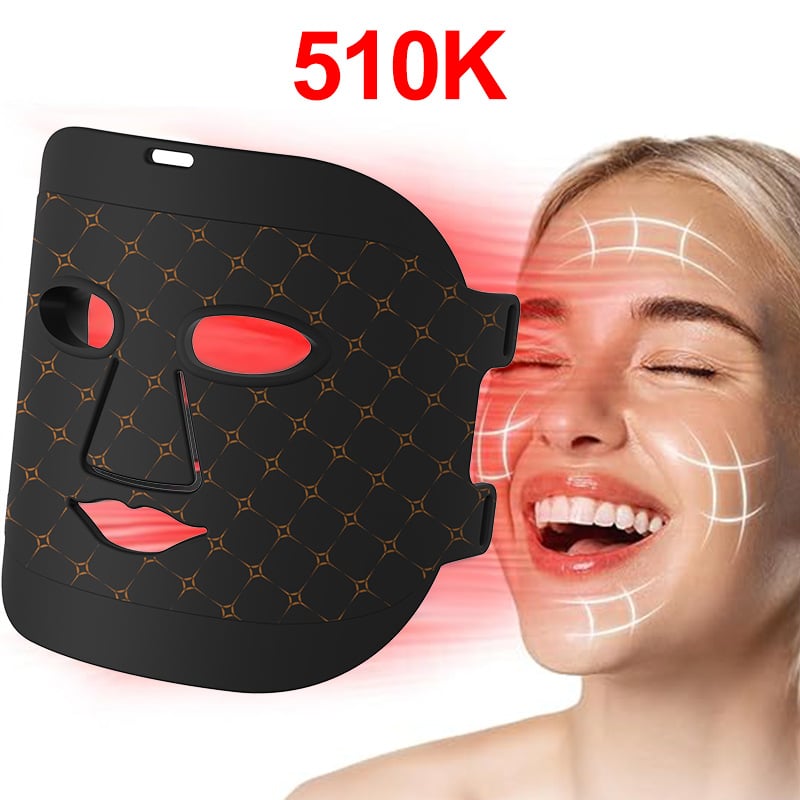
Choosing an LED therapy device is easier when you start with the area you want to support, not with the longest list of light modes. A full-face mask, a small handheld device, a scalp comb, and a larger panel solve different coverage and usability problems. As a home-beauty device technical adviser, I recommend treating LED therapy as a fit-and-routine decision: clarify the target area, then compare coverage, comfort, controls, and safety information.
LED therapy is not a one-size-fits-all treatment, and a device should not be expected to diagnose, cure, or replace professional care. If you have a skin condition, take photosensitizing medication, have an eye condition, or are unsure about suitability, consult a qualified clinician before starting.
Write down the exact area first: the whole face, occasional localized breakouts, the scalp, or a broad body area. Then define a cosmetic or maintenance goal in plain language. This prevents a common mistake: buying the device with the most features when a better-fitting format would be easier to use consistently.
| Target area | Usually practical format | What to compare |
|---|---|---|
| Whole face | Mask or flexible face panel | Fit, even facial coverage, timer, eye shielding, cleanable contact surfaces |
| Small facial zones | Handheld or targeted wand | Spot size, comfortable grip, precise placement, treatment timer |
| Scalp and hairline | Comb, cap, or helmet-style format | How light reaches through hair, head fit, session convenience, cleaning instructions |
| Large body areas | Panel or flexible wrap | Coverage area, stable positioning, distance guidance, ventilation, session setup |
For example, someone considering red light therapy for fine lines may value even face coverage and a routine that fits after cleansing. A person looking into red light therapy for acne may need a device that can target the relevant facial zones without forcing an uncomfortable full-face routine. The format should support the use case; it should not dictate it.
Device marketing often makes color choices sound interchangeable. They are not. Cleveland Clinic explains that blue LED light acts on the uppermost layer of skin, while red light travels further; it also notes that blue LED light may target acne-causing bacteria. That distinction is useful as a starting point, but it is not a promise that any device will deliver a particular personal result.
Ask the supplier or brand to explain each mode in the user instructions: what area it is intended for, how it should be used, and which precautions apply. Avoid making a purchase based only on a color name, a vague “multi-light” label, or before-and-after imagery. A clear protocol and realistic claim language are more useful than a crowded control panel.
There is a trade-off between versatility and repeatability. A multifunction device can look compelling, but if it is heavy, awkward around the nose, or slow to position, it may spend more time in a drawer than in a routine. For full-face LED therapy, check that the device rests securely and distributes light across the intended facial zones. For a targeted wand, check whether the head can comfortably reach around the jawline, sides of the nose, or hairline.
For red light therapy for hair growth, the practical question is not simply whether a device emits red light. Consider whether its design can be placed consistently over the scalp and whether your hair density makes positioning difficult. A cap or comb may be more routine-friendly than a facial mask adapted for the wrong job.
At-home LED therapy deserves the same careful reading you would give any electrical beauty device. The American Academy of Dermatology advises consumers to follow device directions, use recommended eye protection, and look for FDA clearance when that is relevant to the product and market. FDA-cleared is not the same as a universal effectiveness guarantee, and local market requirements vary, but transparent labeling and instructions are positive signals.
A device is only useful if people can follow its directions consistently. Before choosing, consider whether the unit has a simple timer, clear controls, stable straps or stands, and a session length that is realistic for the intended user. Ask yourself: will you actually set up a large panel several times a week, or would a smaller targeted format fit the routine better?
For brands and buyers, this is also a product-development question. A well-documented ODM program can help align housing, fit, packaging, user instructions, and quality-control checks with a chosen treatment-area format. The right specification is not necessarily the device with the most modes; it is the one whose coverage, instructions, and use pattern fit the product promise.
The most suitable LED therapy device is area-specific, understandable, and comfortable enough to use responsibly. Start with coverage and routine fit, keep claims realistic, and let clear instructions and safety information carry more weight than a long feature list.

2026/10/30
Discover why in-house mold development helps an RF beauty device manufacturer improve product consistency, iteration speed, tooling control, and production readiness.

2026/10/30
Learn how to verify an RF beauty device manufacturer's R&D and prototyping capabilities using practical engineering workflows and audit checklists.

2026/10/30
Learn what shapes MOQ when choosing an RF beauty device manufacturer and how to plan a lower-risk first order with balanced platform and customization.

2026/10/30
Use this RF beauty device manufacturer evaluation checklist to compare safety evidence, OEM and ODM capability, quality control, and launch readiness.

2026/10/30
See how technology makes beauty at home more guided, consistent, and informed—plus a practical checklist for choosing devices wisely.

2026/10/30
Explore how AI and smart devices shape the future of beauty with responsive routines, clear guidance, trustworthy design, and user-controlled care.

Ideal for daily facial care routines, providing easy-to-use beauty solutions at home.

Perfect for spas and salons’ frequent treatments, enhancing client experiences and results.

Supports dermatologists with advanced devices for professional skin therapy sessions.

Delivers innovative solutions for full-body massage and relaxation with home devices.

Features anti-aging technologies to help reduce wrinkles and stimulate skin vitality.

Specialized devices for safe and effective hair removal suitable for home or clinic use.

Our customers love the Perfect Idea beauty devices. Quality, packaging, and results are all outstanding. We saw increased repeat sales after adding their facial cleansers to our lineup. Their support team is responsive and reliable.

Perfect Idea brings innovation and reliability to home beauty appliances. Our collaboration introduced their massage tools to Japanese women, boosting customer satisfaction and growing our brand trust across the region.

We partnered with Shenzhen Perfect Idea Tech for their beauty equipment. The shipping was fast and every product matched our expectations. Their home-use massagers are especially popular with local salons and home users.

The stylish packaging and attractive design make Perfect Idea stand out. French consumers appreciate the easy instructions and visible results. Communication was efficient and orders always arrived on time.

Perfect Idea home use personal care devices have become a favorite with our clients. The beauty device line offers quality at a reasonable price, and technical training for our staff made onboarding easy.

We selected Perfect Idea for our beauty product portfolio and have seen very positive feedback from our customers. Products are easy to market online and the customer support is reliable and helpful.
