 EN
Home Skincare
Ideal for daily facial care routines, providing easy-to-use beauty solutions at home.

2026/10/20
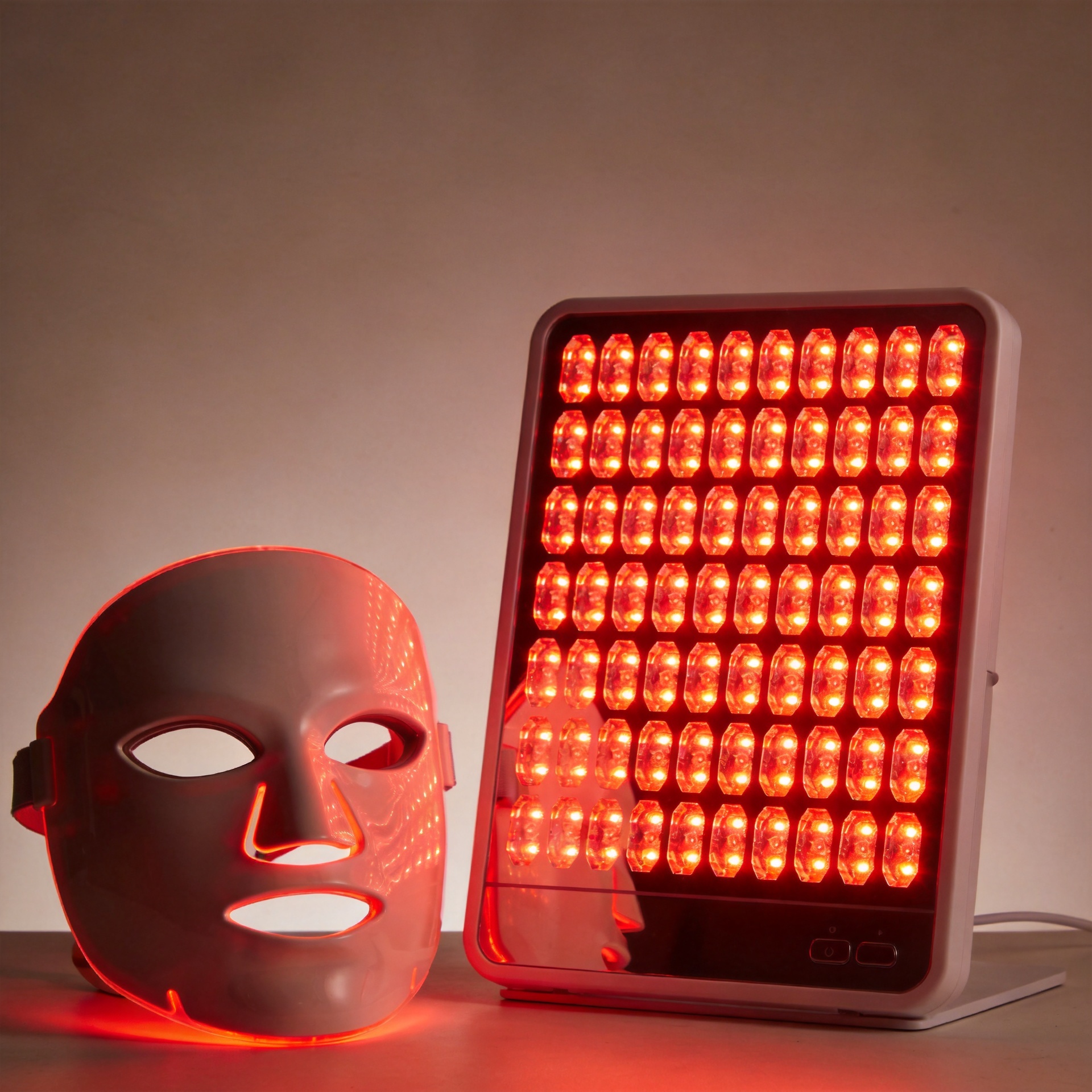
Choosing between a red light therapy panel and a mask is less about finding the “strongest” device and more about matching the format to the area you want to treat, the routine you can repeat, and the information a supplier can document. Both formats use LEDs to deliver red light therapy, but they place the light differently: a mask sits close to the face, while a panel works from a stated distance. That difference changes coverage, comfort, timing, and how you should read the specifications.
As a home-beauty-device technical advisor, I would start with one practical question: will your red light therapy routine focus on facial skincare, or do you want flexibility for the neck, chest, body, or several people? Once that answer is clear, the comparison becomes much simpler.
A mask is usually the more focused red light therapy format. It follows the contours of the face and keeps the light source at a consistent close distance. That can make a mask easier to fit into a skincare routine because the user can sit, recline, or continue a quiet task during a timed session. A well-designed light therapy mask is especially relevant when facial convenience, a compact footprint, and repeatable positioning matter most.
A panel is a more flexible red light therapy format. Depending on its size and stand or mounting options, one panel may be used for the face, neck, décolletage, hands, or larger body areas. It also asks more of the user: the working distance must be understood, the angle may need adjustment, and the session setup usually takes more space. For someone who expects to use red light therapy beyond the face, those trade-offs can be worthwhile.
| Decision factor | Mask may fit better | Panel may fit better |
|---|---|---|
| Primary treatment area | Face-focused routine | Face plus larger or changing areas |
| Positioning | Close, repeatable facial placement | Adjustable distance and angle |
| Setup | Compact and routine-friendly | Requires a stable location and clearance |
| Sharing or versatility | Usually one facial user at a time | Can suit varied household uses |
| Spec comparison | Ask for output measured at the face | Ask for output and the stated measurement distance |
One easy red light therapy buying mistake is treating one irradiance number as a complete answer. Irradiance describes power density, commonly reported in mW/cm², but it has meaning only with the measurement location and session time. A panel’s reading can change as you move farther away. A mask is worn close to the skin, so its useful question is whether the stated value was measured where the face actually sits.
Ask a supplier for the wavelength configuration, irradiance, test distance, timer range, and the method used for measurement. Then read those answers together. Dose is commonly discussed as irradiance multiplied by time, so a faster red light therapy session is not automatically better, and a lower output is not automatically inadequate. The device instructions should define the intended distance and session duration; do not improvise a longer schedule just because the device looks gentle.
Red light therapy devices often list red wavelengths and may also list near-infrared wavelengths. The presence of a familiar number on a specification sheet does not, by itself, prove performance for every goal. Look for a clear wavelength listing, tolerances where available, and documentation that ties the claims to the specific model. For brand buyers, this is also a useful point to request test records during sample evaluation rather than relying only on a sales presentation.
Many people initially spend the most time comparing output figures. In practice, the better red light therapy device is often the one a person will use according to its instructions over time. If your evening routine is already crowded, a face-focused mask with a simple timer may be easier to sustain. If you want one device that can serve multiple areas, a panel may prevent you from buying several specialized products.
Think about the details that are easy to overlook: the weight and fit of a mask, whether straps are adjustable, whether eye protection and ventilation feel workable, the panel’s stand stability, cord placement, controls, storage, and the room where you will use it. Those details matter because a red light therapy device that is awkward to position is less likely to become a consistent habit.
Red light therapy is not a substitute for medical diagnosis or treatment. Review the manufacturer’s instructions, contraindications, and eye-safety guidance before use. People with a health condition, photosensitivity, a relevant eye concern, or medicines that may increase light sensitivity should seek guidance from an appropriate clinician. Stop use and ask for advice if a device causes unusual discomfort or a concerning reaction.
For masks, evaluate the eye area rather than assuming that closed eyes solve every comfort question. For panels, evaluate brightness, distance, and whether the recommended setup is realistic in your room. A responsible red light therapy supplier should be able to explain the intended use, provide a clear manual, and identify the model associated with its compliance and safety documents. Do not equate a generic certification logo with model-specific evidence.
Neither format wins every red light therapy decision. A mask is usually the clearer choice for a convenient face-first routine; a panel is usually the stronger fit when coverage and adaptability are the priority. Make the choice from your target area, setup tolerance, and verifiable specifications—not from a single marketing number. That approach gives consumers a more realistic purchase decision and gives brand teams a cleaner brief for evaluating red light therapy products with an OEM or ODM partner.

2026/10/30
Discover why in-house mold development helps an RF beauty device manufacturer improve product consistency, iteration speed, tooling control, and production readiness.

2026/10/30
Learn how to verify an RF beauty device manufacturer's R&D and prototyping capabilities using practical engineering workflows and audit checklists.

2026/10/30
Learn what shapes MOQ when choosing an RF beauty device manufacturer and how to plan a lower-risk first order with balanced platform and customization.

2026/10/30
Use this RF beauty device manufacturer evaluation checklist to compare safety evidence, OEM and ODM capability, quality control, and launch readiness.

2026/10/30
See how technology makes beauty at home more guided, consistent, and informed—plus a practical checklist for choosing devices wisely.

2026/10/30
Explore how AI and smart devices shape the future of beauty with responsive routines, clear guidance, trustworthy design, and user-controlled care.

Ideal for daily facial care routines, providing easy-to-use beauty solutions at home.

Perfect for spas and salons’ frequent treatments, enhancing client experiences and results.

Supports dermatologists with advanced devices for professional skin therapy sessions.

Delivers innovative solutions for full-body massage and relaxation with home devices.

Features anti-aging technologies to help reduce wrinkles and stimulate skin vitality.

Specialized devices for safe and effective hair removal suitable for home or clinic use.

Our customers love the Perfect Idea beauty devices. Quality, packaging, and results are all outstanding. We saw increased repeat sales after adding their facial cleansers to our lineup. Their support team is responsive and reliable.

Perfect Idea brings innovation and reliability to home beauty appliances. Our collaboration introduced their massage tools to Japanese women, boosting customer satisfaction and growing our brand trust across the region.

We partnered with Shenzhen Perfect Idea Tech for their beauty equipment. The shipping was fast and every product matched our expectations. Their home-use massagers are especially popular with local salons and home users.

The stylish packaging and attractive design make Perfect Idea stand out. French consumers appreciate the easy instructions and visible results. Communication was efficient and orders always arrived on time.

Perfect Idea home use personal care devices have become a favorite with our clients. The beauty device line offers quality at a reasonable price, and technical training for our staff made onboarding easy.

We selected Perfect Idea for our beauty product portfolio and have seen very positive feedback from our customers. Products are easy to market online and the customer support is reliable and helpful.
