 EN
Home Skincare
Ideal for daily facial care routines, providing easy-to-use beauty solutions at home.

2026/09/26
For a red light therapy face routine, the format you can use consistently matters more than a dramatic-looking feature list. A mask and a wand can both bring LED light close to the skin, but they solve different routine problems. The useful choice starts with treatment area, positioning, session habits, and the level of control you want—not with a promise of instant change.
As a home beauty-device selection adviser, I treat a red light therapy face decision as a fit question. A mask is designed for broad, repeatable facial coverage. A wand is designed for targeted attention and flexible handling. Neither format is automatically better for every person or every brand concept.
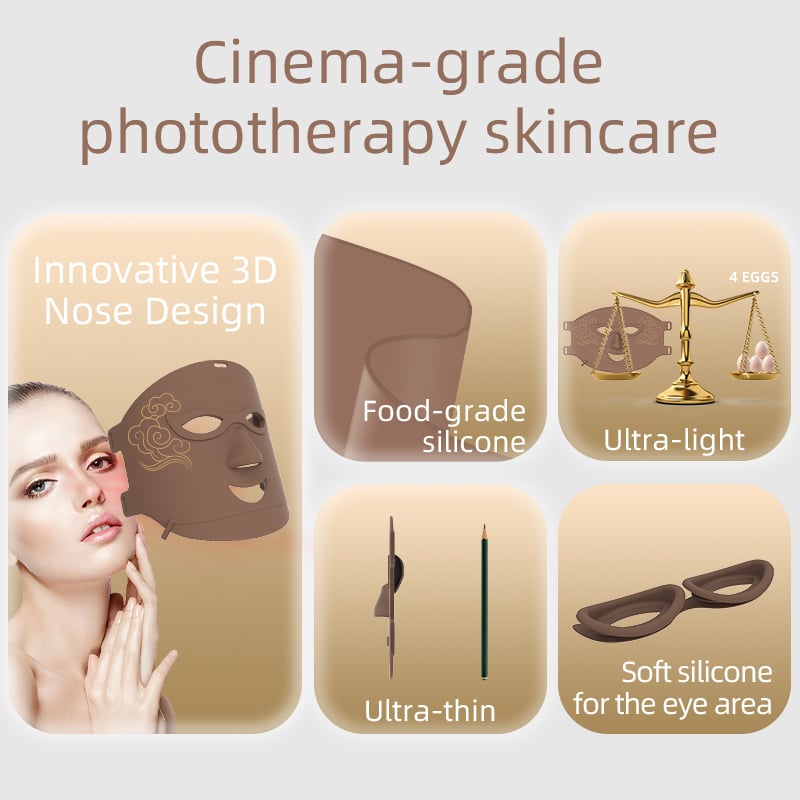
A mask makes sense when your red light therapy face goal is a full-face session with as few hand movements as possible. Once fitted and switched on according to its instructions, it can cover the forehead, cheeks, nose, and chin in one treatment position. That fixed geometry is its practical advantage: it reduces the chance that a busy user treats one cheek much longer than the other.
A wand is usually the stronger fit when a red light therapy face routine is focused on smaller zones. Someone may want to spend extra time around a visible blemish, a particular cheek area, or the jawline. A wand also gives the user freedom to adjust the angle around contours. The trade-off is that coverage depends on hand placement and patience, so it is easier to skip areas or create an uneven routine.
| Decision factor | Mask | Wand |
|---|---|---|
| Coverage | Broad, simultaneous facial coverage | Small, movable treatment area |
| Positioning | Fixed by the mask shape and straps | Controlled by the user at each pass |
| Routine fit | Hands-free session | Active, targeted session |
| Selection question | Will I use full-face care regularly? | Do I need precision and flexibility? |
People often begin a red light therapy face comparison by asking which device is more powerful. That is a reasonable question, but it is incomplete. A device can only be useful in the areas it reaches consistently. With a mask, assess how the shell or silicone body sits across the face, whether the eye area is comfortable, and whether the user can remain relaxed for the stated session. With a wand, assess the size of the light head, how easily it follows contours, and whether the routine realistically leaves time to cover each intended area.
For a red light therapy face concept aimed at consumers who want simplicity, a mask’s hands-free approach may lower routine friction. For users who value control or already have a detailed skincare ritual, a wand may feel more intuitive. This is not just a technical distinction. If a device creates too many steps, it can become a drawer item regardless of its specifications.
Repeatability is the overlooked part of choosing a red light therapy face device. A mask gives the user a similar distance and orientation each time because the device rests on the face. A wand requires the user to maintain the recommended distance, keep moving or holding it as directed, and remember the same sequence. That extra control can be valuable, but it also places more responsibility on the user.
Ask yourself a plain question: would you rather wear a device while you sit still, or would you rather guide it around your face? If your skincare routine already takes more than 15 minutes, a hands-free facial LED routine format may be more realistic. If you prefer to concentrate on a few spots and enjoy a more hands-on ritual, the wand format may be easier to keep.
For either facial LED routine format, read the manufacturer’s instructions first. Look for clear information about intended use, session directions, charging or power requirements, cleaning, eye guidance, and contraindications. Compare wavelength information only when it is disclosed clearly and in context; do not assume that a longer specification sheet guarantees a better result.
In the United States, “FDA-cleared” is commonly used for devices that have gone through the applicable clearance pathway; it is not the same as a blanket promise that a device will deliver a particular cosmetic result. The American Academy of Dermatology also advises following the directions supplied with a device and seeking professional advice when a person has a condition or medication that can increase light sensitivity. A facial LED routine article should make those boundaries clear rather than treat home use as risk-free for everyone.
Comfort can decide whether a facial LED routine device stays in the routine. For masks, check weight distribution, strap adjustability, face fit, ventilation, and how the device is cleaned between uses. For wands, check grip, control placement, cable or charging convenience, and whether the head can be cleaned without damaging it. These practical details do not sound glamorous, but they affect adherence.
It is also worth correcting a common assumption: more features do not automatically make a better facial LED routine choice. A device with several modes may be useful only if users understand which mode applies and can operate it comfortably. A straightforward format with clear instructions can be the more responsible choice for a first-time home-device user.
For brands developing a facial LED routine device, translate the format into a clear user promise. A mask needs to communicate fit, coverage, comfort, and straightforward session behavior. A wand needs to explain zone sequencing, handling, and how users can avoid uneven treatment. The manufacturer supports home beauty-device OEM/ODM development, so a product brief can also consider exterior design, packaging, instructions, and market-specific compliance planning alongside the basic format choice.
The final answer is simple: choose a mask when full-face coverage and low-effort repeatability are the priority; choose a wand when targeted control and flexible placement matter most. Set realistic expectations, follow the product instructions, and consult an appropriate healthcare professional before using a facial LED routine device if you have photosensitivity concerns or a relevant medical condition.

2026/10/30
Discover why in-house mold development helps an RF beauty device manufacturer improve product consistency, iteration speed, tooling control, and production readiness.

2026/10/30
Learn how to verify an RF beauty device manufacturer's R&D and prototyping capabilities using practical engineering workflows and audit checklists.

2026/10/30
Learn what shapes MOQ when choosing an RF beauty device manufacturer and how to plan a lower-risk first order with balanced platform and customization.

2026/10/30
Use this RF beauty device manufacturer evaluation checklist to compare safety evidence, OEM and ODM capability, quality control, and launch readiness.

2026/10/30
See how technology makes beauty at home more guided, consistent, and informed—plus a practical checklist for choosing devices wisely.

2026/10/30
Explore how AI and smart devices shape the future of beauty with responsive routines, clear guidance, trustworthy design, and user-controlled care.

Ideal for daily facial care routines, providing easy-to-use beauty solutions at home.

Perfect for spas and salons’ frequent treatments, enhancing client experiences and results.

Supports dermatologists with advanced devices for professional skin therapy sessions.

Delivers innovative solutions for full-body massage and relaxation with home devices.

Features anti-aging technologies to help reduce wrinkles and stimulate skin vitality.

Specialized devices for safe and effective hair removal suitable for home or clinic use.

Our customers love the Perfect Idea beauty devices. Quality, packaging, and results are all outstanding. We saw increased repeat sales after adding their facial cleansers to our lineup. Their support team is responsive and reliable.

Perfect Idea brings innovation and reliability to home beauty appliances. Our collaboration introduced their massage tools to Japanese women, boosting customer satisfaction and growing our brand trust across the region.

We partnered with Shenzhen Perfect Idea Tech for their beauty equipment. The shipping was fast and every product matched our expectations. Their home-use massagers are especially popular with local salons and home users.

The stylish packaging and attractive design make Perfect Idea stand out. French consumers appreciate the easy instructions and visible results. Communication was efficient and orders always arrived on time.

Perfect Idea home use personal care devices have become a favorite with our clients. The beauty device line offers quality at a reasonable price, and technical training for our staff made onboarding easy.

We selected Perfect Idea for our beauty product portfolio and have seen very positive feedback from our customers. Products are easy to market online and the customer support is reliable and helpful.
