 EN
Home Skincare
Ideal for daily facial care routines, providing easy-to-use beauty solutions at home.

2026/09/19
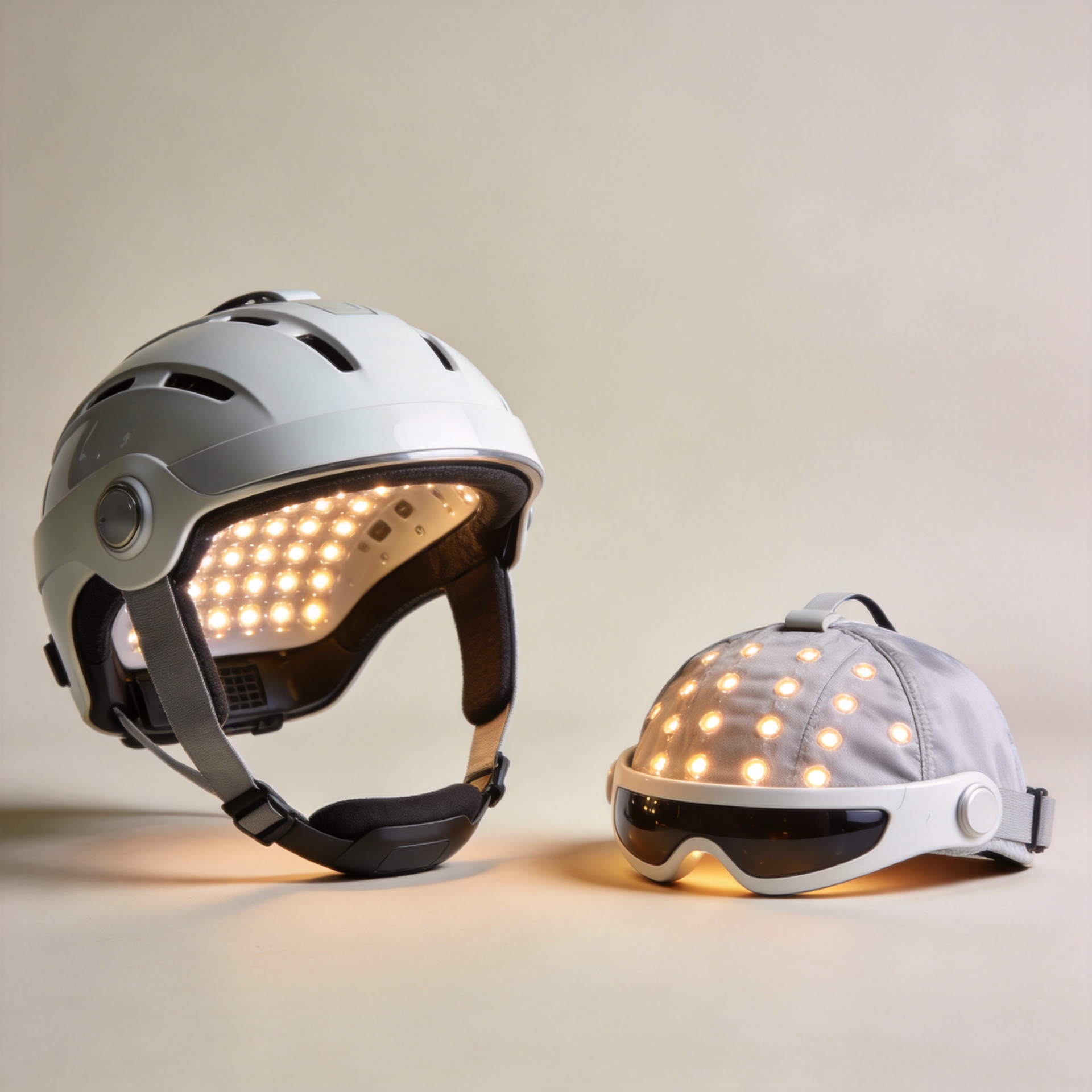
Choosing an LED hair growth cap device is less about finding a universally suitable design and more about finding a format you will use consistently. Helmet-style and cap-style devices both place light-emitting diodes near the scalp, but they can feel very different in a weekly routine. For buyers comparing options for personal use, retail, or a private-label product line, the useful questions are coverage, fit, comfort, controls, documentation, and realistic expectations—not just the number of LEDs on a product page.
This guide takes a practical comparison approach. It does not assume that one format produces a better outcome for every person, and it does not treat a device as a substitute for professional assessment of ongoing hair loss. Instead, it helps you identify which LED hair growth cap device format better fits your intended user and purchasing criteria.
Before comparing shapes, define the use case. Is the device intended for short sessions at home, for a user who wants hands-free downtime, or for a brand that needs an approachable, wearable product concept? An LED hair growth cap device should be judged as a complete user experience: how easily it goes on, whether it stays positioned, how it is charged or powered, how long a session takes, and whether the instructions make regular use simple.
Also separate general hair-care interest from a medical claim. Hair shedding and thinning can have many causes. A careful buyer reviews the manufacturer’s intended-use statement, instructions, contraindications, and local regulatory documentation, then speaks with a qualified clinician when symptoms are new, rapid, patchy, or accompanied by scalp irritation.
A helmet-style device is commonly a rigid or semi-rigid shell that sits over the head. Its main attraction is structure. The housing can hold the LEDs in a fixed arrangement, which may make placement feel repeatable from session to session. For someone who prefers a device that covers the head without adjusting fabric or straps, a helmet-style LED hair growth cap device can feel straightforward.
The trade-off is often bulk. Ask about weight, ventilation, internal headroom, cable placement, and whether the shell accommodates different head sizes and hairstyles. A rigid LED hair growth cap device may be less convenient for travel or storage. It can also feel warm during use, so buyers should rely on the actual instructions and product specifications rather than assume that every helmet has the same comfort profile.
A cap-style device generally places LEDs inside or beneath a soft cap, hat, or flexible insert. The familiar silhouette can make the format feel less clinical and easier to store. For users who value discretion, portability, or a lighter-feeling product, a cap-style LED hair growth cap device may be the more appealing starting point.
With a cap format, fit deserves extra scrutiny. Check how the inner light panel is secured, whether the cap maintains close and comfortable positioning across different head shapes, and how the textile or liner is cleaned. Do not assume that a cap-style LED hair growth cap device is automatically cooler, more flexible, or more travel-friendly; confirm those details in the manual and sample evaluation.
“Full coverage” can mean different things across listings. A better comparison starts with the actual treatment area shown in the product documentation. Consider the crown, frontal hairline, temples, and sides of the scalp that matter to the intended user. Then consider whether the device sits in the same place every time. A well-fitted LED hair growth cap device is easier to evaluate than one that shifts, pinches, or requires repeated adjustment.
Ask suppliers or manufacturers for clear diagrams, interior photos, fit guidance, and the instructions for use. If you are sourcing for a brand, request a sample and have several representative users assess the fit. This is more informative than comparing LED counts alone, because LED count does not explain placement, session instructions, build quality, or user adherence.
The most sophisticated LED hair growth cap device is not helpful if it stays in a drawer. Think through the session environment: a user may read, work at a desk, watch television, or simply sit quietly. A helmet can be preferable when a stable shell feels reassuring. A cap can be preferable when a softer format feels less intrusive. Neither preference is universal.
During evaluation, note pressure points, heat sensation, noise, cable management, controller placement, and whether the user can wear eyeglasses comfortably. Make comfort testing part of product selection rather than an afterthought. For B2B buyers, this step can also reveal practical issues that should be addressed in sizing guidance, packaging, or customer-support materials.
Regardless of format, a responsible LED hair growth cap device purchase includes documentation review. Confirm the intended user, session schedule, power and charging instructions, cleaning method, warranty, return terms, and contact route for support. If a supplier cites regulatory status, ask for the exact jurisdiction and documentation. In the United States, for example, FDA clearance and FDA approval are different regulatory terms; do not treat them as interchangeable.
Avoid choosing based on medical-sounding wording alone. Look for clear, consistent instructions and avoid sellers that make assured regrowth claims, promise instant results, or claim suitability for everyone. These claims are warning signs because individual outcomes and suitability can vary.
| Priority | Helmet-style may suit you when… | Cap-style may suit you when… |
|---|---|---|
| Positioning | You prefer a formed, repeatable shell. | You are comfortable checking fit and adjustment. |
| Storage | You have a dedicated place for a larger device. | You value a compact, packable form. |
| Feel during sessions | You like a structured, hands-free setup. | You prefer a softer, more familiar wearable format. |
| Brand program | You need a prominent device presentation and controls. | You want flexible exterior styling and wearable positioning. |
Choose a helmet-style design if stable placement and a structured treatment routine are your leading priorities. Choose a cap-style design if portability, a familiar wearable format, and flexible styling matter more. In either case, the most suitable LED hair growth cap device is one supported by clear documentation, comfortable enough for repeated use, and appropriate for the buyer’s actual needs. Keep the decision grounded in fit, routine, and verifiable product information—not promises that a device cannot responsibly make.

2026/10/30
Discover why in-house mold development helps an RF beauty device manufacturer improve product consistency, iteration speed, tooling control, and production readiness.

2026/10/30
Learn how to verify an RF beauty device manufacturer's R&D and prototyping capabilities using practical engineering workflows and audit checklists.

2026/10/30
Learn what shapes MOQ when choosing an RF beauty device manufacturer and how to plan a lower-risk first order with balanced platform and customization.

2026/10/30
Use this RF beauty device manufacturer evaluation checklist to compare safety evidence, OEM and ODM capability, quality control, and launch readiness.

2026/10/30
See how technology makes beauty at home more guided, consistent, and informed—plus a practical checklist for choosing devices wisely.

2026/10/30
Explore how AI and smart devices shape the future of beauty with responsive routines, clear guidance, trustworthy design, and user-controlled care.

Ideal for daily facial care routines, providing easy-to-use beauty solutions at home.

Perfect for spas and salons’ frequent treatments, enhancing client experiences and results.

Supports dermatologists with advanced devices for professional skin therapy sessions.

Delivers innovative solutions for full-body massage and relaxation with home devices.

Features anti-aging technologies to help reduce wrinkles and stimulate skin vitality.

Specialized devices for safe and effective hair removal suitable for home or clinic use.

Our customers love the Perfect Idea beauty devices. Quality, packaging, and results are all outstanding. We saw increased repeat sales after adding their facial cleansers to our lineup. Their support team is responsive and reliable.

Perfect Idea brings innovation and reliability to home beauty appliances. Our collaboration introduced their massage tools to Japanese women, boosting customer satisfaction and growing our brand trust across the region.

We partnered with Shenzhen Perfect Idea Tech for their beauty equipment. The shipping was fast and every product matched our expectations. Their home-use massagers are especially popular with local salons and home users.

The stylish packaging and attractive design make Perfect Idea stand out. French consumers appreciate the easy instructions and visible results. Communication was efficient and orders always arrived on time.

Perfect Idea home use personal care devices have become a favorite with our clients. The beauty device line offers quality at a reasonable price, and technical training for our staff made onboarding easy.

We selected Perfect Idea for our beauty product portfolio and have seen very positive feedback from our customers. Products are easy to market online and the customer support is reliable and helpful.
