 EN
Home Skincare
Ideal for daily facial care routines, providing easy-to-use beauty solutions at home.

2026/10/09
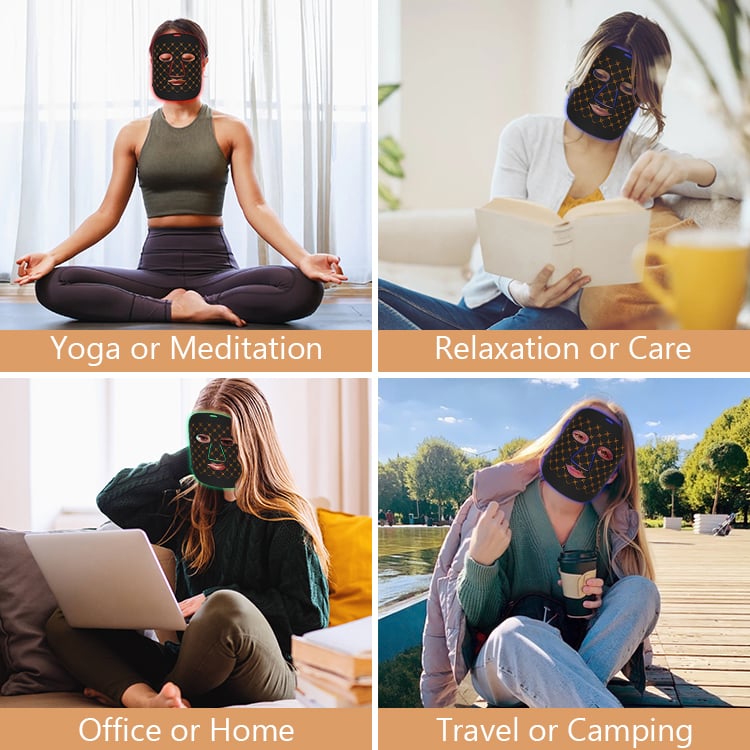
A silicone mask can make an at-home LED therapy routine easier to keep, but “silicone” alone does not tell you whether the fit will feel comfortable. For a face-worn device, comfort is practical: it affects whether the mask sits evenly, whether the straps distract you, and whether you are likely to follow the maker’s directions consistently. Rather than looking for the most feature-heavy silicone mask, start with the session you can realistically complete without pressure points or constant readjustment.
As a selection framework, separate flexible material from fit quality. A soft-looking silicone mask may still feel awkward if its openings, strap path, or shape do not suit your face. Conversely, a simple silicone mask with thoughtful clearance around the nose and eyes can be easier to wear. The goal is not to promise a universal right choice; it is to find a model whose design fits your comfort priorities and whose instructions you can follow safely.
The generic search term silicone mask can describe many unrelated items, including cosmetic covers and costume masks. For LED therapy, confirm that the product is specifically designed as a facial light-therapy device before comparing comfort details. Read the intended-use description, user instructions, and safety information. Do not assume that a generic reusable face cover, or a mask made from silicone for another purpose, can deliver the same function.
A flexible silicone mask is often appealing because it may follow facial contours more closely than a rigid shell. That is a comfort consideration, not a guarantee. Material flexibility should work with the device’s overall shape, light layout, closures, and care instructions. If a listing uses broad phrases such as “soft” or “comfortable,” look for the practical information that explains how the device is meant to sit on the face.
Fit is the first comparison point for a silicone mask. Begin with the areas most likely to become distracting during a session:
Do not judge fit only from a front-facing product photo. Look for side views, instructions about positioning, and return or support terms that let you resolve a genuine fit issue. If you have facial sensitivity, recent procedures, or an active skin concern, pause and seek appropriate professional advice rather than trying to force a silicone mask to work.
Many people focus on the mask material and overlook the straps. In practice, strap tension often decides whether a silicone mask feels stable or tiring. A good setup should hold the device in its intended position without leaving you tempted to over-tighten it. Adjustable fastening can be useful, but the presence of an adjustment alone is not enough; consider where the strap rests, whether it is easy to operate, and whether it spreads tension rather than concentrating it at one point.
Think about your normal posture. If you plan to sit upright, lie back, or move around lightly, follow the product instructions for that use case. A silicone mask that feels fine while standing for a moment may shift when you recline. It is reasonable to prioritize a lower-effort routine over a design that asks you to hold still in an uncomfortable position. Comfort supports consistency, but it does not change the need to use the device only as directed.
Before each LED therapy session, make sure the silicone mask is clean, dry, and used in the way its maker specifies. Ask practical questions: Can you reach the areas that touch the skin? Does the care guidance say which cleansers or wipes are acceptable? Will makeup, skincare residue, or hair products make the surface harder to maintain? A design that is easy to clean is easier to keep pleasant against the skin.
Pay attention to edges and seams as well as the central surface. Smooth contact areas may reduce friction, while rough joins or poorly finished openings can be bothersome. If a silicone mask causes pain, marked irritation, pressure, or visual discomfort, stop the session and consult the product guidance or a qualified clinician as appropriate. More pressure is not a route to a better experience.
It is easy to assume that more functions or a higher price will automatically make a silicone mask more comfortable. A better question is whether the design makes your intended routine manageable. If your priority is gentle facial contact, focus first on flexible fit and edge comfort. If eye comfort is your concern, examine the maker’s guidance and the physical clearance around the eye area. These directions involve trade-offs, and the right choice depends on your face shape, sensitivity, and the instructions for the specific device.
In the end, a well-chosen silicone mask should feel like a considered part of your skincare routine, not something you tolerate. Confirm the purpose, evaluate fit and strap tension, keep cleaning simple, and respect the safety guidance. That approach gives you a more useful basis for choosing a silicone mask for comfortable LED therapy sessions.

2026/10/30
Discover why in-house mold development helps an RF beauty device manufacturer improve product consistency, iteration speed, tooling control, and production readiness.

2026/10/30
Learn how to verify an RF beauty device manufacturer's R&D and prototyping capabilities using practical engineering workflows and audit checklists.

2026/10/30
Learn what shapes MOQ when choosing an RF beauty device manufacturer and how to plan a lower-risk first order with balanced platform and customization.

2026/10/30
Use this RF beauty device manufacturer evaluation checklist to compare safety evidence, OEM and ODM capability, quality control, and launch readiness.

2026/10/30
See how technology makes beauty at home more guided, consistent, and informed—plus a practical checklist for choosing devices wisely.

2026/10/30
Explore how AI and smart devices shape the future of beauty with responsive routines, clear guidance, trustworthy design, and user-controlled care.

Ideal for daily facial care routines, providing easy-to-use beauty solutions at home.

Perfect for spas and salons’ frequent treatments, enhancing client experiences and results.

Supports dermatologists with advanced devices for professional skin therapy sessions.

Delivers innovative solutions for full-body massage and relaxation with home devices.

Features anti-aging technologies to help reduce wrinkles and stimulate skin vitality.

Specialized devices for safe and effective hair removal suitable for home or clinic use.

Our customers love the Perfect Idea beauty devices. Quality, packaging, and results are all outstanding. We saw increased repeat sales after adding their facial cleansers to our lineup. Their support team is responsive and reliable.

Perfect Idea brings innovation and reliability to home beauty appliances. Our collaboration introduced their massage tools to Japanese women, boosting customer satisfaction and growing our brand trust across the region.

We partnered with Shenzhen Perfect Idea Tech for their beauty equipment. The shipping was fast and every product matched our expectations. Their home-use massagers are especially popular with local salons and home users.

The stylish packaging and attractive design make Perfect Idea stand out. French consumers appreciate the easy instructions and visible results. Communication was efficient and orders always arrived on time.

Perfect Idea home use personal care devices have become a favorite with our clients. The beauty device line offers quality at a reasonable price, and technical training for our staff made onboarding easy.

We selected Perfect Idea for our beauty product portfolio and have seen very positive feedback from our customers. Products are easy to market online and the customer support is reliable and helpful.
