 EN
Home Skincare
Ideal for daily facial care routines, providing easy-to-use beauty solutions at home.

2026/10/27
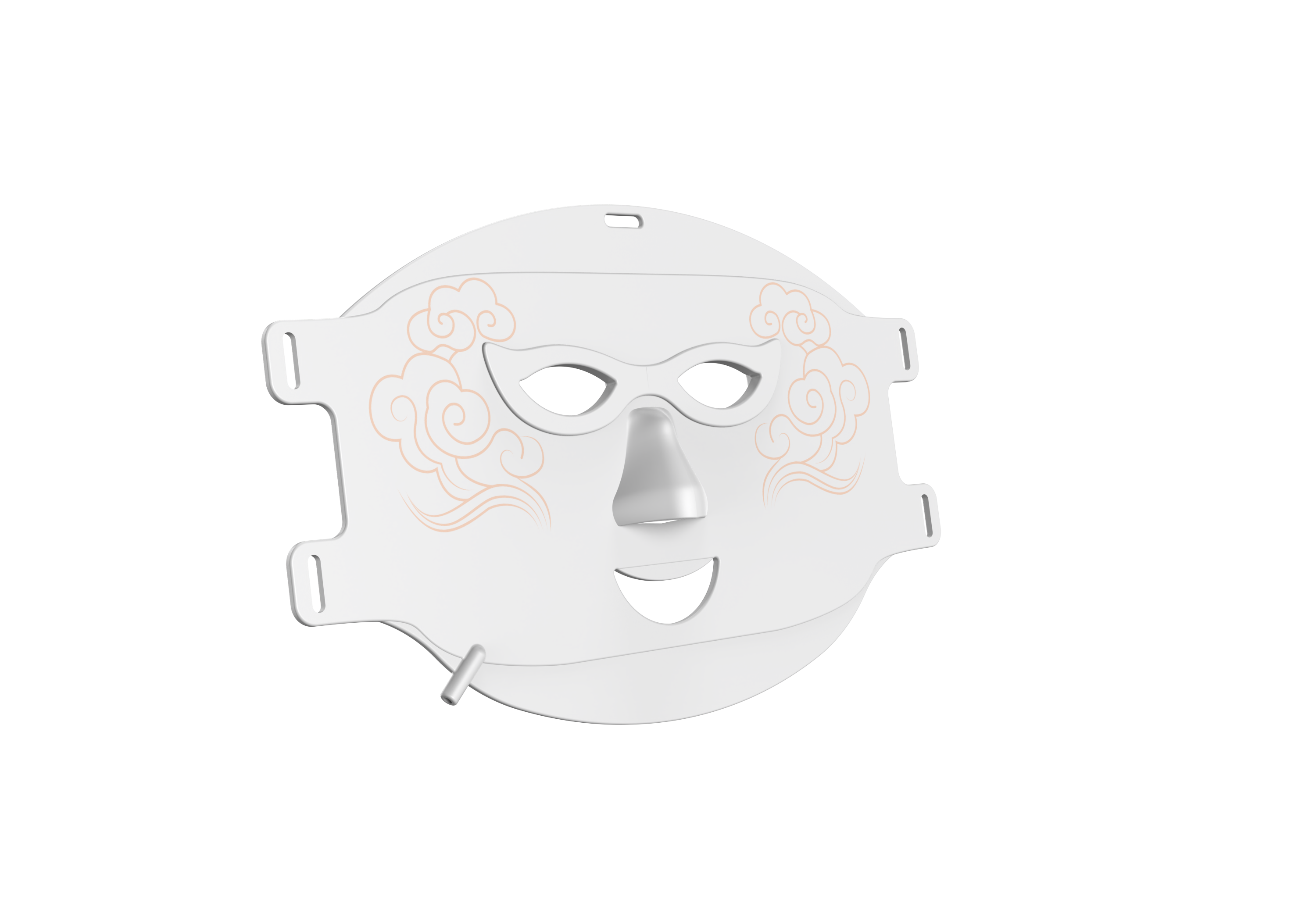
Choosing a silicone LED mask supplier is not a matter of comparing a catalog and accepting the lowest quotation. For a skincare brand, the supplier is part of the product-development system: it influences the fit, optical configuration, documentation, packaging, and consistency that customers experience. From an international buyer’s perspective, the useful question is not “Which factory says it can make an LED mask?” but “Which partner can repeatedly make the configuration we have specified and show the evidence?”
This guide turns that question into a practical OEM review process. It is intentionally focused on supplier evidence, sample validation, and change control rather than making performance or regulatory promises for a particular product.
Before contacting suppliers, define the commercial and technical boundaries of the project. A clear brief prevents a factory from quoting an attractive but incomparable version of a silicone LED mask. It should state the intended market, target user, planned claims, desired light modes, fit and strap concept, controller format, packaging language, accessory requirements, and expected production volume.
Also distinguish the parts that are fixed from those open to engineering discussion. For example, a brand may require a soft, flexible face interface but be open to changes in the controller enclosure or strap routing. This makes supplier conversations more productive and exposes whether the factory can translate a brand brief into controlled drawings, bills of materials, and inspection criteria.
Ask how the supplier specifies silicone, manages incoming material, and approves molded parts. A visually similar mask can feel very different once thickness distribution, edge finishing, odor, hardness, and repeated bending are considered. Review the proposed tooling path, sample-cavity plan, dimensional checkpoints, and the method used to approve surface finish and color. If the project requires a particular skin-contact material position, ask what supporting documents can be supplied for the exact material and final configuration rather than accepting a broad statement about “medical-grade” silicone.
A capable OEM team can explain where variation tends to occur: around eye and mouth cutouts, thin flexible zones, strap anchors, and areas where the LED assembly meets the silicone body. They should also describe how a nonconforming molded part is identified before it reaches final assembly.
For a silicone LED mask, the flexible shell is only one part of the system. Request a configuration-level discussion of the LED layout, light modes, thermal management, controller, battery or power arrangement, wiring protection, and functional test steps. The supplier does not need to reveal proprietary details, but it should be able to define what is controlled and what is verified for your program.
Be especially careful with samples that look polished but have no traceable specification. The purchase order, approved sample, and production documentation should agree on the selected configuration. If a supplier proposes a substitution after sampling, treat it as a formal change that needs evaluation—not a casual adjustment made on the production floor.
Ask to see the operating evidence behind the promise of quality: incoming inspection records, in-process checks, functional-test records, final inspection criteria, and a traceability method that links finished lots to key components. For an OEM launch, it is reasonable to ask how the factory handles a failed test, who can approve a deviation, and how it prevents the same issue from recurring.
Many brands initially focus on unit price. In practice, batch consistency and a clear corrective-action process usually matter more once the first purchase order is shipped. A supplier that can explain its controls in plain language is easier to work with than one that provides only a certificate collage.
Compliance is not a checkbox that transfers automatically from one product to another. It depends on the destination market, intended use, labeling, and the exact silicone LED mask configuration. Ask the factory to map available reports and declarations to the proposed model, light modes, power setup, and test conditions. For optical safety, confirm whether photobiological-safety evidence applies to the exact configuration you are buying; a report for another mode or model may not answer the same question.
Likewise, avoid vague phrases such as “FDA approved.” If a U.S. pathway is relevant, work with qualified regulatory professionals to determine the appropriate route and the evidence required for the specific intended claims. The supplier’s role is to provide accurate design, test, and manufacturing documentation—not to make unsupported market-access promises.
Good OEM manufacturing relies on a named project owner, clear revision control, and decisions recorded in writing. During early calls, test the supplier’s response to practical questions: Who owns the artwork approval? How are translations checked? What happens if the brand changes a light-mode label? What files are frozen before mass production? These details reveal whether the supplier has a repeatable process or is improvising around each request.
For brands building a wider device range, a partner with OEM support for logo application, packaging adaptation, and localized instructions can reduce coordination work. The value is not simply convenience; it is fewer handoffs where an approved detail can be lost.
A first sample should be evaluated against a written checklist. Check fit across the facial zones you care about, strap adjustment, pressure points, cable or controller handling, finish quality, instructions, and the consistency of the selected operating modes. Then record every issue in a revision list with photos, an owner, and a due date.
For a silicone LED mask OEM project, sample approval should also establish the production reference. If the supplier offers a lower-cost material, LED, or controller after approval, ask for a revised sample and an updated change record. This approach may feel slower at the beginning, but it is less expensive than resolving uncontrolled differences after packaging and marketing have been completed.
An on-site visit is useful when feasible, but a remote audit can still reveal meaningful information. Ask for a live walkthrough of the molding area, assembly flow, test stations, aging or burn-in process if applicable, packaging line, and quality records. Match what you see against the quotation and sample discussion.
The goal is not to make every supplier use the same process. It is to determine whether the process is visible, controlled, and suitable for the risk level of your brand program.
Build a comparison sheet that puts price beside tooling, sample iterations, documentation scope, testing support, minimum order quantity, lead-time assumptions, packaging work, and change-control rules. A lower quotation can be sensible if the specification is simple and the supplier’s controls are strong. It becomes less attractive when essential validation, documentation, or communication work is excluded.
One useful procurement habit is to ask every finalist to quote the same frozen brief and to list exclusions separately. That makes gaps visible. It also lets your team compare suppliers on the factors that affect a repeatable silicone LED mask launch, not merely on headline price.
Score each candidate across product engineering, silicone and tooling control, electronics verification, documentation, traceability, communication, and commercial fit. Weight the categories according to the project. A brand entering a tightly controlled market may give more weight to evidence and change control; a fast pilot launch may emphasize sample speed while still keeping safety and quality gates intact.
The stronger supplier is rarely the one that promises everything. It is the one that states what it can deliver, documents the boundaries, responds constructively to sample findings, and can keep the approved configuration stable through mass production. That is the foundation for an OEM relationship that protects both the brand and the end user.

2026/10/30
Discover why in-house mold development helps an RF beauty device manufacturer improve product consistency, iteration speed, tooling control, and production readiness.

2026/10/30
Learn how to verify an RF beauty device manufacturer's R&D and prototyping capabilities using practical engineering workflows and audit checklists.

2026/10/30
Learn what shapes MOQ when choosing an RF beauty device manufacturer and how to plan a lower-risk first order with balanced platform and customization.

2026/10/30
Use this RF beauty device manufacturer evaluation checklist to compare safety evidence, OEM and ODM capability, quality control, and launch readiness.

2026/10/30
See how technology makes beauty at home more guided, consistent, and informed—plus a practical checklist for choosing devices wisely.

2026/10/30
Explore how AI and smart devices shape the future of beauty with responsive routines, clear guidance, trustworthy design, and user-controlled care.

Ideal for daily facial care routines, providing easy-to-use beauty solutions at home.

Perfect for spas and salons’ frequent treatments, enhancing client experiences and results.

Supports dermatologists with advanced devices for professional skin therapy sessions.

Delivers innovative solutions for full-body massage and relaxation with home devices.

Features anti-aging technologies to help reduce wrinkles and stimulate skin vitality.

Specialized devices for safe and effective hair removal suitable for home or clinic use.

Our customers love the Perfect Idea beauty devices. Quality, packaging, and results are all outstanding. We saw increased repeat sales after adding their facial cleansers to our lineup. Their support team is responsive and reliable.

Perfect Idea brings innovation and reliability to home beauty appliances. Our collaboration introduced their massage tools to Japanese women, boosting customer satisfaction and growing our brand trust across the region.

We partnered with Shenzhen Perfect Idea Tech for their beauty equipment. The shipping was fast and every product matched our expectations. Their home-use massagers are especially popular with local salons and home users.

The stylish packaging and attractive design make Perfect Idea stand out. French consumers appreciate the easy instructions and visible results. Communication was efficient and orders always arrived on time.

Perfect Idea home use personal care devices have become a favorite with our clients. The beauty device line offers quality at a reasonable price, and technical training for our staff made onboarding easy.

We selected Perfect Idea for our beauty product portfolio and have seen very positive feedback from our customers. Products are easy to market online and the customer support is reliable and helpful.
