 EN
Home Skincare
Ideal for daily facial care routines, providing easy-to-use beauty solutions at home.

2026/10/21
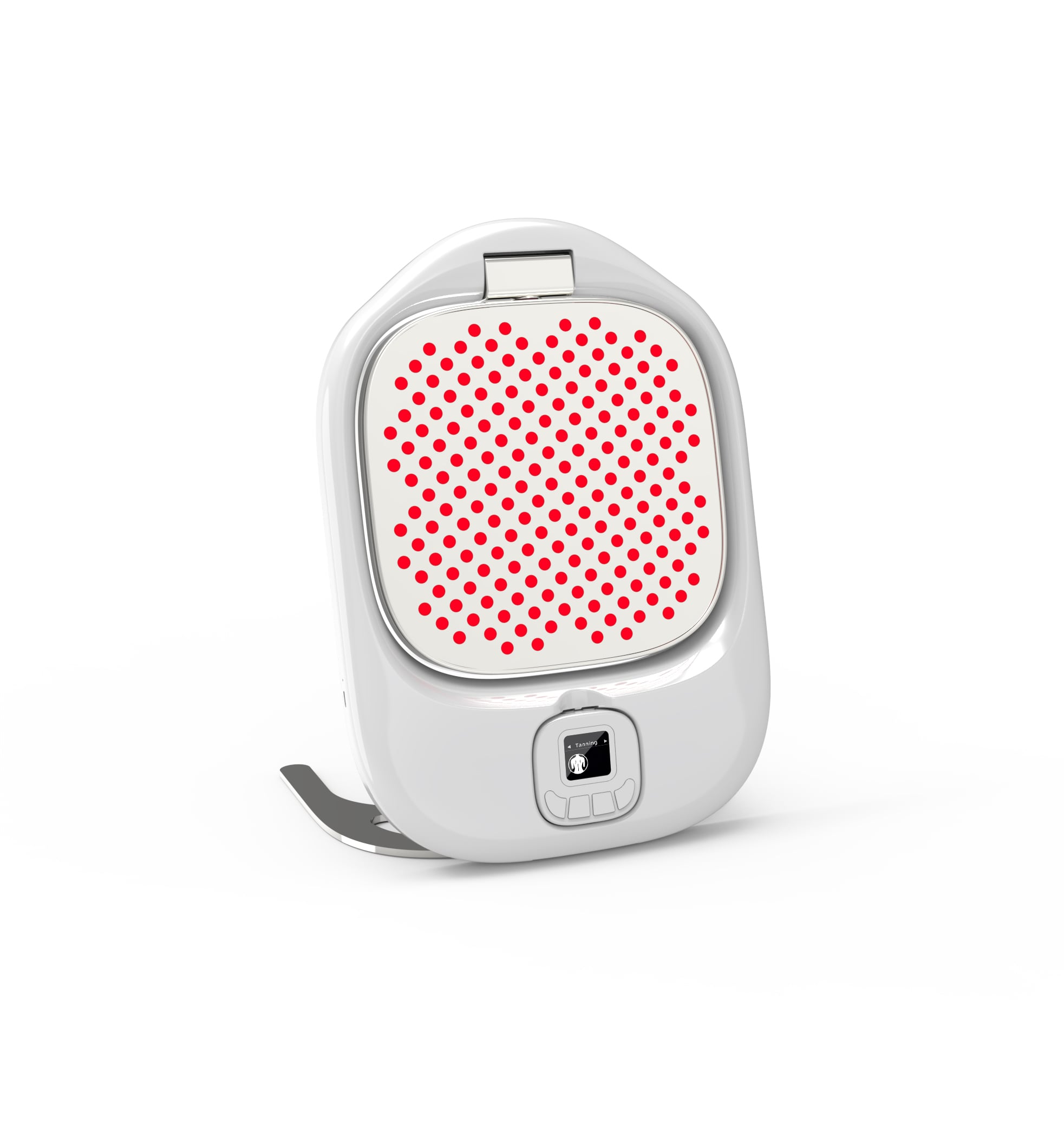
Choosing a full-body light panel is less about finding the biggest spec sheet and more about matching coverage, light settings, and operating habits to the way you will actually use it. A panel that looks powerful on paper can still be awkward if it only covers a narrow strip of the body, demands an impractical standing position, or provides no clear guidance on distance and session time.
As a home beauty-device selection advisor, I start with one question: can the claimed setup be repeated comfortably and consistently? For full-body treatment, that question matters more than a single headline number. The practical framework below helps you compare a panel without assuming that one size or one wavelength mix is right for everyone.
A full-body red light therapy panel should be judged by its usable illuminated area at the distance you expect to stand or sit. Count the body zones you want to address—front torso, legs, arms, back, or a localized area—and decide whether you are comfortable rotating during a session. A tall panel can reduce repositioning, while a compact panel may be sensible if you only need to treat one region at a time.
Ask the supplier for the panel dimensions, the recommended operating distance, and a diagram or photos showing the practical treatment footprint. LED count alone does not tell you how evenly light reaches the body. Lens angle, diode spacing, panel geometry, and distance all affect coverage. In other words, a red light therapy panel with more LEDs is not automatically a better full-body choice if its effective coverage does not match your routine.
Many consumer panels combine visible red and near-infrared light. Reviews of photobiomodulation devices commonly discuss red wavelengths around 630–660 nm and near-infrared wavelengths around 830–850 nm. Those ranges are useful context, not a guarantee of an outcome. What matters when comparing a red light therapy panel is whether the manufacturer clearly identifies the wavelengths used and explains how the modes can be controlled.
Here is the useful distinction: a dual-wavelength label describes a feature, while clear operating guidance helps you use that feature responsibly. If a red light therapy panel does not explain its settings in a manual, ask before you buy.
Irradiance is often presented as the deciding metric, but it only becomes meaningful when the measurement conditions are disclosed. Request the reported value, the unit used, the test distance, the area measured, and whether the figure is an average or a peak. A high number measured very close to the surface may not describe the experience at a more comfortable full-body distance.
Photobiomodulation guidance generally treats wavelength, energy density, light source, and treatment duration as connected variables. That is why a buyer should evaluate a red light therapy panel as a system: panel output, distance, exposure time, coverage, and frequency all belong in the same conversation. Avoid treating longer sessions as inherently better. Begin with the manufacturer’s conservative instructions and adjust only within its stated guidance, especially if you have a health condition or use photosensitizing medication.
For full-body use, the hardware arrangement can determine whether a red light therapy panel becomes part of your routine or stays in a box. Consider the following practical choices:
| Decision point | What to compare | Why it matters |
|---|---|---|
| Panel size | Height, width, and stated treatment footprint | Determines how much repositioning a full-body session requires. |
| Mounting | Door mount, stand, wall mount, or modular frame | A stable setup improves comfort and helps keep distance consistent. |
| Controls | Built-in timer, dimming, channel selection, remote or app controls | Simple controls make a routine easier to repeat. |
| Heat and ventilation | Housing design, fan noise, and recommended session conditions | Comfort affects whether you can use the device as intended. |
| Electrical details | Voltage, plug type, warranty, and local support | These reduce avoidable setup and after-sales problems. |
A common buying mistake is choosing the largest panel possible without planning the space around it. Measure the wall or doorway, check where you can stand safely, and make sure the cable and mount will not create a trip hazard. The most suitable red light therapy panel is often the one whose setup you can repeat without friction.
Ask for a user manual, warranty terms, electrical specifications, and the documentation relevant to your destination market. If a seller refers to FDA clearance, CE marking, or another regulatory status, ask which specific model and intended use that statement covers. Device records and compliance claims are not interchangeable across a whole category, and they should not be treated as proof that a panel will deliver every advertised wellness benefit.
Be especially careful with broad medical claims. This type of light panel may be marketed for wellness or cosmetic routines, but it is not a substitute for medical evaluation. People with eye conditions, photosensitivity, active skin concerns, or questions about medications should seek advice from a qualified clinician before use. This is not a minor footnote: safe selection includes knowing when a self-directed device is not the right starting point.
A suitable full-body red light therapy panel is not defined by one “magic” wavelength, the largest LED count, or an isolated output claim. It is the panel that gives you adequate coverage, transparent specifications, understandable controls, a secure installation, and documentation that matches the market where you will use it.
Before you place an order, write down your intended position, distance, session schedule, and available floor space. If a supplier cannot help you answer those basic questions clearly, keep comparing. A thoughtful panel selection starts with a repeatable setup and realistic expectations, then uses specifications to confirm that the device fits that plan.

2026/10/30
Discover why in-house mold development helps an RF beauty device manufacturer improve product consistency, iteration speed, tooling control, and production readiness.

2026/10/30
Learn how to verify an RF beauty device manufacturer's R&D and prototyping capabilities using practical engineering workflows and audit checklists.

2026/10/30
Learn what shapes MOQ when choosing an RF beauty device manufacturer and how to plan a lower-risk first order with balanced platform and customization.

2026/10/30
Use this RF beauty device manufacturer evaluation checklist to compare safety evidence, OEM and ODM capability, quality control, and launch readiness.

2026/10/30
See how technology makes beauty at home more guided, consistent, and informed—plus a practical checklist for choosing devices wisely.

2026/10/30
Explore how AI and smart devices shape the future of beauty with responsive routines, clear guidance, trustworthy design, and user-controlled care.

Ideal for daily facial care routines, providing easy-to-use beauty solutions at home.

Perfect for spas and salons’ frequent treatments, enhancing client experiences and results.

Supports dermatologists with advanced devices for professional skin therapy sessions.

Delivers innovative solutions for full-body massage and relaxation with home devices.

Features anti-aging technologies to help reduce wrinkles and stimulate skin vitality.

Specialized devices for safe and effective hair removal suitable for home or clinic use.

Our customers love the Perfect Idea beauty devices. Quality, packaging, and results are all outstanding. We saw increased repeat sales after adding their facial cleansers to our lineup. Their support team is responsive and reliable.

Perfect Idea brings innovation and reliability to home beauty appliances. Our collaboration introduced their massage tools to Japanese women, boosting customer satisfaction and growing our brand trust across the region.

We partnered with Shenzhen Perfect Idea Tech for their beauty equipment. The shipping was fast and every product matched our expectations. Their home-use massagers are especially popular with local salons and home users.

The stylish packaging and attractive design make Perfect Idea stand out. French consumers appreciate the easy instructions and visible results. Communication was efficient and orders always arrived on time.

Perfect Idea home use personal care devices have become a favorite with our clients. The beauty device line offers quality at a reasonable price, and technical training for our staff made onboarding easy.

We selected Perfect Idea for our beauty product portfolio and have seen very positive feedback from our customers. Products are easy to market online and the customer support is reliable and helpful.
