 EN
Home Skincare
Ideal for daily facial care routines, providing easy-to-use beauty solutions at home.

2026/10/03
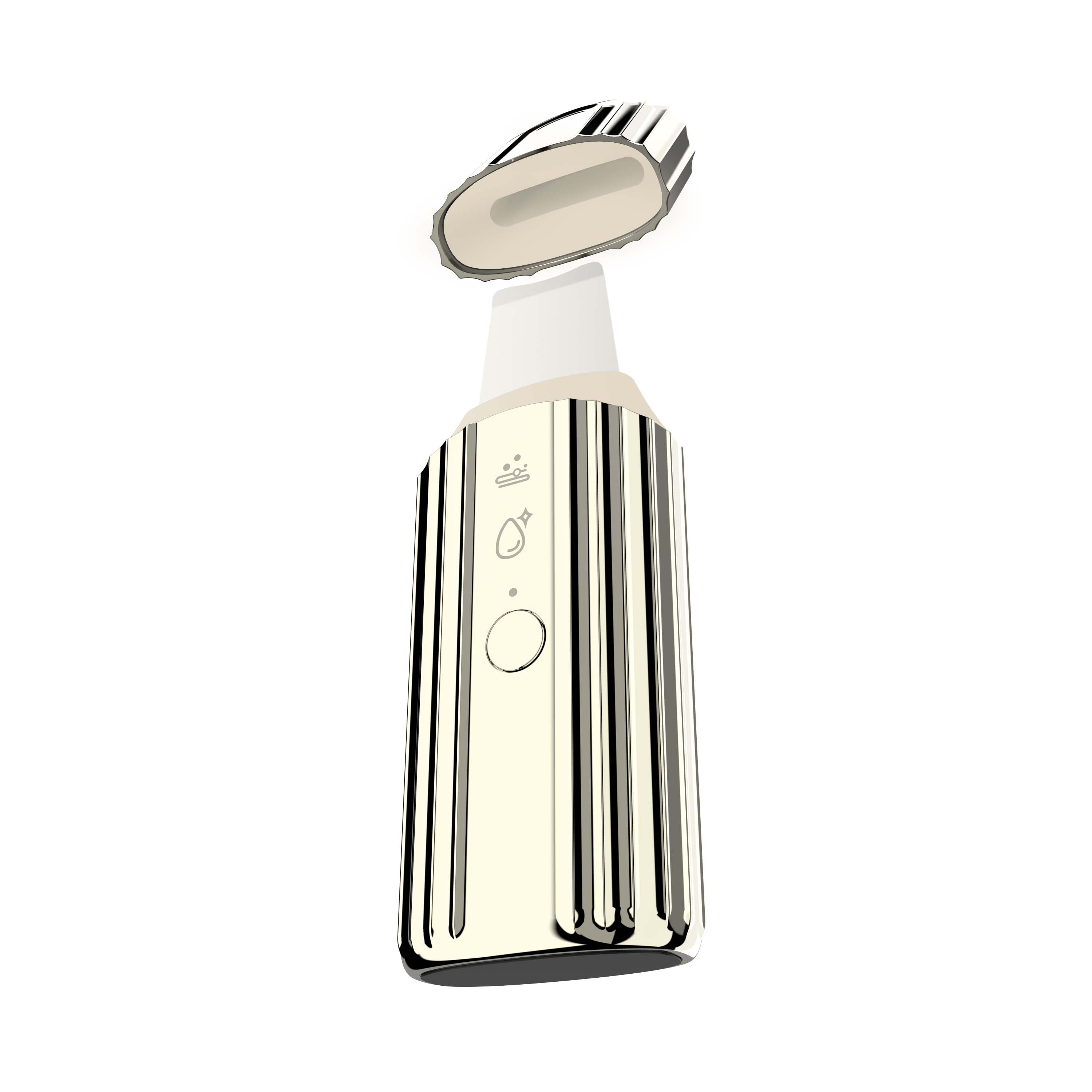
“Deep-cleanse” is an attractive phrase, but it can blur what a home device actually does. In practical skincare terms, beauty equipment such as an ultrasonic face spatula is designed to support surface cleansing and very gentle exfoliation on damp skin. It does not wash the inside of pores, change pore size, or replace a clinician’s care for persistent acne or irritation. Used carefully, though, it can help lift the mix of softened oil, makeup residue, sunscreen, and loose dead cells that ordinary cleansing sometimes leaves behind.
From a skin-management perspective, the useful question is not “How powerful is it?” but “What can this tool loosen without pushing the skin barrier too far?” That distinction makes an ultrasonic exfoliation device easier to use well—and easier to position responsibly in a home-care routine.
A typical ultrasonic face scrubber tool has a thin metal spatula that vibrates at a very high frequency. When the skin is wet, the moving edge works with the water or watery toner on the surface. The vibration and the gliding motion can help disturb a film of residue and move loosened material toward the blade edge, where it can be wiped away. This is why damp skin matters: the tool is intended to glide over a water-based layer, not scrape across dry skin.
It is tempting to picture the vibration drilling into pores. That is not a helpful model. Pores are openings connected to hair follicles, not little rooms that a handheld device can pressure-wash. A more accurate description is that ultrasonic beauty equipment assists the removal of material already sitting on, or close to, the surface after it has been softened by cleansing and moisture.
The visible result is usually about the outermost layer. A gentle pass may remove flakes that make the complexion look dull, help lift leftover product around the nose or chin, and leave the surface feeling smoother. On areas with congested-looking texture, an ultrasonic pore cleanser may make surface buildup easier to wipe away. That is different from promising that it will clear every blackhead or treat acne.
The effect also depends on what happened before the device touched the skin. Makeup and water-resistant sunscreen should be removed with an appropriate cleanser first. A short session with beauty equipment then becomes a finishing step, rather than an attempt to force a week’s worth of buildup off in one go. Many people initially focus on the device’s frequency or mode count; in real use, the gentler variables—moisture, pressure, and session length—usually matter more.
Water is not just a convenience. It gives the spatula a slip layer and helps soften surface residue so the edge can travel without dragging. Keep the face visibly damp with water or a simple water-based product that your skin already tolerates. If the device begins to catch, skip, or feel scratchy, stop and re-wet the area rather than pressing harder.
This is also where the phrase “deep cleansing” needs a boundary. The device may help you achieve a cleaner-feeling surface, but it does not sterilize skin, dissolve sebaceous filaments permanently, or substitute for a balanced cleansing routine. Good beauty equipment supports a routine; it is not a shortcut around it.
For brands and product teams, this is a useful design lesson as well: home-use ultrasonic beauty equipment should make correct behavior intuitive. A comfortable grip, a clear damp-skin instruction, and a straightforward cleaning routine are more valuable than a long list of unexplained modes.
Do not use an ultrasonic exfoliation device over broken skin, active irritation, sunburn, or a rash. If your skin stings, turns persistently red, or becomes unusually tight after use, pause the tool and simplify the routine. Be especially cautious if you are using prescription retinoids or over-the-counter retinol and benzoyl peroxide; dermatology guidance notes that these can increase sensitivity, and extra exfoliation may worsen dryness or breakouts.
The same principle applies to frequency. More passes do not automatically mean a better result. If you already use acids, scrubs, or strong active products, adding frequent mechanical-style exfoliation can turn a helpful cleansing step into cumulative irritation. A qualified dermatologist is the right person to ask when acne, eczema, rosacea, or a damaged barrier is part of the picture.
When comparing beauty equipment, look beyond dramatic cleansing claims. A sensible evaluation includes whether the instructions explain moisture and pressure, whether the head is easy to clean, whether controls are simple enough to use consistently, and whether the supplier can support clear safety and care guidance for the intended market. For private-label teams, an OEM/ODM partner with experience in home skincare devices can help translate those use conditions into packaging, manuals, and product positioning rather than relying on vague “deep clean” promises.
BEPERFECT develops home beauty devices for global brand customers, including ultrasonic and cold-hot skincare instruments, with OEM/ODM customization support. The responsible message is straightforward: ultrasonic beauty equipment can complement ordinary cleansing by helping remove softened surface residue on damp skin. It works when the user keeps expectations realistic, uses a light hand, and protects the skin barrier afterward.
An ultrasonic face scrubber tool does not cleanse beneath the skin or solve every pore concern. Its practical role is narrower—and more useful: on damp, freshly cleansed skin, the vibrating spatula can help lift loosened surface debris with minimal pressure. Choose beauty equipment that explains this mechanism clearly, treat it as an occasional support step, and stop when your skin signals that it needs less exfoliation, not more.

2026/10/30
Discover why in-house mold development helps an RF beauty device manufacturer improve product consistency, iteration speed, tooling control, and production readiness.

2026/10/30
Learn how to verify an RF beauty device manufacturer's R&D and prototyping capabilities using practical engineering workflows and audit checklists.

2026/10/30
Learn what shapes MOQ when choosing an RF beauty device manufacturer and how to plan a lower-risk first order with balanced platform and customization.

2026/10/30
Use this RF beauty device manufacturer evaluation checklist to compare safety evidence, OEM and ODM capability, quality control, and launch readiness.

2026/10/30
See how technology makes beauty at home more guided, consistent, and informed—plus a practical checklist for choosing devices wisely.

2026/10/30
Explore how AI and smart devices shape the future of beauty with responsive routines, clear guidance, trustworthy design, and user-controlled care.

Ideal for daily facial care routines, providing easy-to-use beauty solutions at home.

Perfect for spas and salons’ frequent treatments, enhancing client experiences and results.

Supports dermatologists with advanced devices for professional skin therapy sessions.

Delivers innovative solutions for full-body massage and relaxation with home devices.

Features anti-aging technologies to help reduce wrinkles and stimulate skin vitality.

Specialized devices for safe and effective hair removal suitable for home or clinic use.

Our customers love the Perfect Idea beauty devices. Quality, packaging, and results are all outstanding. We saw increased repeat sales after adding their facial cleansers to our lineup. Their support team is responsive and reliable.

Perfect Idea brings innovation and reliability to home beauty appliances. Our collaboration introduced their massage tools to Japanese women, boosting customer satisfaction and growing our brand trust across the region.

We partnered with Shenzhen Perfect Idea Tech for their beauty equipment. The shipping was fast and every product matched our expectations. Their home-use massagers are especially popular with local salons and home users.

The stylish packaging and attractive design make Perfect Idea stand out. French consumers appreciate the easy instructions and visible results. Communication was efficient and orders always arrived on time.

Perfect Idea home use personal care devices have become a favorite with our clients. The beauty device line offers quality at a reasonable price, and technical training for our staff made onboarding easy.

We selected Perfect Idea for our beauty product portfolio and have seen very positive feedback from our customers. Products are easy to market online and the customer support is reliable and helpful.
