 EN
Home Skincare
Ideal for daily facial care routines, providing easy-to-use beauty solutions at home.

2026/09/20
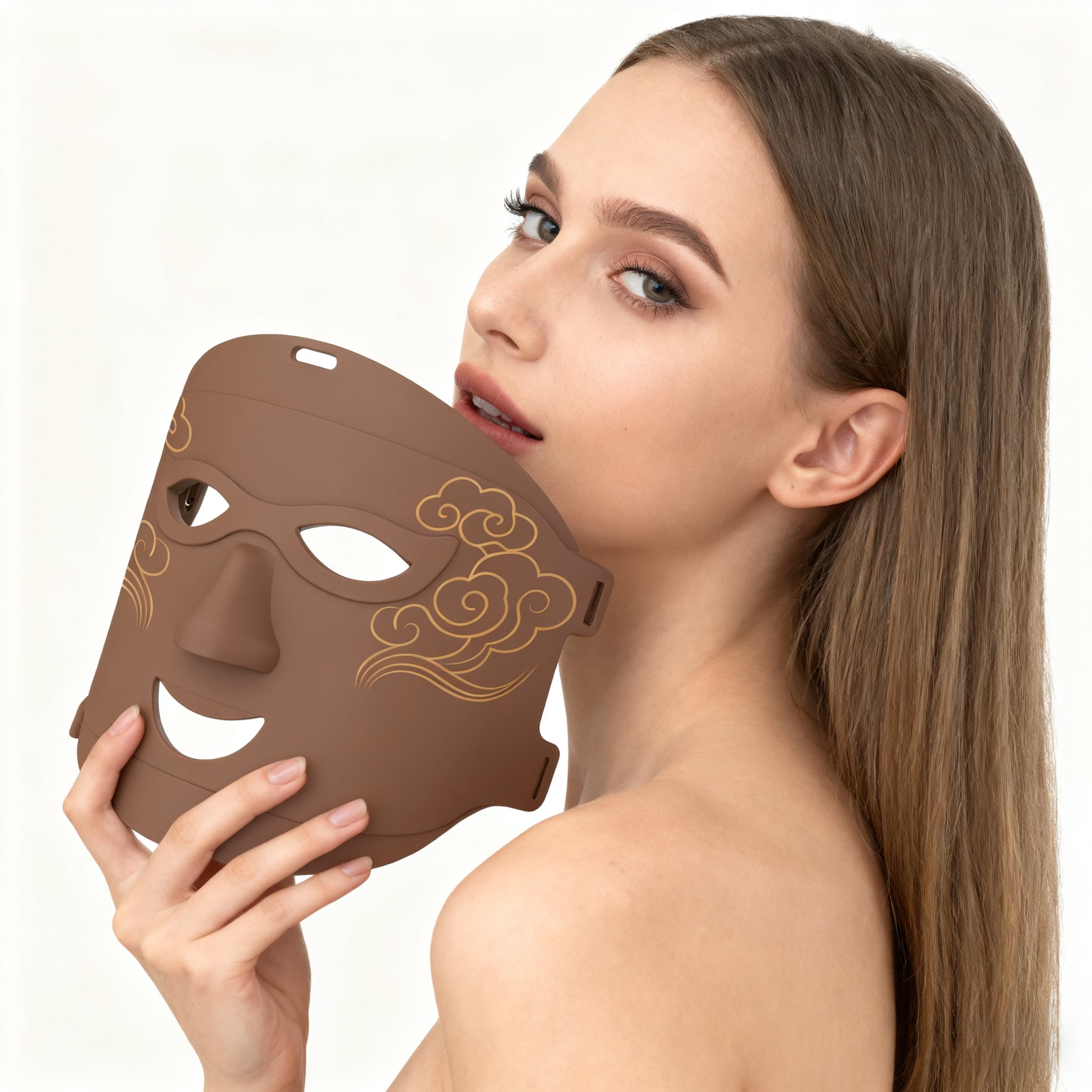
LED light therapy is often described as if every color of light simply “reaches” a named skin layer. The real process is more useful—and more nuanced—than that. Light entering skin is partly reflected, partly absorbed, and partly scattered. The amount that remains available to interact with tissue changes with wavelength, the device’s optical output, the treatment distance, the skin’s condition, and the treatment area.
From a skin-management perspective, the important question is not whether an LED device can promise a fixed depth. It is whether its wavelength, delivery pattern, and use instructions make sense for the intended cosmetic application. Understanding this distinction helps users and product teams assess led light therapy without turning a simple color chart into a medical claim.
Skin has several functional zones. The epidermis is the outer protective layer, where the stratum corneum forms a barrier. Beneath it sits the dermis, a connective-tissue-rich layer containing structures such as blood vessels, nerves, and fibroblasts. Below that is subcutaneous tissue. In real use, these boundaries are not optical walls. Light travels through a changing mixture of water, pigments, proteins, lipids, and microscopic structures.
That is why penetration is more accurately understood as a gradual reduction in available light, not as a clean stop at a particular millimeter. Melanin, hemoglobin, water content, surface oils, and even the angle of a mask or panel can change the path. Two people can therefore receive different surface exposure from the same led light therapy session.
Visible blue light, red light, and near-infrared light occupy different wavelength ranges. In broad terms, shorter visible wavelengths tend to interact more strongly near the surface because scattering is higher and certain skin chromophores absorb more of that light. Longer red and near-infrared wavelengths may have a greater relative opportunity to pass beyond the surface before attenuation reduces the available energy. “May” matters here: it is not a guarantee that every device reaches a prescribed depth or creates the same biological response.
For cosmetic communication, it is safer to say that wavelength influences the tissue interaction profile. A well-designed led light therapy device matches that profile to a sensible intended use rather than claiming that a color alone treats a diagnosis.
Wavelength is only one part of the picture. Irradiance describes optical power arriving over an area, while fluence is the accumulated energy per area over time. Both are influenced by the LEDs, lenses or diffusers, the spacing of the emitters, and distance from the skin. A flexible face mask held close to the face and a panel used farther away can create very different exposure patterns even if their headline wavelengths look similar.
Uniformity also matters. Hot spots, wide gaps, and poor fit may create uneven coverage. A practical evaluation should ask how a device distributes light over the intended treatment zone, whether its timer is clear, and whether the instructions specify distance and eye protection where appropriate. Chasing a large number on a specification sheet is less useful than confirming that the complete optical design supports repeatable use.
Hydration, pigmentation, irritation, makeup, topical residues, and hair can alter how much light reaches the surface and how it is scattered. Clean, dry skin is often the simplest starting condition when a manufacturer’s directions allow it. However, sensitive, inflamed, recently treated, or photosensitized skin deserves extra caution. If a person has a skin condition, takes photosensitizing medication, or has an uncertain reaction history, professional guidance is more appropriate than experimenting with longer sessions.
It is tempting to assign one color to one layer, but that shortcut overstates the science. A more accurate framework is to consider relative interaction, intended endpoint, and evidence for the specific device. Blue light is commonly discussed in surface-oriented skincare contexts because its shorter wavelength has stronger superficial interaction. Red light is often discussed in relation to skin appearance and photobiomodulation research because its longer wavelength may travel differently through tissue. Near-infrared light is invisible and is frequently paired with red LEDs in devices intended for deeper relative optical interaction.
None of these descriptions means a consumer device can replace clinical evaluation, cure disease, or deliver a predetermined result at a specific depth. Outcomes depend on the individual, the device parameters, adherence to instructions, and the concern being addressed. The disciplined language is not a limitation; it is what makes led light therapy education credible.
Thinking in layers can make led light therapy choices more practical. For a surface-focused routine, the emphasis is usually on clean contact, even coverage, and a wavelength rationale that matches the product’s cosmetic instructions. For concerns where a brand discusses red or near-infrared exposure, the key is not to assume that “deeper” automatically means better. The goal is controlled, repeatable led light therapy exposure within the device’s stated use conditions.
In other words, a layered-skin explanation should help people set expectations. Led light therapy does not bypass the skin barrier, and it does not work independently of the rest of a routine. Consistent setup, sensible session timing, and attention to skin comfort are what make an led light therapy routine more meaningful than a one-time test.
When comparing devices, ask four questions. First, which wavelengths are actually specified? Second, is treatment distance or mask contact explained? Third, how does the device manage coverage across curved areas such as cheeks and the jawline? Fourth, are safety instructions, contraindications, and session limits easy to find?
For brands developing home beauty devices, these questions also shape product design. Reliable timers, comfortable fit, eye-safety considerations, clear labeling, and realistic instructions support consistent use. A device should be positioned as a cosmetic skincare tool unless its regulatory status and documentation support a more specific claim. Good communication explains the mechanism without promising an outcome the product has not demonstrated.
Look for a complete description rather than a single headline claim. A credible led light therapy listing explains its wavelength range, intended treatment area, session guidance, and basic safety information. It should not imply that a consumer device can diagnose or cure a condition. If a claim sounds tied to one exact skin depth, ask whether the statement also accounts for distance, skin variation, and optical design.
For buyers evaluating led light therapy devices for a beauty line, documentation is part of product quality. Clear labeling and appropriate compliance review for the destination market reduce confusion for end users. They also keep marketing language aligned with what the device is actually designed to do.
Some wavelengths, particularly red and near-infrared ranges, may have greater relative transmission beyond the surface than shorter visible wavelengths. Actual delivery varies with the device, distance, skin characteristics, and treatment setup, so no universal depth claim is appropriate.
No. Higher output alone does not confirm uniform coverage, suitable exposure, comfort, or safety. Wavelength, geometry, instructions, and intended use should be assessed together.
No. It may be part of a cosmetic routine, but persistent acne, pigment changes, pain, rashes, or a changing lesion warrant assessment by a qualified healthcare professional.
Effective led light therapy is about controlled exposure, not a simplistic promise that light reaches one exact layer. Wavelength sets the starting optical behavior; device design, distance, coverage, and individual skin properties determine how the session unfolds. Choose clear instructions and proportionate claims, follow the recommended routine, and treat persistent skin concerns as a reason to seek professional care.

2026/10/30
Discover why in-house mold development helps an RF beauty device manufacturer improve product consistency, iteration speed, tooling control, and production readiness.

2026/10/30
Learn how to verify an RF beauty device manufacturer's R&D and prototyping capabilities using practical engineering workflows and audit checklists.

2026/10/30
Learn what shapes MOQ when choosing an RF beauty device manufacturer and how to plan a lower-risk first order with balanced platform and customization.

2026/10/30
Use this RF beauty device manufacturer evaluation checklist to compare safety evidence, OEM and ODM capability, quality control, and launch readiness.

2026/10/30
See how technology makes beauty at home more guided, consistent, and informed—plus a practical checklist for choosing devices wisely.

2026/10/30
Explore how AI and smart devices shape the future of beauty with responsive routines, clear guidance, trustworthy design, and user-controlled care.

Ideal for daily facial care routines, providing easy-to-use beauty solutions at home.

Perfect for spas and salons’ frequent treatments, enhancing client experiences and results.

Supports dermatologists with advanced devices for professional skin therapy sessions.

Delivers innovative solutions for full-body massage and relaxation with home devices.

Features anti-aging technologies to help reduce wrinkles and stimulate skin vitality.

Specialized devices for safe and effective hair removal suitable for home or clinic use.

Our customers love the Perfect Idea beauty devices. Quality, packaging, and results are all outstanding. We saw increased repeat sales after adding their facial cleansers to our lineup. Their support team is responsive and reliable.

Perfect Idea brings innovation and reliability to home beauty appliances. Our collaboration introduced their massage tools to Japanese women, boosting customer satisfaction and growing our brand trust across the region.

We partnered with Shenzhen Perfect Idea Tech for their beauty equipment. The shipping was fast and every product matched our expectations. Their home-use massagers are especially popular with local salons and home users.

The stylish packaging and attractive design make Perfect Idea stand out. French consumers appreciate the easy instructions and visible results. Communication was efficient and orders always arrived on time.

Perfect Idea home use personal care devices have become a favorite with our clients. The beauty device line offers quality at a reasonable price, and technical training for our staff made onboarding easy.

We selected Perfect Idea for our beauty product portfolio and have seen very positive feedback from our customers. Products are easy to market online and the customer support is reliable and helpful.
