 EN
Home Skincare
Ideal for daily facial care routines, providing easy-to-use beauty solutions at home.

2026/09/19
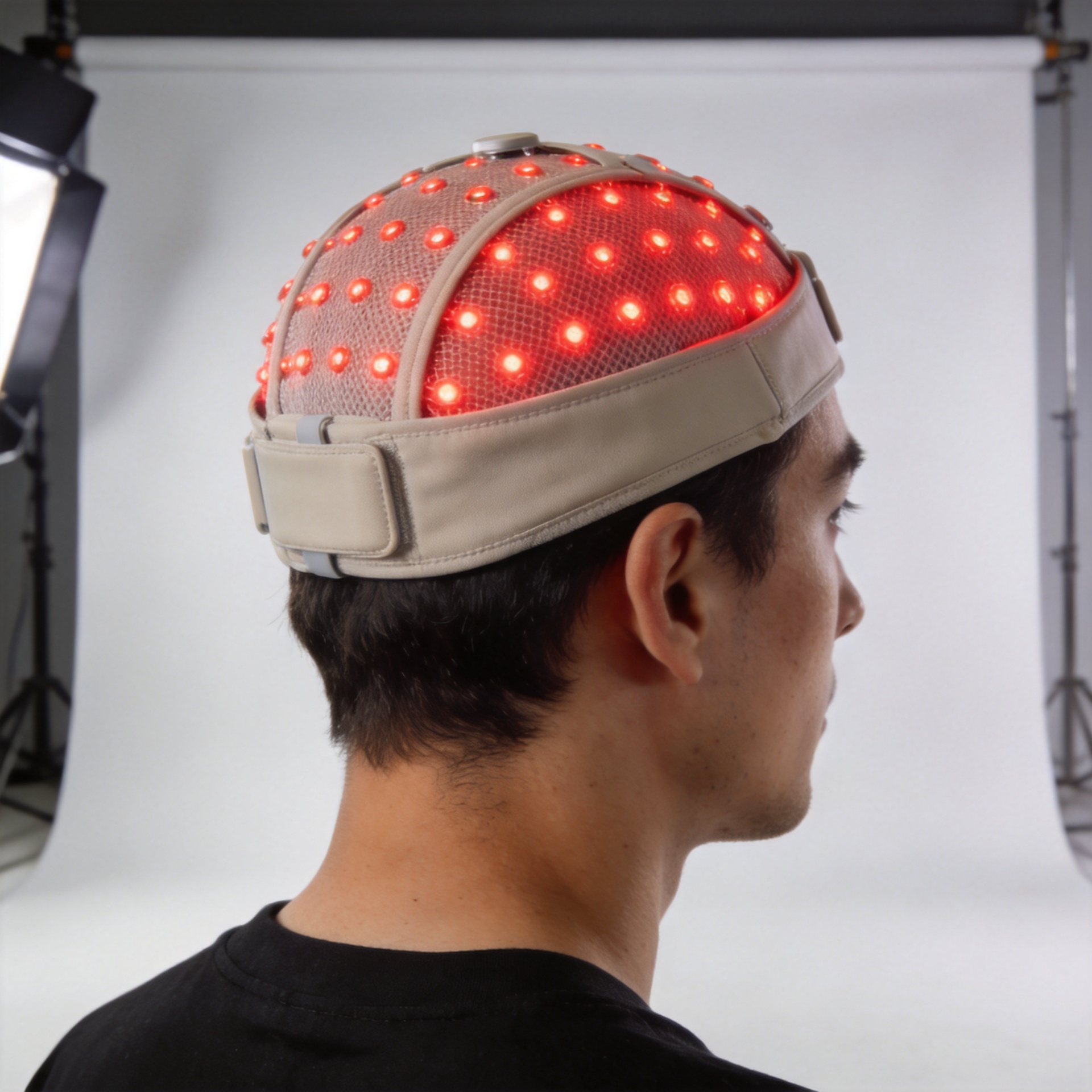
A wearable LLLT cap is designed to place low-level light therapy (LLLT), also called photobiomodulation, close to the scalp in a repeatable hands-free format. The basic idea is not that light “creates” hair overnight. Rather, carefully controlled red-light energy may influence cellular processes around hair follicles and support conditions associated with an active growth phase. For buyers, product teams, and users, the useful question is how that pathway works—and what it does not promise.
Each hair follicle cycles through growth (anagen), transition (catagen), and resting/shedding (telogen) phases. Pattern hair loss can involve shorter growth phases and progressively smaller follicles. An LED hair growth cap device aims light at the scalp rather than at the hair shaft, because the follicle and its surrounding cells are the biological targets.
In a cap format, an array of diodes spreads light over multiple scalp zones. That coverage can make a scheduled session easier to repeat than a handheld treatment, but coverage alone is not a clinical outcome. Hair density, hair color, scalp condition, the underlying cause of shedding, and how consistently a protocol is followed can all affect what a person notices.
LLLT uses low-intensity visible or near-infrared light rather than heat-based treatment. Reviews of photobiomodulation describe a proposed chain of events in which light is absorbed by cellular chromophores, including targets associated with mitochondria. Mitochondria help cells make usable energy. When cells receive an appropriate light dose, downstream signaling may involve changes in mitochondrial respiration, ATP availability, reactive oxygen species signaling, and nitric-oxide-related pathways.
That description is important because an LED hair growth cap device is not intended to burn, ablate, or mechanically pull the follicle into growth. It is intended to deliver a non-thermal light stimulus that may support cellular activity in follicle-associated tissue. Laboratory mechanisms are useful for explaining why the approach is researched, but they are not a guarantee that every user will regrow hair.
Researchers propose several ways this signaling could matter for follicles. First, improved cellular energy handling may support metabolically active follicle cells. Second, local signaling can be associated with circulation and oxygen-use changes in tissue. Third, photobiomodulation research examines effects on inflammatory signaling and growth-related pathways. Together, these mechanisms may help create a scalp environment that is more favorable to follicles that are still viable.
This type of wearable device is more appropriately understood as a follicle-support concept, not as a substitute for diagnosing hair loss. A cap cannot determine whether shedding is related to androgenetic alopecia, a nutritional issue, hormonal change, medication, traction, or a scalp disorder. Sudden shedding, irritation, scarring, or patchy loss deserves evaluation by a qualified clinician before relying on an at-home device.
Red wavelengths around 650 nm are frequently discussed in educational and clinical-device literature, yet a wavelength number by itself does not validate a cap. The useful dose at the scalp depends on the optical design, diode placement, treatment area, session schedule, contact through hair, and the manufacturer’s tested protocol. A well-designed LED hair growth cap device should make its intended use clear rather than asking users to guess how long or how often to wear it.
The terms LED, laser cap, red-light cap, and LLLT device are often used loosely. LEDs and laser diodes are different light sources, but photobiomodulation literature does not reduce the question to a simple “laser good, LED bad” rule. What matters is whether a device delivers an appropriate, tested optical dose to the intended area under a credible use protocol. An LED hair growth cap device should be assessed by its complete design and supporting documentation, not by promotional claims about a single component.
For a private-label or OEM evaluation, that means asking practical questions: What scalp area is intended to receive light? What is the session schedule? How is output consistency checked? Are user instructions written for the target market? Is the product positioned as a supportive wellness or hair-care tool within the claims allowed in that market? These questions are more meaningful than copying a competitor’s diode count into a specification sheet.
Consistency is central. Hair cycling is slow, so changes—if they occur—are usually assessed over months rather than days. An LED hair growth cap device may be one part of a broader clinician-guided plan, especially for users with pattern thinning. It should not be described as a cure, a universal regrowth promise, or a replacement for medical care.
A sensible routine starts with the manufacturer’s instructions, clean dry scalp conditions where recommended, and a way to track baseline photos under similar lighting. If scalp discomfort, headaches, eye symptoms, or worsening shedding occurs, the user should stop and seek professional advice. Pregnant users, people taking photosensitizing medication, and people with a diagnosed scalp condition should review suitability with a healthcare professional.
An LED hair growth cap device delivers LLLT by placing low-intensity light near the scalp, where it may influence mitochondrial and cell-signaling processes associated with follicle activity. The mechanism is biologically plausible and has been studied in pattern hair-loss contexts, but outcomes depend on the individual, the cause of hair loss, the device’s actual delivery design, and consistent use.
For brands building a hair-care device line, responsible communication matters as much as hardware. Describe the technology as supportive, provide clear instructions, avoid universal regrowth promises, and encourage users with unexplained or concerning hair loss to obtain appropriate medical guidance. That approach gives an LED hair growth cap device a credible place in an evidence-aware hair wellness routine.

2026/10/30
Discover why in-house mold development helps an RF beauty device manufacturer improve product consistency, iteration speed, tooling control, and production readiness.

2026/10/30
Learn how to verify an RF beauty device manufacturer's R&D and prototyping capabilities using practical engineering workflows and audit checklists.

2026/10/30
Learn what shapes MOQ when choosing an RF beauty device manufacturer and how to plan a lower-risk first order with balanced platform and customization.

2026/10/30
Use this RF beauty device manufacturer evaluation checklist to compare safety evidence, OEM and ODM capability, quality control, and launch readiness.

2026/10/30
See how technology makes beauty at home more guided, consistent, and informed—plus a practical checklist for choosing devices wisely.

2026/10/30
Explore how AI and smart devices shape the future of beauty with responsive routines, clear guidance, trustworthy design, and user-controlled care.

Ideal for daily facial care routines, providing easy-to-use beauty solutions at home.

Perfect for spas and salons’ frequent treatments, enhancing client experiences and results.

Supports dermatologists with advanced devices for professional skin therapy sessions.

Delivers innovative solutions for full-body massage and relaxation with home devices.

Features anti-aging technologies to help reduce wrinkles and stimulate skin vitality.

Specialized devices for safe and effective hair removal suitable for home or clinic use.

Our customers love the Perfect Idea beauty devices. Quality, packaging, and results are all outstanding. We saw increased repeat sales after adding their facial cleansers to our lineup. Their support team is responsive and reliable.

Perfect Idea brings innovation and reliability to home beauty appliances. Our collaboration introduced their massage tools to Japanese women, boosting customer satisfaction and growing our brand trust across the region.

We partnered with Shenzhen Perfect Idea Tech for their beauty equipment. The shipping was fast and every product matched our expectations. Their home-use massagers are especially popular with local salons and home users.

The stylish packaging and attractive design make Perfect Idea stand out. French consumers appreciate the easy instructions and visible results. Communication was efficient and orders always arrived on time.

Perfect Idea home use personal care devices have become a favorite with our clients. The beauty device line offers quality at a reasonable price, and technical training for our staff made onboarding easy.

We selected Perfect Idea for our beauty product portfolio and have seen very positive feedback from our customers. Products are easy to market online and the customer support is reliable and helpful.
