 EN
Home Skincare
Ideal for daily facial care routines, providing easy-to-use beauty solutions at home.

2026/10/13
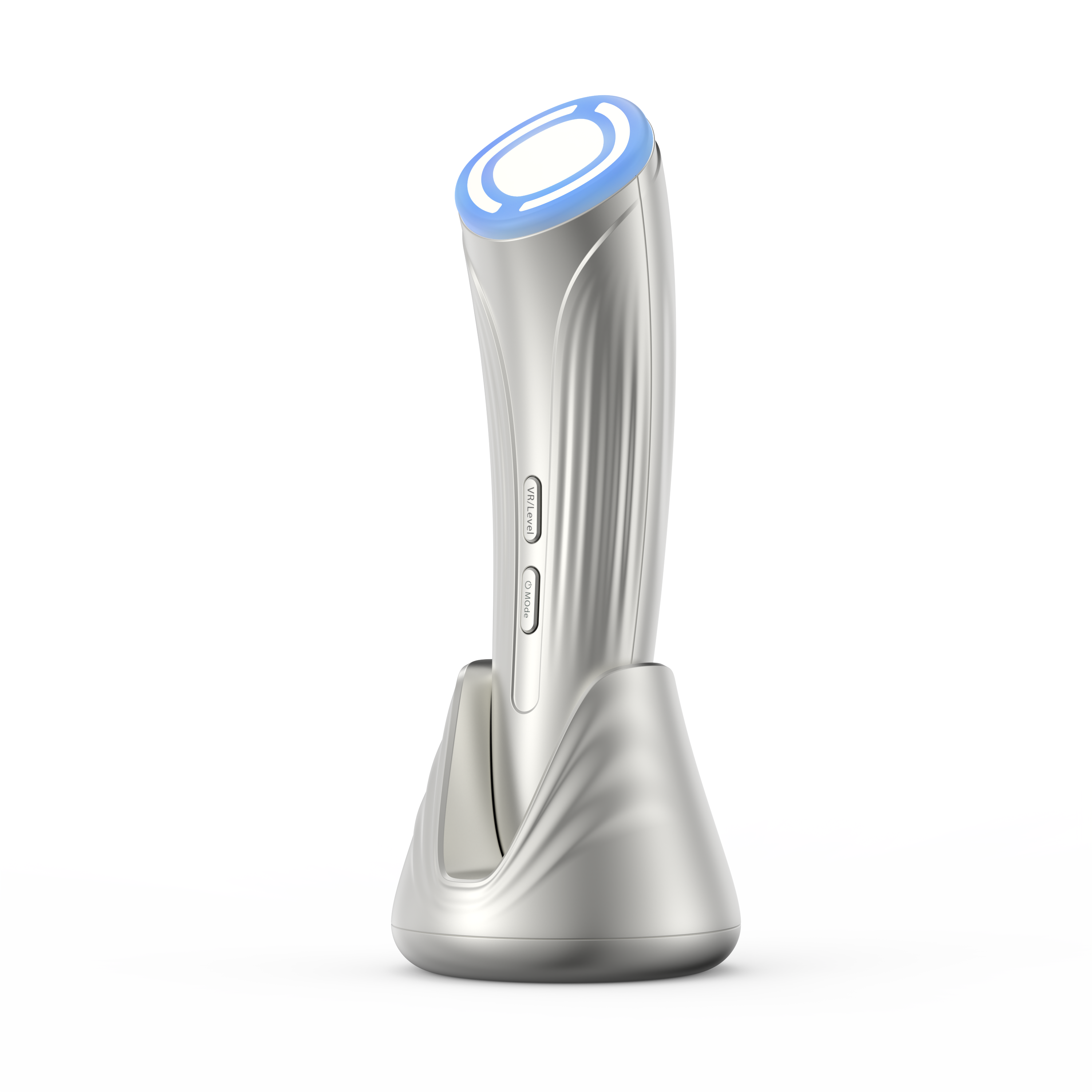
Choosing an EMS face device or an RF facial device can feel confusing because both are often presented as “lifting” technology. They do not work in the same way, however. An EMS face routine is primarily about gentle electrical stimulation directed at facial muscles, while radiofrequency (RF) is designed to create controlled warmth in the skin’s deeper layers. That difference matters when your priority is contour, skin texture, early laxity, or a more consistent at-home routine.
As a technical advisor for home beauty devices, I suggest starting with the concern you can actually describe—not the longest feature list. An EMS face tool may suit someone focused on the look of facial tone and a short, repeatable routine. RF may be the more relevant category when the main concern is skin-focused firmness or texture. Neither should be treated as a substitute for medical care, professional treatment, sunscreen, or realistic expectations.
| Decision point | EMS face technology | RF face technology |
|---|---|---|
| Primary action | Uses low-level electrical stimulation intended to engage facial muscles. | Uses radiofrequency energy intended to warm tissue in a controlled manner. |
| Primary decision question | Do I want a routine centered on facial tone and the look of contour? | Is skin-focused firmness or texture my main anti-aging priority? |
| Typical sensation | A light pulsing, tapping, or muscle-engaging sensation, depending on the device and setting. | Gradual warmth; it should remain comfortable when used correctly. |
| What to compare | Comfort, intensity control, contact method, and whether you will use it consistently. | Temperature safeguards, treatment-area guidance, contact requirements, and comfort. |
| Expectation to avoid | A dramatic or permanent “face lift” claim. | An instant result from every device. |
An EMS face device uses electrical muscle stimulation. In plain language, it is built to create a controlled stimulus that may cause a subtle muscular response. That is why EMS is commonly discussed around the jawline, cheeks, and lower-face appearance. The point is not to force a result overnight; the practical question is whether the stimulation feels comfortable enough that you can follow the manufacturer’s schedule consistently.
It is easy to confuse an EMS face device with microcurrent because both use electrical current and both appear in home beauty categories. The labels are not interchangeable. Device design, current pattern, intended sensation, and instructions can differ substantially. Rather than relying on a broad claim such as “electrical lifting,” read the specific instructions and contraindications for the model you are considering.
For a user who notices that the lower face looks less defined when tired or who wants a brief adjunct to massage and skin care, EMS can be a sensible category to explore. But a muscle-oriented technology does not directly answer every concern about fine lines, uneven texture, or sun-related skin changes. That boundary is important.
RF facial technology works from a skin-focused rather than muscle-focused premise. It delivers radiofrequency energy to create controlled heat in tissue. In clinical and home-device discussions, RF is often associated with the appearance of firmness, texture, and mild laxity. A peer-reviewed report on a home RF device found rejuvenation benefits in its study setting, but that does not mean every RF device will produce the same outcome for every person.
Comfort and safeguards are central to the RF decision. Reputable guidance commonly describes RF skin tightening as relatively safe when used appropriately, while also recognizing the importance of features that help limit excess heat. “More heat” is not a better home-use strategy. Follow the product’s conductive-medium instructions, keep the device moving if its manual says to do so, and do not use it over irritated, broken, or recently treated skin.
If your priority is a gradual skin-quality routine rather than a facial-muscle sensation, RF may be the better first category to investigate. Think of it as a consistency-based approach with cautious expectations, not a replacement for an in-clinic procedure.
An EMS face device may be the more relevant option if your main interest is the appearance of facial tone, especially around the cheeks or jawline, and you enjoy a device that provides a noticeable stimulation sensation. Look for adjustable intensity, clear placement guidance, and a routine you can realistically maintain. If your skin barrier is reactive, start conservatively and stop if the treatment feels painful or leaves persistent irritation.
RF may better match someone who is thinking less about muscle engagement and more about the appearance of mild laxity, texture, or overall skin smoothness. Compare safety features and treatment guidance before comparing marketing phrases. A device should explain its intended areas, recommended frequency, preparation steps, and who should not use it.
Some beauty devices combine modes, and some routines alternate technologies. That can be reasonable, but it is not automatically superior. First establish whether an EMS face routine addresses your contour priority or whether RF addresses your skin priority. Then check both manuals for timing, contraindications, and product compatibility. If the instructions are unclear, do not improvise a stacked treatment schedule.
Both technologies deserve careful use. Patch-testing products used with the device, starting at a lower setting, and following the manual can reduce avoidable problems. Do not use either category to treat a medical condition or make it a workaround for symptoms that deserve professional assessment. People with a pacemaker or other implanted electronic device, a history of relevant medical concerns, or uncertainty after a cosmetic procedure should ask an appropriately qualified clinician before using an electrical or energy-based facial device.
It is also worth correcting a common assumption: a higher price or more modes do not automatically make a device more suitable. More accurately, the right choice depends on a clear mechanism, safe controls, and repeatable use. For brands developing at-home beauty devices, that means clear instructions and consistent quality controls are as important as the headline technology.
Choose EMS face technology when your anti-aging routine is primarily about the look of facial tone and contour, and you are comfortable with a controlled stimulation sensation. Choose RF when your priority is skin-focused firmness or texture and you value a controlled warming treatment. If both goals matter, avoid assuming that more technology is better; choose a well-explained routine, use it as directed, and reassess over time.
The most suitable option is the one whose mechanism matches your concern and whose safety instructions you can follow consistently. In other words, decide on suitability first, then features.

2026/10/30
Discover why in-house mold development helps an RF beauty device manufacturer improve product consistency, iteration speed, tooling control, and production readiness.

2026/10/30
Learn how to verify an RF beauty device manufacturer's R&D and prototyping capabilities using practical engineering workflows and audit checklists.

2026/10/30
Learn what shapes MOQ when choosing an RF beauty device manufacturer and how to plan a lower-risk first order with balanced platform and customization.

2026/10/30
Use this RF beauty device manufacturer evaluation checklist to compare safety evidence, OEM and ODM capability, quality control, and launch readiness.

2026/10/30
See how technology makes beauty at home more guided, consistent, and informed—plus a practical checklist for choosing devices wisely.

2026/10/30
Explore how AI and smart devices shape the future of beauty with responsive routines, clear guidance, trustworthy design, and user-controlled care.

Ideal for daily facial care routines, providing easy-to-use beauty solutions at home.

Perfect for spas and salons’ frequent treatments, enhancing client experiences and results.

Supports dermatologists with advanced devices for professional skin therapy sessions.

Delivers innovative solutions for full-body massage and relaxation with home devices.

Features anti-aging technologies to help reduce wrinkles and stimulate skin vitality.

Specialized devices for safe and effective hair removal suitable for home or clinic use.

Our customers love the Perfect Idea beauty devices. Quality, packaging, and results are all outstanding. We saw increased repeat sales after adding their facial cleansers to our lineup. Their support team is responsive and reliable.

Perfect Idea brings innovation and reliability to home beauty appliances. Our collaboration introduced their massage tools to Japanese women, boosting customer satisfaction and growing our brand trust across the region.

We partnered with Shenzhen Perfect Idea Tech for their beauty equipment. The shipping was fast and every product matched our expectations. Their home-use massagers are especially popular with local salons and home users.

The stylish packaging and attractive design make Perfect Idea stand out. French consumers appreciate the easy instructions and visible results. Communication was efficient and orders always arrived on time.

Perfect Idea home use personal care devices have become a favorite with our clients. The beauty device line offers quality at a reasonable price, and technical training for our staff made onboarding easy.

We selected Perfect Idea for our beauty product portfolio and have seen very positive feedback from our customers. Products are easy to market online and the customer support is reliable and helpful.
