 EN
Home Skincare
Ideal for daily facial care routines, providing easy-to-use beauty solutions at home.

2026/10/21
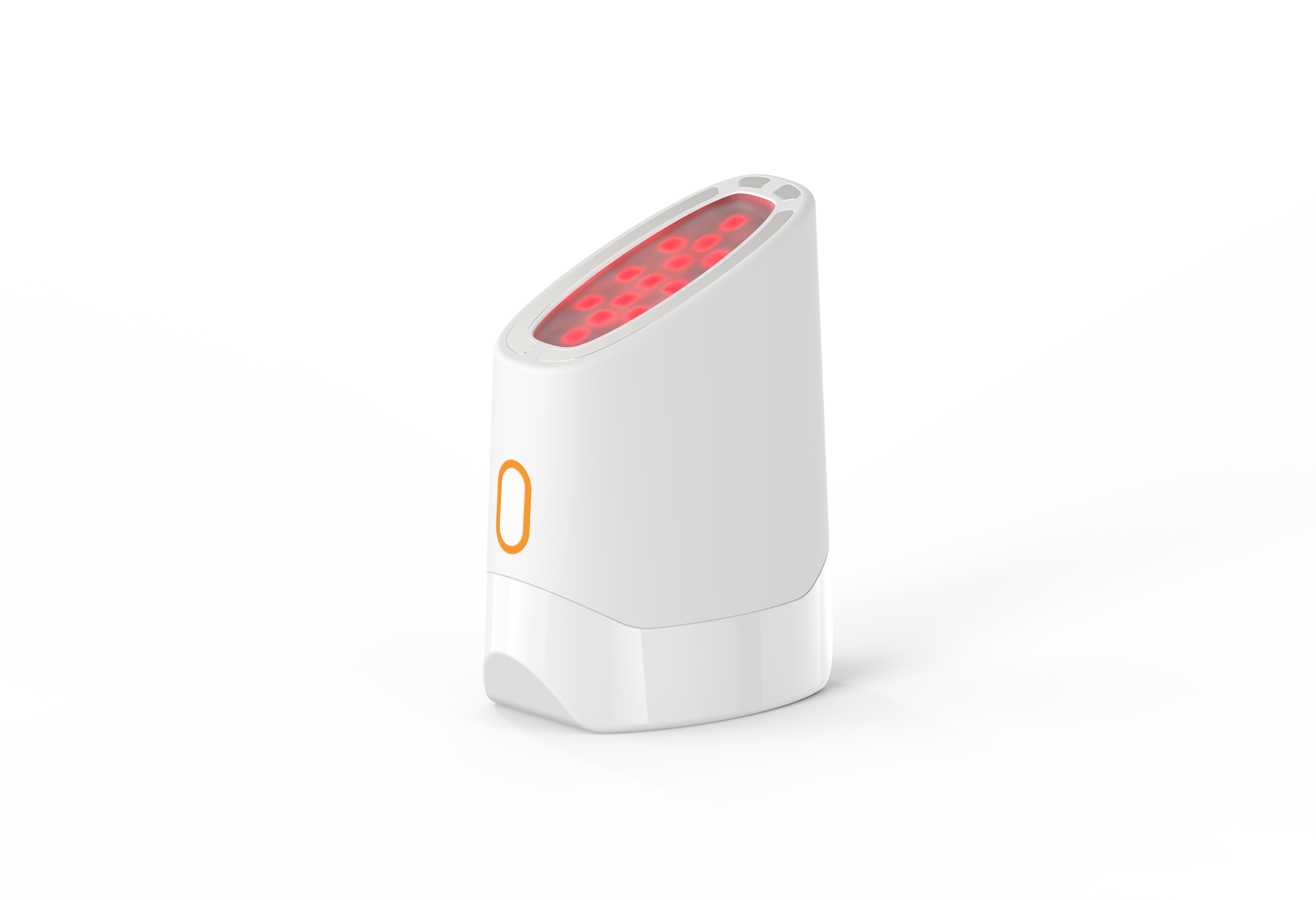
For an importer, salon chain, or emerging skincare brand, choosing a Beauty equipment producer is not simply a way to lower a quotation. It is a decision about who owns the technical answer when a sample changes, a document is missing, or a production batch needs correction. A trading company can also be valuable, especially when it consolidates several categories or manages a difficult shipment. The better route depends on the project, the risk, and the evidence available.
From an international buyer’s perspective, price is only one line in the calculation. The more useful question is: which partner can carry responsibility for product quality, documentation, changes, and delivery with the fewest avoidable handoffs?
A Beauty equipment producer usually controls some part of design, sourcing, assembly, testing, or final release. That direct connection can shorten feedback loops and make it easier to test a customization request. A trading company usually represents one or more factories and may add value through supplier screening, multilingual communication, export handling, mixed-category purchasing, or local inspection coordination.
Neither label is enough on its own. Some factories outsource critical processes; some traders have strong engineering and quality teams. Before comparing prices, ask each supplier to map its role: who makes the unit, who approves materials, who issues quality records, who owns tooling, and who answers for a change after sample approval?
A direct Beauty equipment producer is often the better fit when the product needs OEM or ODM work. If a brand wants a custom housing, revised user interface, branded packaging, feature configuration, or a planned product refresh, speaking with the people responsible for engineering and production can reduce translation loss between the buyer, intermediary, and factory.
Direct access can also improve quality follow-up. A buyer can ask how incoming parts are checked, what happens during assembly, how final inspection is recorded, and how nonconforming units are isolated. The answer should be specific to the proposed product and facility. A certificate or logo is a starting point, not proof that the named site, process, and current project are covered.
For higher-risk or regulated device categories, that distinction matters even more. In the United States, the FDA’s Quality Management System Regulation became effective on February 2, 2026. It is relevant to medical devices, not automatically to every beauty device, but it illustrates a sound buying principle: suppliers should be able to show a system that consistently meets defined requirements. Buyers must still verify classification and market rules independently.
A trading company may be the practical choice when one purchase order covers unrelated items, modest quantities, or multiple production sites. Instead of managing several factories, the buyer may receive one commercial contact, consolidated payment and shipping support, and a single point for routine coordination. That can reduce administrative cost and speed up a simple launch.
A good trader can also be useful when a buyer lacks local staff. It may conduct pre-shipment checks, help compare factories, translate specifications, and coordinate packaging or export documents. These services are valuable only when the scope, fee structure, inspection method, and escalation path are clear. If the trader cannot identify the manufacturing site or provide project-relevant evidence, the apparent convenience can turn into a visibility problem.
| Decision area | Direct producer advantage | Trading company advantage |
|---|---|---|
| Customization | Fewer handoffs to engineering and production teams. | Can source alternatives when one factory lacks a capability. |
| Accountability | Clearer route to the team controlling the batch. | Useful if it contractually manages inspection and supplier follow-up. |
| Mixed sourcing | Best when one factory can genuinely cover the required range. | Often simpler for multi-factory or multi-category orders. |
| Unit price | May reduce intermediary margin, but only on comparable specifications. | May combine volume or logistics services that offset part of the markup. |
| Speed | Can accelerate technical decisions when factory access is direct. | Can accelerate routine export coordination and ready-stock sourcing. |
Do not treat “factory direct” as an automatic saving. A low quote from a Beauty equipment producer can omit testing, packaging work, documentation, spare parts, or change-control support. Likewise, a trader’s margin may be reasonable if it replaces work the buyer would otherwise need to perform. Compare like-for-like specifications, acceptance criteria, Incoterms, warranty responsibilities, and after-sales response before calculating value.
Experienced sourcing teams replace broad claims with documents and conversations. Ask a Beauty equipment producer or trader for the legal entity and address of the manufacturing site, the product scope of available certificates, sample and mass-production inspection plans, change-notification terms, traceability approach, and a clear corrective-action contact. For a trader, add questions about which tasks it performs itself and which remain the factory’s responsibility.
This is where the decision often becomes clearer. A buyer seeking a differentiated product and long-term line extension generally gains more from a Beauty equipment producer that can document design, quality, and change ownership. A buyer purchasing several standard categories for a time-sensitive launch may get better operational value from a trader with transparent supplier relationships and disciplined inspection support.
For a first small trial, a trading company can be a sensible gateway if it offers transparent factory information and a defined quality process. For an OEM/ODM program, a Beauty equipment producer is usually more valuable because technical decisions need a direct path to the people who can implement them. For repeat production, re-evaluate both models using delivery performance, defect trends, documentation quality, and response to changes—not only the original quote.
In practical B2B buying, several people usually participate: product, procurement, quality, and compliance teams often weight the same supplier differently. A sourcing choice becomes more robust when those priorities are made visible before negotiations begin.
A Beauty equipment producer is often the stronger long-term partner for customized, quality-sensitive, or compliance-heavy projects because it can reduce the distance between the buyer and the production decision. A capable trading company can be better value for consolidated, standard, or logistics-heavy orders. The winning option is not the one with the lowest opening price; it is the one that gives the buyer verifiable control over the risks that matter after the purchase order is issued.
Use a Beauty equipment producer when direct technical accountability is the priority. Use a trader when coordination is the priority—and require both models to prove their role with project-specific evidence.

2026/10/30
Discover why in-house mold development helps an RF beauty device manufacturer improve product consistency, iteration speed, tooling control, and production readiness.

2026/10/30
Learn how to verify an RF beauty device manufacturer's R&D and prototyping capabilities using practical engineering workflows and audit checklists.

2026/10/30
Learn what shapes MOQ when choosing an RF beauty device manufacturer and how to plan a lower-risk first order with balanced platform and customization.

2026/10/30
Use this RF beauty device manufacturer evaluation checklist to compare safety evidence, OEM and ODM capability, quality control, and launch readiness.

2026/10/30
See how technology makes beauty at home more guided, consistent, and informed—plus a practical checklist for choosing devices wisely.

2026/10/30
Explore how AI and smart devices shape the future of beauty with responsive routines, clear guidance, trustworthy design, and user-controlled care.

Ideal for daily facial care routines, providing easy-to-use beauty solutions at home.

Perfect for spas and salons’ frequent treatments, enhancing client experiences and results.

Supports dermatologists with advanced devices for professional skin therapy sessions.

Delivers innovative solutions for full-body massage and relaxation with home devices.

Features anti-aging technologies to help reduce wrinkles and stimulate skin vitality.

Specialized devices for safe and effective hair removal suitable for home or clinic use.

Our customers love the Perfect Idea beauty devices. Quality, packaging, and results are all outstanding. We saw increased repeat sales after adding their facial cleansers to our lineup. Their support team is responsive and reliable.

Perfect Idea brings innovation and reliability to home beauty appliances. Our collaboration introduced their massage tools to Japanese women, boosting customer satisfaction and growing our brand trust across the region.

We partnered with Shenzhen Perfect Idea Tech for their beauty equipment. The shipping was fast and every product matched our expectations. Their home-use massagers are especially popular with local salons and home users.

The stylish packaging and attractive design make Perfect Idea stand out. French consumers appreciate the easy instructions and visible results. Communication was efficient and orders always arrived on time.

Perfect Idea home use personal care devices have become a favorite with our clients. The beauty device line offers quality at a reasonable price, and technical training for our staff made onboarding easy.

We selected Perfect Idea for our beauty product portfolio and have seen very positive feedback from our customers. Products are easy to market online and the customer support is reliable and helpful.
